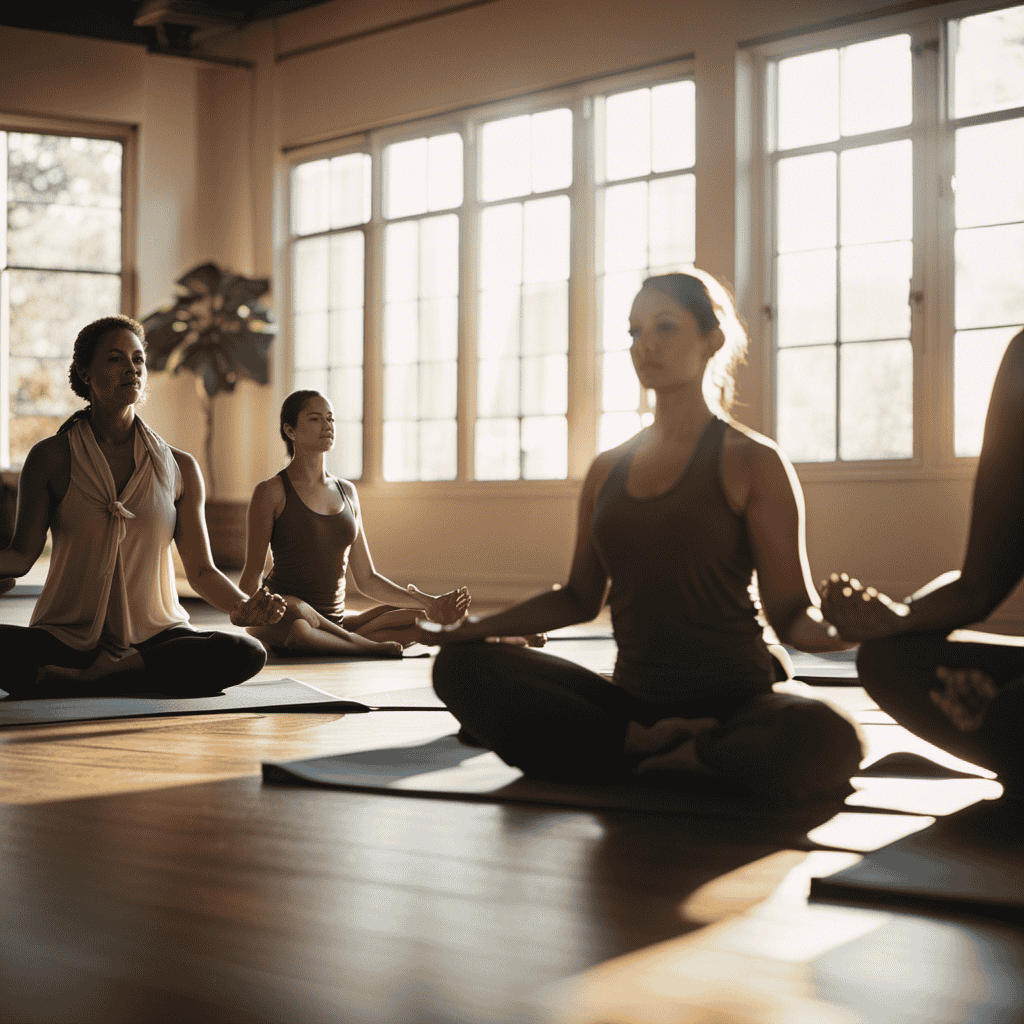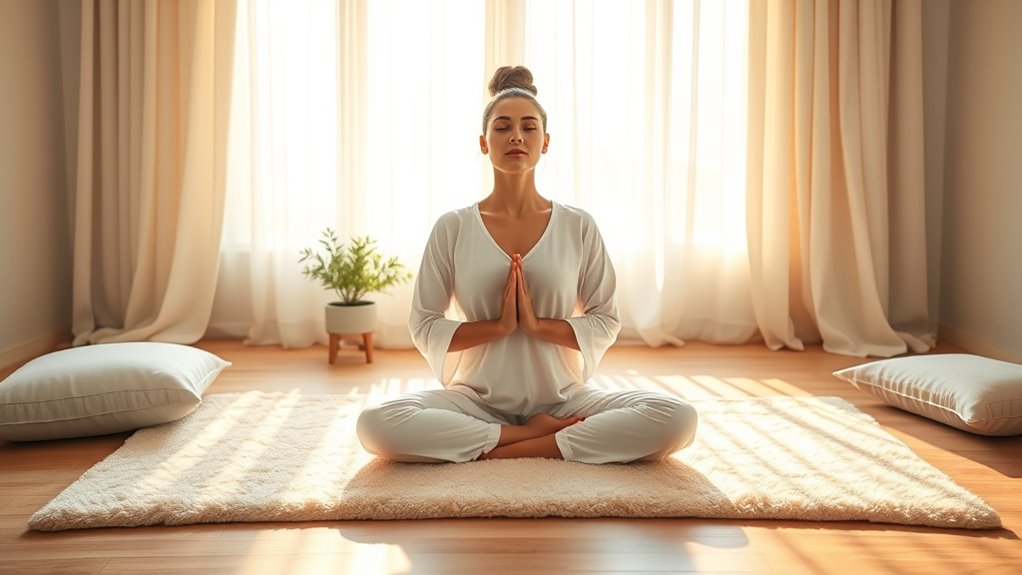

Practicing gentle yoga before bed can help you relax both your body and mind, making it easier to fall asleep. Focus on slow, calming poses like forward bends, gentle twists, and stretches that release tension in your neck, shoulders, and back. Combining deep breathing with these stretches signals to your nervous system that it’s time to wind down, promoting restful sleep. Keep exploring to discover specific routines that can enhance your nightly relaxation.

Turn your wind-down time into listening time
- Thousands of audiobooks, podcasts and originals
- Listen on your phone, tablet or Echo — also offline
- Cancel anytime
Key Takeaways
- Incorporate gentle yoga poses like forward bends and spinal twists before bed to relax muscles and calm the nervous system.
- Practice deep, slow breathing during yoga to activate the parasympathetic nervous system, promoting relaxation.
- Establish a nightly routine of yoga stretches about 30 minutes before sleep to signal the body it’s time to wind down.
- Focus on mindful movement and breath awareness to reduce stress and racing thoughts that interfere with sleep.
- Regularly practicing calming yoga routines can improve overall sleep quality and help establish a restful sleep pattern.
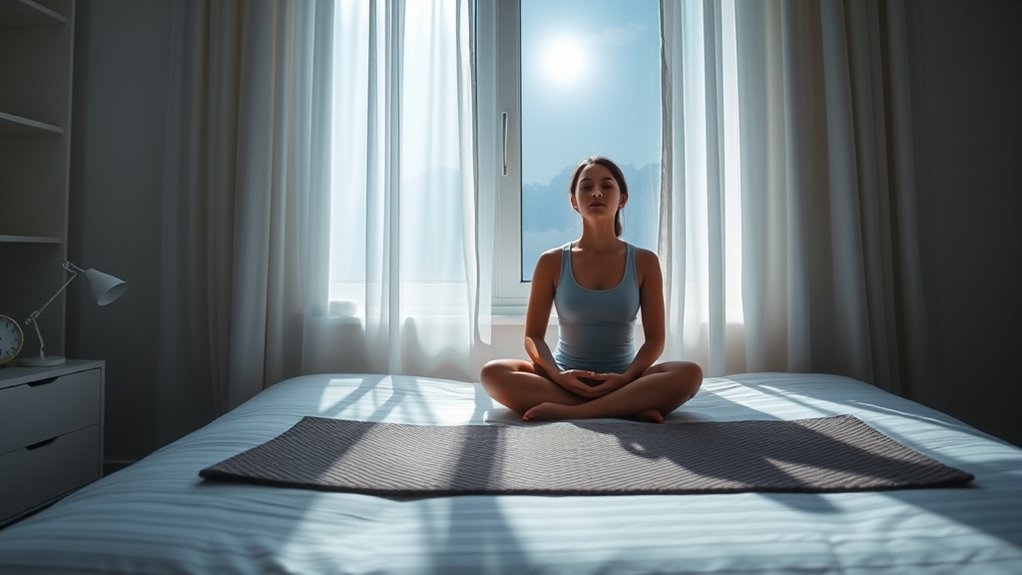
Ever wonder how you can improve your sleep naturally? One effective way is by incorporating simple practices into your nightly routine, like breathing exercises and evening stretches. These techniques help signal to your body that it’s time to wind down, easing you into a restful night. Breathing exercises, in particular, are powerful tools. When you focus on slow, deep breaths, you activate your parasympathetic nervous system—the part responsible for relaxation. Try inhaling deeply through your nose for a count of four, holding that breath for a moment, then exhaling slowly through your mouth for a count of six. Repeat this several times, feeling your body relax with each exhale. This deliberate breathing helps calm racing thoughts and reduces stress hormones that might otherwise keep you awake. It’s a simple, accessible way to clear your mind and prepare your body for sleep. Incorporating these techniques into your routine can also help improve your overall sleep quality. Alongside breathing exercises, evening stretches can make a significant difference. Gentle stretching before bed releases muscle tension accumulated throughout the day, which often leads to discomfort or restlessness at night. Focus on stretches that target your neck, shoulders, back, and hips—areas prone to tightness from daily activities. For example, try seated forward bends or gentle spinal twists. These stretches not only relax your muscles but also improve circulation and promote a sense of calm. As you hold each stretch, breathe deeply and evenly, amplifying the relaxation effect. Incorporating even just ten minutes of evening stretches can help ease physical discomfort and prepare your body for restful sleep. The key is consistency. Make these practices a regular part of your nightly routine, ideally starting about 30 minutes before bed. Find a quiet, comfortable space where you won’t be disturbed. As you begin, focus on your breath, taking slow, deliberate inhales and exhales. Shift smoothly into gentle stretches, maintaining awareness of your body and breath. Over time, these habits can become powerful signals to your nervous system that it’s time to relax, making it easier to fall asleep and stay asleep throughout the night. Remember, the goal isn’t to push yourself into uncomfortable positions but to gently unwind and release tension. With patience and regular practice, you’ll notice a marked improvement in the quality of your sleep, waking up feeling more refreshed and energized each morning.
As an affiliate, we earn on qualifying purchases.
Frequently Asked Questions
Can Yoga Replace Medication for Sleep Issues?
Yoga can be a helpful medication alternative for sleep issues, but it might not fully replace medication for everyone. Incorporating yoga, along with herbal remedies and healthy sleep habits, can improve your sleep quality naturally. However, if your sleep problems persist or are severe, it’s essential to consult a healthcare professional. Yoga offers a relaxing, drug-free approach that complements other treatments and promotes overall well-being.
What Yoga Poses Are Best for Insomnia Relief?
To relieve insomnia, try poses like Legs-Up-The-Wall and Child’s Pose, which promote relaxation. Incorporate breathing exercises such as deep diaphragmatic breathing and meditation techniques like body scan meditation to calm your mind. These practices help reduce stress and prepare your body for sleep. Consistently practicing these poses and techniques before bed can improve sleep quality and ease your journey into restful sleep.
How Long Should I Practice Yoga Before Bed?
You should practice bedtime stretches for about 15 to 20 minutes before bed, as research shows even short routines can improve sleep quality. Incorporate calming yoga poses into your evening routines to help relax your mind and body. Consistency is key, so aim to practice regularly. This gentle approach signals your body it’s time to wind down, making it easier to fall asleep naturally.
Is Yoga Suitable for All Age Groups?
Yes, yoga is suitable for all age groups. You can explore age-specific yoga tailored to your needs and flexibility level. For beginners, start with beginner-friendly poses that build strength and flexibility gradually. Whether you’re young or elderly, practicing safe, modified poses helps improve mobility, reduce stress, and promote better sleep. Always listen to your body and consult a professional if needed to guarantee the exercises suit your age and health.
Are There Any Yoga Practices to Avoid Before Sleep?
You should avoid vigorous yoga practices before sleep, as they can make you more alert. Instead, opt for gentle breathing techniques and calming meditation practices. These help relax your mind and body, easing you into restful sleep. Avoid challenging poses or sequences that increase energy levels, and focus on slow, restorative movements. Incorporating deep breathing and meditation can promote tranquility, making it easier to fall asleep naturally.
As an affiliate, we earn on qualifying purchases.
Conclusion
Imagine your sleep as a delicate garden that needs gentle tending. Just like watering plants helps them flourish, practicing yoga before bed can nurture your rest. I once knew someone who struggled with insomnia until she started a nightly yoga routine—within weeks, her sleep blossomed. Remember, small daily efforts can transform your nights from restless to restful. So, roll out your mat tonight and watch your sleep bloom like a well-tended garden.
As an affiliate, we earn on qualifying purchases.
As an affiliate, we earn on qualifying purchases.
Fall Picks
fall essentials
As an affiliate, we earn on qualifying purchases.