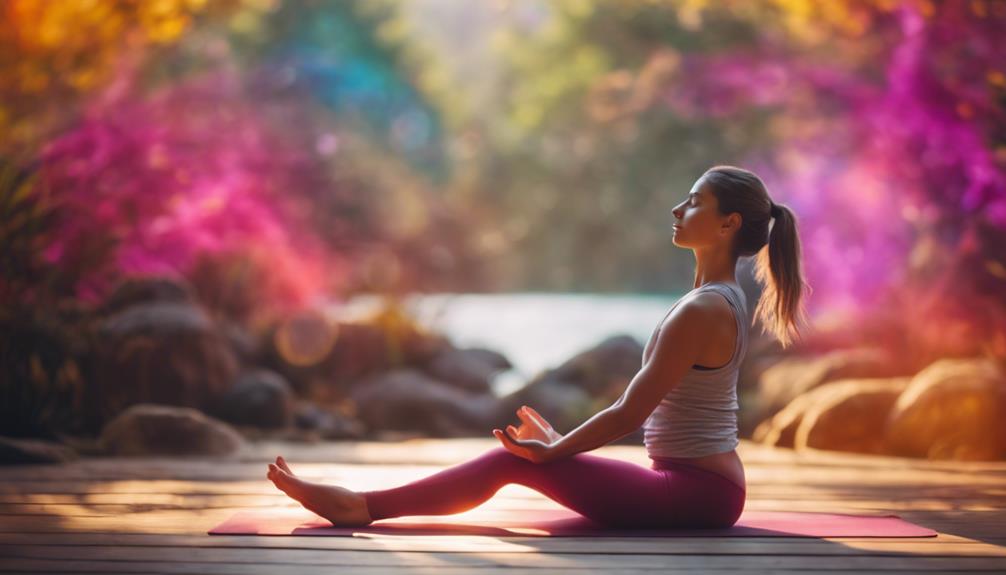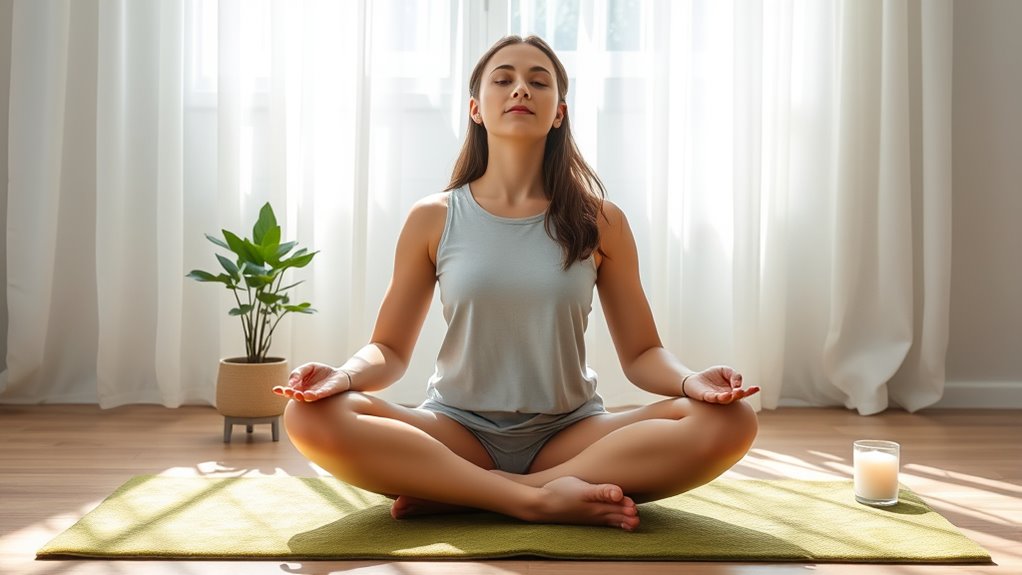

To start mindful breathing, sit comfortably with a relaxed posture. Focus on your natural breath, noticing the sensation of air entering and leaving your nostrils. When your mind wanders, gently bring your attention back to your breath without judgment. Practice daily for a few minutes to build awareness and calm. If you keep practicing, you’ll discover simple techniques to deepen your experience and enjoy lasting benefits.

Turn your wind-down time into listening time
- Thousands of audiobooks, podcasts and originals
- Listen on your phone, tablet or Echo — also offline
- Cancel anytime
Key Takeaways
- Find a comfortable seated position and focus on natural, relaxed breathing to begin practicing mindfulness.
- Gently observe the sensation of breath entering and leaving your nostrils without controlling it.
- When your mind wanders, acknowledge distractions calmly and redirect attention back to your breath.
- Practice daily for a few minutes to build consistency and enhance focus over time.
- Incorporate techniques like deep belly breathing or breath counting to deepen relaxation and mindfulness.
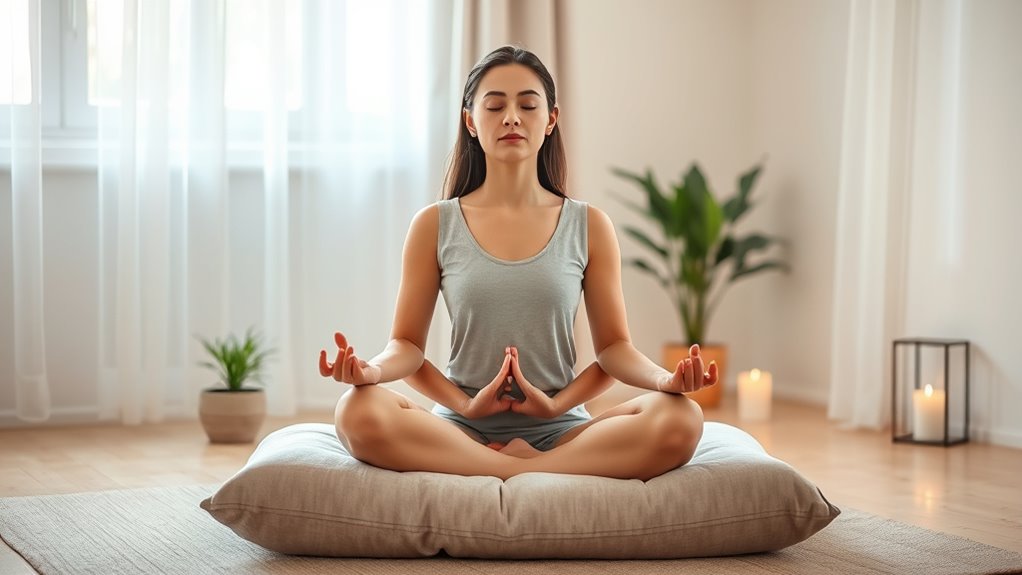
If you’re new to mindfulness, starting with mindful breathing is a simple and effective way to cultivate calm and focus. Breathing techniques are foundational to many meditation practices because they help anchor your attention in the present moment. When you pay close attention to your breath, you create a natural point of focus that can quiet the mind and reduce stress. You don’t need any special equipment or setting—just a few quiet minutes and a willingness to observe your breath as it naturally flows in and out.
Starting with mindful breathing helps calm the mind and anchor your focus in the present moment.
Begin by finding a comfortable seated position. Sit upright but relaxed, with your shoulders loose and your hands resting on your lap or knees. Close your eyes if it feels comfortable, or keep them softly focused downward. Take a slow, deep breath through your nose, feeling the air fill your lungs. Exhale gently through your nose or mouth, noticing the release of tension. As you continue, focus on the sensation of the breath entering and leaving your body. Don’t try to control your breathing; instead, observe it as it naturally occurs. This simple act of awareness is a core breathing technique used in many meditation practices, helping you stay grounded in the present moment.
As you practice, you might notice your mind wandering or thoughts pulling your attention away. When that happens, gently acknowledge the distraction without judgment and bring your focus back to your breath. Consistency is key, so aim to practice daily, even if only for a few minutes. Over time, you’ll develop greater awareness of your breathing patterns and enhance your ability to stay centered amidst daily stresses.
You can also experiment with different breathing techniques to deepen your practice. For example, try deep belly breathing, where you consciously expand your abdomen as you inhale and gently contract it as you exhale. This technique promotes relaxation and helps calm the nervous system. Alternatively, practice counting your breaths—inhale for a count of four, hold for a count of four, exhale for a count of four, and hold again for four. Such structured approaches can deepen your meditation practices and reinforce mindfulness in everyday life. Incorporating mindfulness techniques into your routine can further enhance your mental clarity and emotional stability.
Frequently Asked Questions
Can Mindful Breathing Help With Anxiety?
Yes, mindful breathing can help you manage anxiety by promoting stress reduction and improving emotional regulation. When you focus on your breath, you slow your heart rate and calm your mind, making it easier to handle anxious feelings. Practicing mindful breathing regularly helps you stay present and gain control over your emotions, reducing overall anxiety. It’s a simple yet effective tool you can use anytime you need to find calm.
How Long Should Beginners Practice Daily?
A journey of a thousand miles begins with a single step. As a beginner, aim for about 5 to 10 minutes of mindful breathing daily. Start with shorter sessions and gradually increase your breathing duration as you become more comfortable. Consistency matters more than duration—practice daily to build a calming habit. Even a few minutes each day can make a noticeable difference in your overall well-being.
Is There Equipment Needed for Mindful Breathing?
You don’t need special equipment for mindful breathing. However, breathing accessories like cushions or mats can make sitting more comfortable, especially during longer sessions. Many people find guided meditation helpful to stay focused and deepen their practice. You can use apps or recordings for guidance, and these often require nothing more than a quiet space. Just find a comfortable spot, and you’re ready to start practicing mindful breathing.
Can Mindful Breathing Improve Sleep Quality?
Yes, mindful breathing can improve sleep quality by promoting relaxation techniques that calm your mind and body. When you practice deep, focused breathing before bed, you reduce stress and lower heart rate, making it easier to fall asleep. Regular use of mindful breathing as a sleep improvement tool helps you create a peaceful bedtime routine, enhancing overall rest and reducing nighttime awakenings. Give it a try tonight for more restful sleep.
Are There Any Health Risks Associated With Mindful Breathing?
There are minimal health risks associated with mindful breathing, especially when it’s done correctly. It can substantially reduce stress and improve respiratory health, making it beneficial for most people. However, if you have underlying respiratory issues or anxiety, you should consult a healthcare professional before starting. Avoid forcing deep breaths if you feel discomfort, and always listen to your body to ensure safe practice and ideal stress reduction.
Conclusion
As you continue practicing mindful breathing, remember how even the busiest bees find moments of calm in their hive. Just like them, you can return to your breath whenever life gets overwhelming, grounding yourself amidst chaos. Each mindful inhale and exhale is your personal pause button—your way to reconnect with peace, like a lighthouse guiding you through stormy seas. Keep this practice close; it’s your steady companion on the journey to calm and clarity.
Columbus Day / Indigenous Peoples' Day Picks
long weekend sales
As an affiliate, we earn on qualifying purchases.