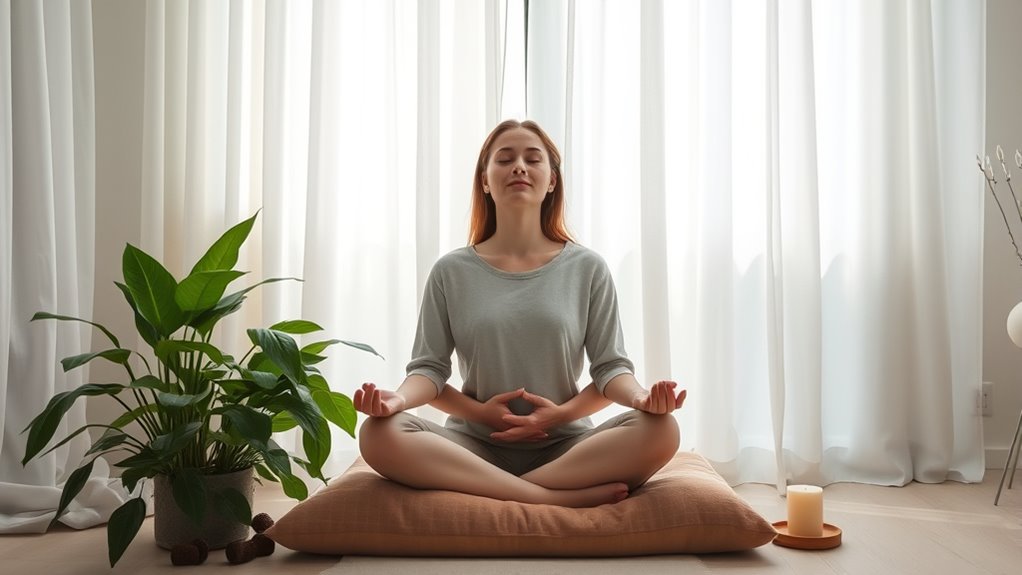

To manage stress through breathwork, focus on slowing your breathing by taking deep inhalations through your nose and gentle exhalations through your mouth. Techniques like diaphragmatic or belly breathing help relax your nervous system and reduce anxiety. Incorporate mindfulness to stay present and monitor your breath, which can calm rapid, shallow patterns caused by stress. Practicing this regularly builds resilience and keeps you centered during tense moments. Keep exploring to discover more simple ways to harness your breath for calmness.
Key Takeaways
- Breathwork techniques, like diaphragmatic breathing and mindful awareness, help activate the relaxation response and reduce stress levels.
- Focusing on slow, deep inhales and exhales can slow heart rate and calm the nervous system during stressful situations.
- Regular practice of breath awareness enhances emotional stability and improves resilience to ongoing stress.
- Incorporating breath exercises into daily routines allows early detection and management of stress symptoms.
- Breathwork is a simple, accessible tool that can be performed anywhere to quickly alleviate anxiety and promote relaxation.

Have you ever noticed how your breath changes when you’re stressed? Maybe your chest feels tight, your breathing becomes shallow, or you start to breathe rapidly. These changes are your body’s natural response to stress, but they can also make you feel even more anxious. That’s where breathwork comes into play. By practicing simple mindfulness techniques and relaxation exercises, you can regain control over your breathing and, in turn, calm your mind and body.
Notice how stress changes your breath and learn to control it to calm your mind.
Mindfulness techniques are an effective way to bring awareness to your breath. When you focus on your breathing, you shift your attention away from stressful thoughts and bring yourself into the present moment. For example, you can try a basic breathing exercise where you inhale deeply through your nose, filling your lungs completely, then exhale slowly through your mouth. As you do this, pay close attention to the sensation of the air entering and leaving your body. This focus helps slow your heart rate and relax your nervous system. Incorporating mindfulness into your daily routine makes it easier to recognize early signs of stress and respond with calming breaths.
Relaxation exercises are another powerful tool for managing stress. Techniques like diaphragmatic breathing, also called belly breathing, teach you to breathe deeply from your diaphragm rather than shallow chest breaths. To practice, place one hand on your chest and the other on your belly. When you breathe in, your belly should rise as your lungs fill with air. When you breathe out, your belly should fall. This method encourages full oxygen exchange and signals your body to relax. Over time, these exercises help break the cycle of rapid, shallow breathing that often accompanies stress, grounding you in a calmer state. Additionally, understanding how respiratory patterns influence your nervous system can deepen your ability to manage stress effectively.
Both mindfulness techniques and relaxation exercises are easy to learn and can be done anywhere—at your desk, in your car, or before bed. The key is consistency. Even a few minutes of focused breathing each day can make a noticeable difference in your stress levels. As you become more familiar with these practices, you’ll notice that your breath becomes more natural and steady during tense moments. This control over your breathing not only reduces immediate feelings of panic but also strengthens your resilience against future stress. Through regular practice, breathwork can become a crucial part of your stress management toolkit, helping you stay centered and composed no matter what challenges come your way.

108 Mindfulness Cards for Coping Skills, Mind Brain Emotional Insight Cards
- Dual-Action Emotional Wellness System: Complete cycle of care with two decks
- Evidence-Based Tools: 108 cards rooted in CBT, DBT, and Somatic Therapy
- Structured, Practical Cards: Each card offers Action, Insight, and Practice
As an affiliate, we earn on qualifying purchases.
Frequently Asked Questions
Can Breathwork Replace Traditional Therapy for Stress?
Breathwork can’t fully replace traditional therapy, but its effectiveness in reducing stress is significant. You may find breathwork helps you manage daily anxiety and calm your mind quickly. However, traditional therapy offers deeper emotional insights and long-term support that breathwork alone doesn’t provide. Combining both approaches can maximize your stress management, giving you immediate relief through breathwork while addressing root causes with therapy.
Is Breathwork Suitable for Children or Pregnant Women?
Think of breathwork as a gentle breeze—suitable for many, but not everyone. For children, guarantee safety by choosing age-appropriate techniques and consulting a healthcare professional. Pregnant women should consider pregnancy considerations and discuss with their doctor before starting any breathwork practice. While it can promote calmness, always prioritize child safety and pregnancy health, adapting exercises to fit individual needs and circumstances.
How Long Does It Take to See Stress Reduction Results?
You can often notice stress reduction results from breathwork within a few sessions, but it varies based on your consistency and practice quality. Timing expectations differ; some experience immediate calming effects, while others see gradual progress. Pay attention to progress indicators like reduced anxiety, better focus, and improved mood. Regular practice enhances benefits, so stay consistent and patient to maximize stress relief over time.
Are There Any Risks or Side Effects of Breathwork?
Imagine breathing deeply like a gentle wave washing over you—that’s the essence of breathwork. While generally safe, be aware of potential adverse effects like dizziness or hyperventilation. If you have contraindications such as cardiovascular issues or severe anxiety, consult a healthcare professional first. Always practice in a safe environment, listen to your body, and stop if you feel uncomfortable, ensuring your journey remains a calming, beneficial experience.
Can Breathwork Be Combined With Other Stress Management Techniques?
Yes, you can combine breathwork with mindfulness integration and physical activity for enhanced stress relief. Incorporating mindful breathing during meditation or yoga deepens relaxation, while pairing breathwork with physical activity like walking or stretching boosts endorphins. These techniques complement each other, helping you manage stress more effectively. Just make certain you listen to your body and avoid overexertion, creating a balanced approach tailored to your needs.

Allura & Arcia 52 Stress Less & Self Care Cards - Mindfulness & Meditation Exercises - Anxiety Relief & Relaxation
- Number of Exercises: 52 mindfulness and relaxation exercises
- Exercise Types: Meditation, anxiety relief, stress management
- Usage Locations: Work, school, commute, yoga, bedtime
As an affiliate, we earn on qualifying purchases.
Conclusion
By embracing breathwork, you can effectively ease emotional exhaustion and elevate your energy. Consistent practice cultivates calmness and clarity, creating a core of control amid chaos. Remember, with mindful mastery of your breath, you wield the wonderful power to ward off worry and worrywarts alike. So, take steady, soothing sighs — and step confidently into a calmer, more composed you. Your breath is your balance, so breathe boldly and beautifully.