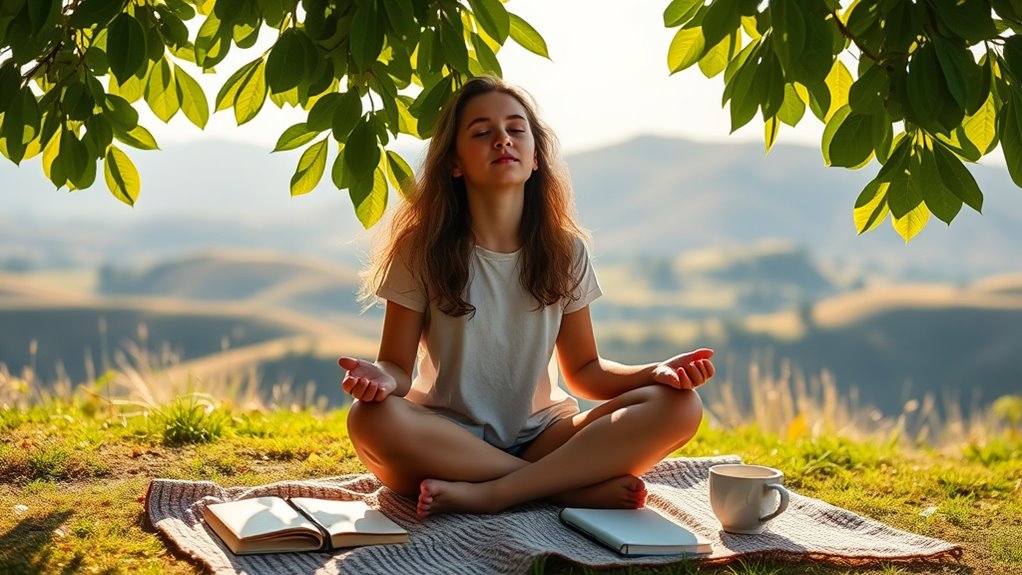

Practicing mindfulness gives you simple emotional tools to handle stress and build resilience. It helps you become more aware of your feelings, allowing you to accept emotions without judgment. Techniques like deep breathing and observing your thoughts can calm your mind and reduce overwhelm. Regular practice strengthens your ability to stay balanced during tough times. Keep exploring these strategies, and you’ll find more ways to grow emotionally stronger and navigate life’s challenges with confidence.
Key Takeaways
- Mindfulness helps teenagers recognize and accept their emotions without judgment, fostering emotional growth.
- Regular mindfulness practice enhances self-awareness, enabling better stress management and decision-making.
- Techniques like deep breathing and meditation reduce overwhelm and promote calmness during challenging situations.
- Cultivating mindfulness encourages self-compassion, reducing self-criticism and supporting mental well-being.
- Incorporating simple mindfulness activities into daily routines builds emotional resilience and long-term growth.

Have you ever felt overwhelmed by school, friends, or future worries? It’s a common experience, especially when life seems to pile up faster than you can handle. When stress builds up, it’s easy to feel stuck or anxious, but learning how to manage those feelings is essential for your growth. One effective way to do this is by practicing stress management techniques, which help you stay calm and focused during tough times. Simple strategies like deep breathing or taking short breaks can make a big difference in calming your mind and body. Additionally, engaging in self-awareness exercises can help you better understand your emotions and reactions. When you become more aware of how you feel, you can respond more thoughtfully instead of reacting impulsively. For instance, pausing for a moment before reacting to a stressful situation allows you to recognize your feelings and choose a healthier response.
Self-awareness exercises might include journaling your thoughts, noticing your physical sensations when you feel stressed, or simply paying close attention to your breathing. These activities help you tune into your inner world, so you’re not just reacting on autopilot. Instead, you become more conscious of what triggers your stress and how you typically respond. As you develop this awareness, it becomes easier to spot early signs of anxiety or frustration and address them before they escalate. Over time, these practices strengthen your emotional resilience, making it easier to handle the ups and downs of adolescence. When you’re more in tune with your feelings, you also gain insight into what truly matters to you, which can guide your decisions and interactions with others. Developing skills like self-awareness can also support your ability to improve your overall mental health and well-being.
Practicing mindfulness through self-awareness exercises also encourages you to accept your emotions without judgment. Recognizing that it’s okay to feel overwhelmed sometimes helps you be gentler with yourself. Instead of criticizing yourself for feeling anxious or stressed, you learn to observe those feelings with curiosity and compassion. This shift in perspective can reduce the intensity of negative emotions and promote a sense of calm. Incorporating these techniques into your daily routine doesn’t require a lot of time—just a few minutes here and there to check in with yourself. Over time, you’ll notice improvements in your ability to manage stress and navigate challenges more confidently. Remember, developing self-awareness and stress management skills is a journey, and each small step brings you closer to emotional strength and clarity.
Frequently Asked Questions
How Can Teens Stay Consistent With Mindfulness Practices?
To stay consistent with mindfulness practices, you should explore different technique variations to keep things interesting. Incorporate short, daily sessions into your routine to build habit formation. Set reminders or create a designated space for mindfulness, making it easier to stick with it. Remember, consistency improves over time, so be patient with yourself and adjust your approach as needed to sustain your practice.
What Are Common Challenges Teens Face When Practicing Mindfulness?
You might find peer pressure and impulsivity throwing wrenches in your mindfulness practice. Suddenly, everyone’s telling you to ditch meditation for social media or snacks, making it hard to stay focused. Impulsivity tempts you to skip sessions or snap at yourself. It’s tough to stay calm when everyone’s urging you to join the chaos, but remember, even small breaths can help you resist the urge to act on impulse.
Can Mindfulness Help With Teenage Anxiety or Depression?
Yes, mindfulness can substantially help with teen mental health by reducing anxiety and depression. When you practice mindfulness, you learn to stay present and manage your emotions better, which builds emotional resilience. This skill helps you break free from negative thought patterns and cope more effectively with stress. Over time, mindfulness strengthens your mental health, making you more resilient and better equipped to handle the challenges that come with adolescence.
How Do I Introduce Mindfulness to Reluctant Teenagers?
You can introduce mindfulness to reluctant teenagers by making it fun and relatable. Start with simple mindfulness exercises like breathing or body scans, and encourage peer support to create a sense of community. Share stories of others who found it helpful, and let them choose activities they enjoy. Keep it casual and non-judgmental, so they feel comfortable exploring mindfulness at their own pace.
Are There Age-Specific Mindfulness Techniques for Teenagers?
Think of adolescent meditation as planting seeds of teen self-awareness. Age-specific mindfulness techniques include simple breathing exercises, guided imagery, and body scans tailored for teens’ developmental needs. These practices help teenagers connect with their emotions and foster self-understanding. By incorporating relatable imagery and short, engaging sessions, you make mindfulness accessible and meaningful, encouraging teens to embrace these tools for growth and emotional resilience.
Conclusion
Practicing mindfulness can substantially boost your emotional resilience, helping you navigate challenges with greater ease. Did you know that teens who meditate regularly report a 30% decrease in stress levels? By incorporating simple mindfulness techniques into your daily routine, you’ll develop valuable tools for growth and self-awareness. Remember, small, consistent steps can lead to lasting positive change. Start today, and watch how your emotional well-being transforms, empowering you to face life’s ups and downs with confidence.