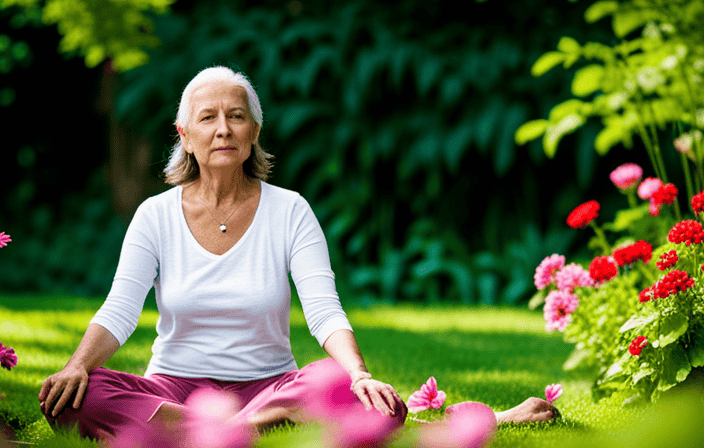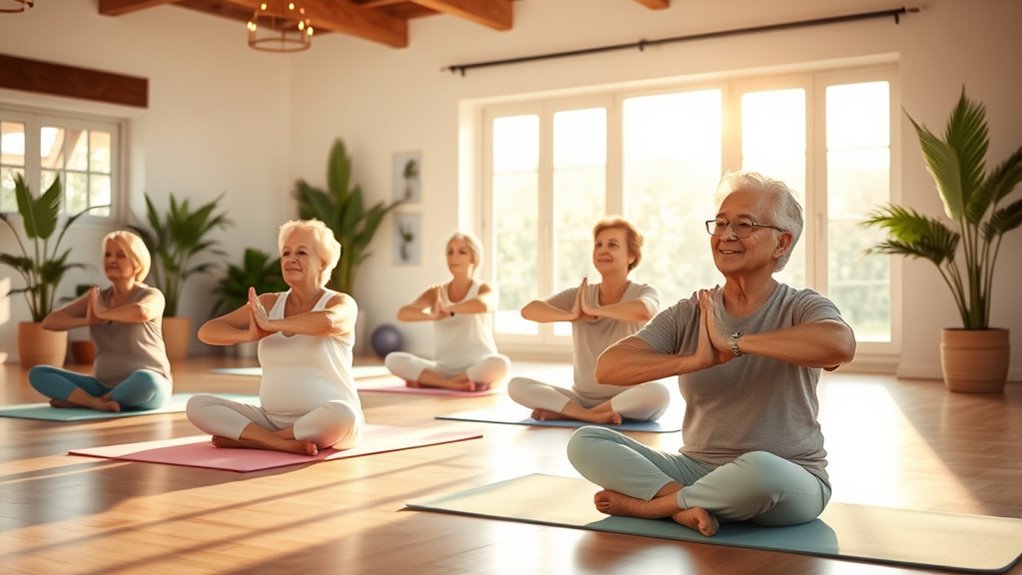

Gentle yoga for seniors offers a safe way to improve mobility, balance, and flexibility without strain. You’ll focus on slow, controlled movements and deep breathing, helping strengthen your core and muscles while enhancing stability. This practice can boost confidence in daily activities and reduce fall risks. With minimal props and adaptable poses, you can do it comfortably at your own pace. Keep exploring to discover how these simple moves can support your ongoing health and independence.
Key Takeaways
- Gentle yoga improves flexibility, joint mobility, and reduces stiffness, making daily tasks easier for seniors.
- Focused balance poses help prevent falls and enhance stability in everyday activities.
- Modifiable sequences accommodate varying mobility levels, ensuring safe practice for all seniors.
- Mindful movements and deep breathing promote body awareness and reduce stress.
- Consistent practice boosts confidence, independence, and overall well-being in aging adults.

Have you ever wondered how yoga can benefit seniors? It’s a gentle yet powerful way to support your health and well-being, especially as you age. One of the key advantages is how it can help improve your balance and enhance your flexibility. As you grow older, maintaining good balance becomes essential to prevent falls and injuries. Yoga offers simple, effective movements that strengthen your core muscles and improve stability. By practicing poses that focus on standing and shifting weight, you develop better coordination and confidence in your everyday movements. These exercises encourage you to engage muscles that might otherwise weaken over time, making it easier to walk confidently and perform daily activities without fear of losing your footing.
Flexibility enhancement is another crucial benefit of yoga for seniors. As you age, your joints can become stiff, and muscles may lose their elasticity, making movement more difficult. Yoga gently stretches your muscles and joints, helping to restore and maintain their natural range of motion. Regular practice can loosen tight muscles and tendons, reducing discomfort and making tasks like reaching for objects or bending easier. You don’t need to push yourself hard; gentle, mindful movements are enough to see improvements over time. Plus, increased flexibility can markedly improve your posture, reduce aches, and support overall mobility, allowing you to stay active and independent longer.
Incorporating yoga into your routine can be simple and adaptable. You don’t need fancy equipment or a gym membership—just a comfortable space and maybe a few props like a chair or blocks. Many poses are modified to suit your current level of mobility, making it accessible regardless of your starting point. Focus on slow, controlled movements, breathing deeply, and listening to your body. As you become more consistent, you’ll notice a gradual increase in your ability to stretch and balance, which can boost your confidence and reduce the risk of falls. Over time, these improvements contribute to a better quality of life, allowing you to enjoy activities you love with greater ease and less discomfort.
Ultimately, yoga for seniors is about cultivating a sense of strength and flexibility without strain. It’s a mindful practice that encourages you to connect with your body, celebrate small victories, and progress at your own pace. Regular practice can also improve your color accuracy and contrast ratios, leading to a more comfortable and enjoyable experience. By committing to gentle, regular practice, you’re investing in your health, stability, and independence for years to come.

Gaiam Yoga Block – Supportive Latex-Free Eva Foam – Soft Non-Slip Surface with Beveled Edges for Yoga, Pilates, Meditation – Yoga Accessories for Stability, Balance, Deepen Stretches
Yoga Blocks for Stability Plus Balance – The Gaiam Essentials yoga blocks help provide the stability and balance…
As an affiliate, we earn on qualifying purchases.
As an affiliate, we earn on qualifying purchases.
Frequently Asked Questions
Can Seniors Practice Yoga if They Have Limited Mobility?
Yes, seniors with limited mobility can practice yoga safely. You should focus on adaptive poses and chair modifications to suit your needs. These modifications help you stay comfortable and avoid strain. By working with a qualified instructor, you can learn how to adapt poses, ensuring you get the benefits of yoga while protecting your joints and muscles. Always listen to your body and take breaks when needed.
What Equipment Is Needed for Senior-Friendly Yoga Sessions?
You’ll need simple yoga props and adaptive equipment to make senior-friendly sessions comfortable and effective. Think sturdy blocks, straps, and blankets, which support your movements without strain. These tools act as your allies, turning challenging poses into accessible stretches. With just a few items, you’ll find that yoga becomes a safe, enjoyable practice, helping you stay mobile and relaxed while respecting your body’s limits.
How Often Should Seniors Do Yoga for Optimal Benefits?
You should aim for 2 to 3 gentle yoga sessions per week to see best benefits. Following the frequency guidelines helps improve flexibility, strength, and balance without overexerting yourself. Consistency is key, so schedule your sessions at regular times that fit your routine. Listen to your body, and if you feel tired, take a rest day. This ideal scheduling supports gradual progress and keeps yoga enjoyable and safe.
Are There Any Age Restrictions for Beginner Yoga Classes?
Like the timeless wisdom of the ages, beginner yoga classes often welcome all ages, but age restrictions vary. For seniors, these classes typically have no strict age limits, focusing instead on gentle movements suited to individual needs. As long as you’re in good health, you can join beginner classes designed for seniors, ensuring a safe, supportive environment to improve mobility and flexibility. Always check with the instructor for specific age guidelines.
How Can Seniors Ensure Safe Practice at Home?
You can guarantee safe practice at home by taking safety precautions seriously. Clear your home environment of obstacles, use a sturdy chair or wall for support, and wear comfortable clothing. Always warm up before starting, listen to your body, and avoid pushing beyond your limits. Consider consulting a healthcare professional or a certified yoga instructor for personalized guidance, making sure your space is safe to prevent injuries and promote gentle mobility.

Yoga for seniors: Gentle chair and mat practices for joint relief, wellness and strength: A complete guide to enhancing mobility and flexibility through … yoga practices (Senior yoga therapy series)
As an affiliate, we earn on qualifying purchases.
As an affiliate, we earn on qualifying purchases.
Conclusion
Practicing yoga can markedly improve your flexibility and balance as you age. Did you know that seniors who engage in regular gentle yoga experience a 40% reduction in fall risk? By embracing this accessible activity, you’re not only enhancing your mobility but also boosting your overall well-being. So, start today and enjoy the many benefits yoga offers—making each day safer, more active, and more enjoyable.

Chair Yoga for Seniors Over 60 Book & Chart – 30-Day Challenge, Gentle Seated Yoga Guide, Chair Yoga for Weight Loss & Flexibility, Senior Chair Exercises for Women & Men, 8.5×11" Book on Chair Yoga
Gentle Chair Yoga for Seniors Over 60 – Designed for seniors and elderly adults, this chair yoga book…
As an affiliate, we earn on qualifying purchases.
As an affiliate, we earn on qualifying purchases.

Amazon Basics Wood Wobble Balance Trainer Board, Slip Resistant, for Exercise and Core Strength, 265 lb Weight Capacity, Black
Black balance board can help improve core strength, coordination, posture, and balance
As an affiliate, we earn on qualifying purchases.
As an affiliate, we earn on qualifying purchases.