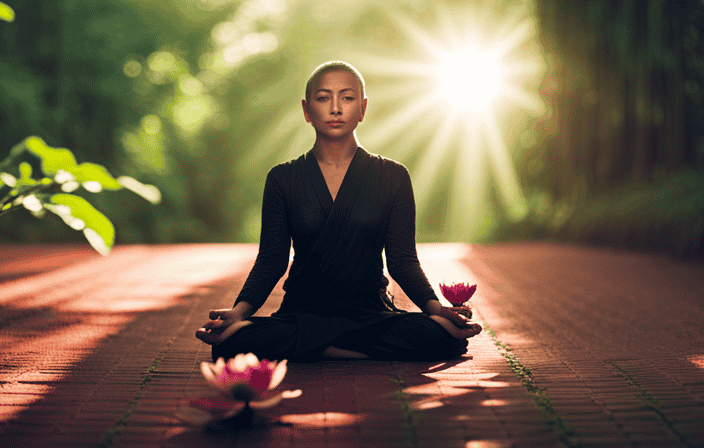
If you don’t feel calm, start with simple breathing exercises to anchor yourself in the present. Focus on slow, deep breaths—inhale through your nose and exhale through your mouth—to activate your body’s relaxation response. Don’t worry about clearing your mind completely; visualization techniques like imagining peaceful environments can also help. Developing patience and a routine will gradually improve your ability to find calm, even on difficult days. Keep exploring for more tips to support your practice.
Prime for Young Adults — start your free trial
Fast free delivery, streaming and member deals for eligible 18–24 year olds.
As an affiliate, we earn on qualifying purchases.
Key Takeaways
- Begin with short, guided meditations or breathing exercises to ease into calmness gradually.
- Focus on anchoring your attention with slow, deep breaths rather than clearing your mind.
- Use visual imagery like peaceful environments to divert attention from stressful thoughts.
- Practice mindfulness consistently to build acceptance of your current state without judgment.
- Remember that patience and regular practice lead to greater calm over time, not immediate perfection.
Starting to meditate can feel intimidating when you’re not feeling calm, but it’s actually a common experience. Many beginners worry that they need to be perfectly relaxed before they start, but the truth is, meditation is about learning to find focus and calm amid the chaos. When your mind is racing or your body feels tense, simple techniques like breathing exercises can help anchor you in the present moment. Focus on slow, deep breaths, inhaling through your nose and exhaling through your mouth. This activates your parasympathetic nervous system, helping to reduce stress and bring your attention inward. Even just a few minutes of conscious breathing can create a noticeable shift in your mood and clarity.
Guided imagery is another powerful tool, especially when you’re struggling to settle your mind. As you sit quietly, listen to a guided meditation that takes you on a calming visual journey—perhaps imagining yourself walking through a peaceful forest or lying on a warm beach. These vivid mental images divert your attention from your worries and help you relax more deeply. Guided imagery is accessible and effective because it doesn’t require you to clear your mind completely; instead, it invites your imagination to lead you into a state of serenity. This can be especially helpful if your thoughts feel overwhelming or if you find it hard to sit still. Incorporating mindfulness techniques can enhance your ability to stay present and centered, even when your mood isn’t perfect. Developing a regular meditation routine can also help train your mind to stay grounded over time. Over time, these small practices will build your capacity to stay centered, regardless of how you initially feel. Remember, meditation isn’t about achieving perfect tranquility but about cultivating awareness and acceptance of your current state. With patience and practice, you’ll find that even on days when calm feels elusive, you can still access a sense of peace and clarity through these simple, accessible techniques. Recognizing the importance of mental habits can also support your progress in building a consistent meditation practice.
As an affiliate, we earn on qualifying purchases.
Frequently Asked Questions
Can I Meditate if I Have a Busy Mind?
Yes, you can meditate even if your mind feels busy. Focus on mindfulness techniques like observing your thoughts without judgment and gently redirecting your attention. Incorporate breathing exercises to anchor yourself, taking slow, deep breaths to calm your mind. Remember, meditation isn’t about clearing your mind completely but about practicing awareness. With patience, these methods will help you develop a sense of calm despite a busy mind.
How Long Should I Meditate When I’M Anxious?
When you’re anxious, start with just 5 to 10 minutes of meditation. Focus on mindful breathing, taking slow, deep breaths to calm your nerves. You can also try guided visualization to help your mind relax and shift focus away from worries. As you get more comfortable, gradually extend your meditation time. Consistency is key, so even short sessions can build a sense of calm over time.
Is It Okay to Meditate Lying Down?
Lying down to meditate is perfectly okay and can sometimes be the most relaxing way to start. You might find it easier to focus on breathing techniques and let your mind settle. Just make sure to do posture adjustments so you don’t drift into sleep; keep your spine aligned and shoulders relaxed. This way, you harness the calming power of meditation without feeling overwhelmed—like standing at the edge of a peaceful ocean.
Should I Meditate if I Feel Physically Uncomfortable?
If you feel physically uncomfortable, it’s okay to pause your meditation and adjust your position. Physical discomfort can distract you and make meditation harder. Use meditation strategies like lying down or sitting comfortably, ensuring your body is relaxed. Focus on gentle stretches beforehand or switch to guided meditations that focus on body awareness. Listening to your body helps you stay present and makes meditation more accessible and enjoyable.
How Do I Stay Motivated to Meditate Regularly?
To stay motivated to meditate regularly, incorporate mindfulness techniques into your daily routine and use meditation accessories like cushions or timers to make sessions more comfortable and consistent. Set small, achievable goals to keep yourself inspired and track your progress. Remind yourself of the benefits, such as reduced stress and improved focus, and create a dedicated space that encourages regular practice. Consistency builds habit and motivation over time.
As an affiliate, we earn on qualifying purchases.
Conclusion
Remember, meditation is like tending to a garden. Even when your mind feels wild and unruly, keep planting seeds of calm and patience. Over time, those tiny sprouts will grow into a peaceful oasis inside you. Don’t force the blooms; simply nurture each moment with gentle intention. With consistent care, your inner landscape will transform from chaos into a serene sanctuary—your personal sanctuary where calm blossoms, no matter how stormy the skies outside.
As an affiliate, we earn on qualifying purchases.
As an affiliate, we earn on qualifying purchases.
Fall yard work Picks
leaf blowers
As an affiliate, we earn on qualifying purchases.