

This checklist is for adults and caregivers exploring practical tools that may support emotional resilience. Choose items based on the routines, preferences, and needs of the person who will use them, and consider professional guidance when it would help. Personal fit matters more than collecting every kind of tool.

Turn your wind-down time into listening time
- Thousands of audiobooks, podcasts and originals
- Listen on your phone, tablet or Echo — also offline
- Cancel anytime
The sections are organized by product type, from workbooks and card decks to sensory items and lighting. Each one explains why that slot may be useful, what to check before choosing, and who the listed pick may suit. The journal section offers selection advice because no specific product was provided. Start with one category that matches a current need.
Use the look-for points as a quick review list, then check the product’s full listing for details that matter to you, such as dimensions, materials, instructions, and compatibility. Product names alone do not confirm features or suitability. If a tool feels uncomfortable or unhelpful, you can set it aside and try a different approach. Let comfort guide your choices.
Emotion Regulation Workbooks
A workbook can give someone a structured place to explore emotion regulation strategies and practice reflecting on situations. The listed pick is titled “ADHD Emotional Regulation Workbook for Adults: CBT & DBT Skills to Man,” which signals an adult and ADHD focus in its name. Read the listing carefully to see what the workbook actually includes, how it is organized, and whether its language and exercises feel appropriate. Check the scope before choosing it.
A common mistake is assuming that a title guarantees a particular method, level of clinical support, or fit for every reader. Check sample pages if available, the format, and whether activities can be completed at a comfortable pace. Consider whether the person prefers prompts, open-ended writing, or a mix, and whether the workbook can be used independently or alongside a clinician. If the title is truncated in the listing, confirm the complete title and details. Match the format to the reader’s preferences.
For a useful choice, look for clear instructions, readable layouts, and exercises that feel manageable rather than overwhelming. Treat a workbook as one possible aid, not a substitute for individualized mental health care. Use it at your pace and adapt the routine to what feels workable.
What to look for:
- Confirm the complete product title and intended audience
- Review sample pages or exercise descriptions
- Check format, readability, and writing space
- Look for clear instructions and manageable activities
- Consider whether it fits solo or clinician-supported use
ADHD Emotional Regulation Workbook for Adults: CBT & DBT Skills to Manage Overwh

This workbook provides adults with ADHD practical CBT and DBT techniques to manage emotional overwhelm, navigate rejection sensitivity, and build resilience. It offers exercises and strategies tailored to improve emotional regulation and mental well-being.
Pros:
- Provides practical CBT and DBT techniques for emotional regulation
- Tailored specifically for adults with ADHD
- Includes exercises to build resilience
Cons:
- No detailed description or reviews available
- Potentially limited to those familiar with CBT and DBT
Best for: Adults looking for guided reflection and skills practice
Not ideal for: Readers who prefer conversation or nonwritten activities
Bottom line: Review the exercises and format to make sure this workbook suits the reader.
Therapy Card Decks
A card deck can offer short prompts for conversations, reflection, or naming emotions, depending on its contents. The listed pick is “FeelWise Emotional Intelligence Card Deck with 156 Emotion Cards and 3.” The name mentions 156 emotion cards, but the remaining title is cut off, so confirm the complete listing and what is included before deciding. Verify the full contents rather than inferring them from the partial title.
One common mistake is choosing a deck because its theme sounds right without checking the wording, intended users, or directions. Look for sample cards or a contents description, and consider whether prompts feel accessible and respectful to the person using them. Think about whether the deck will be used alone, with a partner, in a group, or with a professional; different settings call for different levels of privacy and structure. Check the prompt style for comfort and relevance.
Also consider practical details such as card size, storage, and whether the instructions explain ways to use the deck. A card deck should invite engagement, not pressure someone to disclose more than they want. Keep participation optional and let the user skip prompts. Choice and pacing help make the activity more comfortable.
What to look for:
- Confirm the complete title and listed contents
- Review sample prompts for tone and accessibility
- Check intended audience and usage directions
- Consider whether it suits solo or group use
- Look for practical storage and readable card details
FeelWise Emotional Intelligence Card Deck with 156 Emotion Cards and 37 Mindfuln
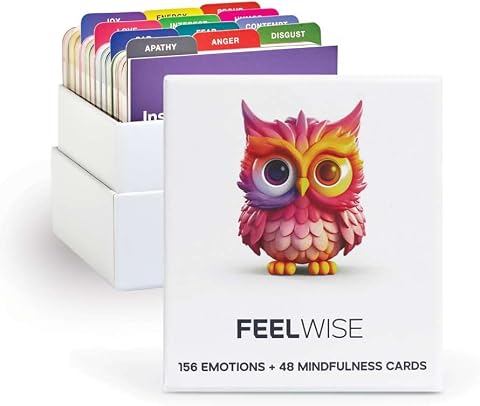
The FeelWise card deck helps users identify, understand, and channel emotions through 156 emotion cards. It also includes 37 micro-mindfulness technique cards with practical exercises designed to support calm, focus, and resilience for individuals, families, or professionals.
Pros:
- Includes a large variety of emotion cards
- Provides practical mindfulness techniques
- Designed for individual, family, and professional use
Cons:
- The recommended age of 5 months and up may not reflect the intended use of the activities
Best for: People who enjoy short guided prompts
Not ideal for: Anyone uncomfortable with card-based discussion
Bottom line: Check the complete listing and sample prompts before choosing this deck.
Sensory Fidget Rings
Fidget items may provide a small tactile activity during moments when keeping the hands occupied feels helpful. The listed pick is “KLT Textured Spinner Rings, 72 Pack,” which names textured spinner rings and a pack quantity. The title alone does not establish sizing, materials, or how the rings feel in use, so verify those details on the product page. Comfort comes first for something worn on the hands.
A frequent buying mistake is overlooking fit or assuming every ring in a multipack will work for every wearer. Check sizing information, whether the rings are adjustable, and the material details. If the product is intended to be shared, consider how it will be stored and cleaned; follow the manufacturer’s care guidance. Also look for descriptions or images that help set expectations about texture and movement. Check fit and care before use.
Consider where the rings will be used and whether their movement or feel suits the wearer’s preferences. A wearable fidget should be easy to remove and comfortable during ordinary activities. If sensory preferences are uncertain, start with a single comfortable option when possible rather than relying on quantity alone. Let the wearer decide which textures feel right.
What to look for:
- Confirm ring sizing and whether sizes vary
- Review material and care details
- Check images or descriptions of texture and movement
- Consider storage and cleaning if shared
- Make sure the wearer can remove the rings easily
KLT Textured Spinner Rings, 72 Pack

This set includes 72 lightweight, quiet spinner rings in six textures and neutral colors for classrooms, offices, travel, or home use. The rings are made with plastic inner rings and food-grade TPR outer rings, and can be disassembled and reassembled.
Pros:
- Quiet spinning for noise-sensitive settings
- Bulk quantity suits classrooms, offices, and shared use
- Lightweight and portable
- Six textures provide sensory variety
Cons:
- Small parts may require care around young children
- The product information does not specify ring sizing
Best for: People who like tactile hand-based fidgets
Not ideal for: Wearers sensitive to rings or repeated textures
Bottom line: Confirm fit, feel, and care instructions before relying on a multipack.
Weighted Lap Pads
A lap pad may be considered when someone prefers a defined item resting across the lap while seated. The pick is named “Fun and Function Sensory Vibrating Lap Pad – 4.5 lb Weighted Vibrating.” Its name includes a stated weight and vibration, but check the full listing for how those features work and the intended use. Review the product details before deciding whether it fits a particular routine.
Do not assume that a weighted item is comfortable or appropriate for every person. Consider the user’s size, ability to move or remove the pad independently, and comfort with both weight and vibration. Check the product dimensions, materials, power or operating details, and any manufacturer guidance about use. A common mistake is focusing on the weight alone while overlooking the pad’s size, controls, or sensory feel. Assess the whole experience, not just one feature.
Think about where the pad will be used and whether it can be positioned securely without interfering with movement. If the user has health or mobility concerns, ask a qualified professional whether this kind of item is suitable. Stop using it if it causes discomfort. Comfort and safe handling should guide the choice.
What to look for:
- Confirm dimensions and materials
- Review how vibration is operated and powered
- Check manufacturer guidance for use and care
- Consider the user’s comfort with weight and vibration
- Ensure the user can reposition or remove it as needed
Fun and Function Sensory Vibrating Lap Pad – 4.5 lb Weighted Vibrating Pillow fo

This weighted vibrating lap pad provides calming sensory input through gentle bumps and soothing vibrations. It is designed for use across the lap, back, or stomach to promote focus and calmness, making it ideal for sensory seekers and individuals with sensory needs.
Pros:
- Provides calming tactile and vibrational sensory input
- Versatile use for calming, focus, and travel
- Easy to activate with simple controls
Cons:
- Batteries not included, may require additional purchase
- Designed for individuals over 45 lbs, not suitable for very young children
- Limited to specific size and weight, may not suit all preferences
Best for: People who prefer a weighted item while seated
Not ideal for: Anyone uncomfortable with weight or vibration
Bottom line: Check fit, operation, and suitability for the intended user before choosing.
Self Compassion Journals
A self-compassion journal can offer a private place to pause, reflect, and write in a way that feels supportive. No specific product was provided for this slot, so choose based on the person’s preferences rather than a named pick. Decide whether a guided journal with prompts or a blank notebook feels more inviting, and whether writing by hand is comfortable. Choose a welcoming format that feels easy to return to.
A common mistake is selecting a journal with an intensive schedule or prompts that feel too personal or demanding. Review sample pages when available, paying attention to tone, length, and how much writing each entry expects. Consider page size, binding, paper feel, and whether the journal can be carried or kept private. For someone who finds writing difficult, short check-ins, drawing space, or a digital alternative may feel more accessible. Keep the routine flexible rather than treating it as homework.
Use the journal in a way that respects the writer’s pace: brief notes count, skipped days are fine, and prompts can be changed or ignored. If journaling brings up distress, pause and consider support from a trusted person or mental health professional. Make room for choice in how the practice works.
What to look for:
- Choose guided prompts or blank pages to suit the writer
- Review sample prompts and their tone
- Check page size, binding, and paper feel
- Consider privacy and where the journal will be stored
- Look for a flexible format that supports brief entries
Calming Light Projectors
Lighting products are sometimes considered as part of a calming space, but the listed pick needs careful verification. Its title is “Calming Dog Bed Sofa, Light Gray, Long Plush, Raised Bolster with Upgr,” which describes a dog bed rather than a light projector. The title does not identify a projector, so check the listing to confirm whether it is the intended product for this section. Resolve the category mismatch before making a choice.
A common mistake is relying on a section heading or partial title instead of confirming the actual item. Review the product page for its purpose, features, dimensions, materials, and intended user. If it is a dog bed, consider whether that is what you meant to include; if a light projector was intended, verify the correct product name and its operating details, such as controls and power needs. Confirm what the item is before comparing features.
For a projector, consider placement, brightness options, and whether the light pattern suits the intended room and user. For any lighting device, check the instructions and compatibility details on the full listing. Since the supplied pick appears to be a dog bed, it cannot be assessed as a light projector from its name alone. Use the verified listing to guide the final selection.
What to look for:
- Confirm the product is actually a light projector
- Verify the complete title and product purpose
- For a projector, check placement and brightness controls
- Review power and operating instructions
- Check the listing for compatibility and intended use
Calming Dog Bed Sofa, Light Gray, Long Plush, Raised Bolster with Upgraded Headr

The Comfort Bedz Calming Dog Bed Sofa offers a plush, orthopedic surface that soothes dogs and eases anxiety. Its raised bolster and upgraded headrest provide extra neck support, while the non‑slip bottom keeps the bed steady on any floor.
Pros:
- Ultra‑soft long plush fabric provides a cozy resting surface.
- Raised bolster and upgraded headrest give extra neck and joint support.
- Non‑slip bottom keeps the bed stable on hardwood, tile, or carpet.
- Eco‑friendly construction with 50% recycled post‑consumer polyester.
Cons:
- Only available in light gray, limiting color choices.
- May be too firm for dogs that prefer a softer cushion.
Best for: Shoppers confirming the intended lighting item
Not ideal for: Anyone seeking a projector from this listed title
Bottom line: The supplied title describes a dog bed, so verify the intended product before selecting a projector.
Use a budget-first buying order by prioritizing the one tool that addresses the most immediate need, then compare the full listing and details before adding another item. Start with low-commitment choices that fit existing routines, and avoid buying several products at once when you are unsure what the person will use. Prioritize the clearest need and let real-world comfort guide the next step.
Emotional resilience develops through individual preferences and supports, and no checklist can determine what will work for everyone. Try tools at a comfortable pace, adjust when needed, and seek professional input when it would be useful. Small, thoughtful choices can make it easier to build a routine that feels personal and sustainable. Keep the approach flexible and kind.