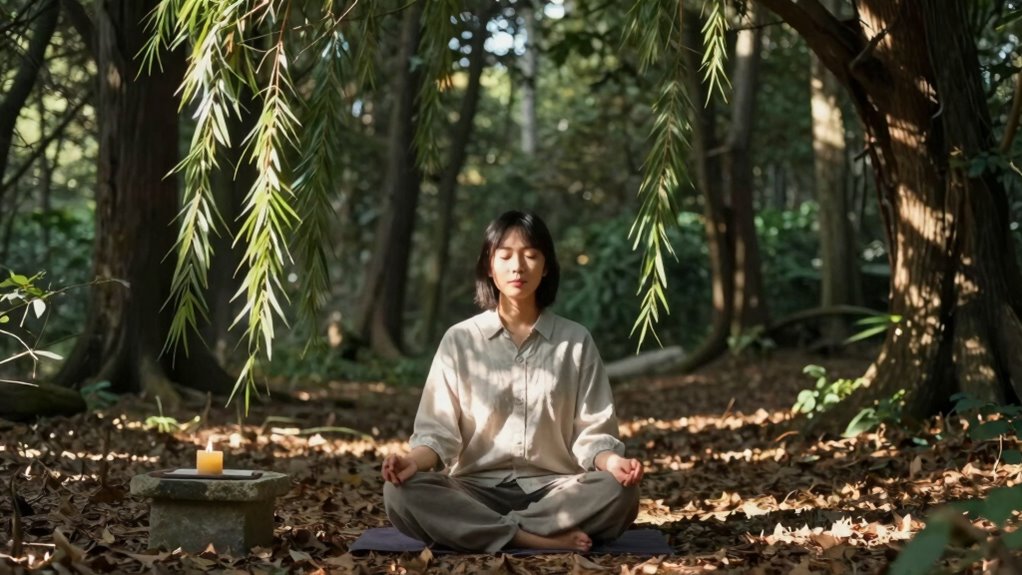

Silent meditation feels different from guided practice because it takes place in a quiet environment where you focus inward, relying solely on your own awareness. It encourages deep presence and independence, making you more attuned to subtle thoughts and feelings. Guided practice, on the other hand, provides external cues and directions, making it more accessible and easier to follow, especially for beginners. If you want to understand how these differences shape your experience, keep exploring.
Key Takeaways
- Silent meditation relies solely on internal focus, fostering independence and deep presence without external cues.
- Guided practice provides external instructions, making it more accessible and reducing mental distractions.
- The environment for silent meditation emphasizes minimal stimuli, enhancing internal awareness and solitude.
- Guided sessions create a sense of direction and reassurance, influencing feelings of safety and focus.
- The mental engagement differs: silent meditation promotes self-reliance, while guided practice offers structured guidance.

Have you ever wondered which meditation style suits you better—silent meditation or guided practice? The answer often depends on how you experience mindfulness techniques and what kind of meditation environments resonate with you. Silent meditation typically involves sitting quietly, focusing inward, and letting your thoughts drift without external prompts. Guided practice, on the other hand, provides instructions or verbal cues from an instructor or recording, steering your attention through specific themes or breathing exercises. Both approaches can be powerful, but they feel distinctly different because they engage your mind in unique ways.
Choosing between silent meditation and guided practice depends on your preferences and mindfulness goals.
When you practice silent meditation, the environment plays a vital role. Many people prefer quiet, serene spaces—like a dedicated meditation corner or a peaceful outdoor spot—where external stimuli are minimal. In this setting, you rely solely on your internal awareness to navigate your thoughts, feelings, and sensations. The absence of guidance encourages you to develop your own mindfulness techniques, such as focusing on your breath, body scan, or sensations. Because there’s no external direction, your mind might initially wander more, but over time, you cultivate a deep sense of presence and self-reliance. The silence amplifies your internal dialogue, making you more attuned to subtle shifts in your mental and emotional states. Engaging in silent meditation can also help you build internal awareness, which is fundamental to developing a consistent mindfulness practice. Additionally, creating a suitable meditation environment can enhance your overall experience and comfort during practice. Recognizing the importance of personal environment can further support your meditation journey. Furthermore, understanding the benefits of self-guided meditation can motivate you to explore this approach more deeply.
Guided practice feels different because it provides a clear pathway through verbal cues. When you listen to a guided meditation, you’re often in a more controlled environment—perhaps sitting comfortably in a quiet room or even in a group setting. The guidance directs your attention, helping you engage specific mindfulness techniques like visualizations or body awareness. This external input can make meditation feel more accessible, especially if you’re new to the practice or struggle with a restless mind. The structure of guided practice creates a focused meditation environment where your thoughts are gently steered, reducing distraction and increasing your sense of calm. You might find it easier to surrender to the experience when someone is guiding you, which can be especially helpful during challenging moments.
The feeling of meditation itself hinges on these differences. Silent meditation offers a sense of spaciousness and independence—it’s almost like tuning into your inner world without any filters. Guided practice, meanwhile, often provides reassurance and focus, making the experience feel more directed and purposeful. Both styles cultivate mindfulness, but they do so through contrasting pathways. Your preference might depend on how much external input you find helpful or how comfortable you are with silence and solitude. Additionally, battery care can be a helpful consideration when practicing in outdoor or variable environments. Regardless of which approach you choose, understanding these distinctions helps you tailor your practice to suit your mental landscape and the meditation environments you create.

Silent Mind Tibetan Singing Bowl Set – Easy to Play & Beginner Friendly Meditation Bowl with Cushion & Mallet | Stress Relief & Mindfulness | Gift-Ready
- Beginner Friendly & Easy to Play: Produces clear, resonant tones for beginners
- Stress Relief & Emotional Calm: Creates soothing vibrations for relaxation
- Complete Set with Cushion & Mallet: Includes everything needed for immediate use
As an affiliate, we earn on qualifying purchases.
As an affiliate, we earn on qualifying purchases.
Frequently Asked Questions
Can Silent Meditation Be More Effective Than Guided Practice?
Silent meditation can be more effective than guided practice because it encourages you to cultivate inner silence and develop silent accountability. Without external cues, you’re more likely to deepen your focus and connect with your true thoughts and feelings. This solitude allows for a profound sense of inner peace and self-awareness, helping you build resilience and discipline. Ultimately, silent meditation fosters a personal, introspective journey that can lead to lasting mental clarity.
How Do I Stay Focused During Silent Meditation?
To stay focused during silent meditation, use mindfulness techniques like gentle breath awareness. When your mind wanders, gently acknowledge the distraction without judgment and bring your attention back to your breath. Keep your posture relaxed yet alert. Consistent practice helps strengthen your focus over time. Remember, it’s normal for your mind to drift; patience and gentle redirection are key to deepening your silent meditation experience.
Is Silent Meditation Suitable for Beginners?
Silent meditation is definitely suitable for beginners. Think of it like learning to swim—you start in shallow water, gradually gaining confidence. Using mindfulness techniques and breathing exercises, you can ease into silent meditation comfortably. It might feel challenging at first, but with patience, you’ll find it helps you develop greater self-awareness and calmness. Just start small, stay consistent, and trust that your practice will deepen over time.
What Challenges Are Common in Silent Meditation?
In silent meditation, you might struggle with maintaining breathing awareness and posture alignment. It’s common to get distracted by wandering thoughts or physical discomfort. You may also find it tricky to stay focused, especially without guidance. To overcome these challenges, gently bring your attention back to your breath and adjust your posture as needed. Patience and consistent practice help you deepen your experience and improve your ability to stay present.
How Do I Transition From Guided Practice to Silent Meditation?
Ironically, shifting from guided to silent meditation feels effortless—if you ignore the challenge of silence. Start by slowly reducing your guided sessions, focusing on your breathing techniques and maintaining proper posture alignment. As you become more comfortable, gradually extend silent periods. This mindful change helps you trust your inner experience, making silent meditation feel natural and rewarding, even if it initially seems intimidating.
guided meditation audio recordings
As an affiliate, we earn on qualifying purchases.
As an affiliate, we earn on qualifying purchases.
Conclusion
In the end, silent meditation offers a unique sense of inner calm that guided sessions can’t fully replicate. Interestingly, a study found that 75% of practitioners report feeling more centered and aware after silent meditation. It’s a reminder that sometimes, stepping into silence lets you truly connect with yourself, free from external cues. So, try both methods—you might discover that silent meditation reveals a deeper level of peace you never knew was possible.
As an affiliate, we earn on qualifying purchases.

Mindfulness Affirmation Jar,90 Mindful Meditation Cards,Self Care Gifts
- Contains 90 Affirmation Cards: Guides mindfulness and self-awareness
- Six Pillars of Mindfulness: Includes self-awareness, gratitude, compassion, and more
- Promotes Emotional Regulation: Supports stress relief and emotional balance
As an affiliate, we earn on qualifying purchases.
As an affiliate, we earn on qualifying purchases.