To practice effective heart-opening yoga sequences, focus on intentional poses combined with mindful breathing techniques like diaphragmatic or Ujjayi breath. Incorporate poses such as Cobra, Bridge, or Camel, flowing smoothly to deepen emotional and physical openness. Begin with meditation or breath awareness to center yourself and set your intentions. As you move through the sequence, stay mindful of your breath and emotions, creating a safe space for vulnerability and self-compassion. Keep exploring to unleash more transformative practices.
Key Takeaways
- Well-structured sequences incorporate poses like backbends and chest openers to promote emotional and physical openness.
- Incorporate intentional breathing techniques such as diaphragmatic and Ujjayi breath to deepen heart opening and release tension.
- Use mindfulness and meditation before and during practice to enhance emotional vulnerability and self-awareness.
- Gradually build intensity in the sequence to safely deepen the stretch and foster trust and openness.
- End with calming poses and breathwork to integrate emotional release and cultivate compassion and resilience.
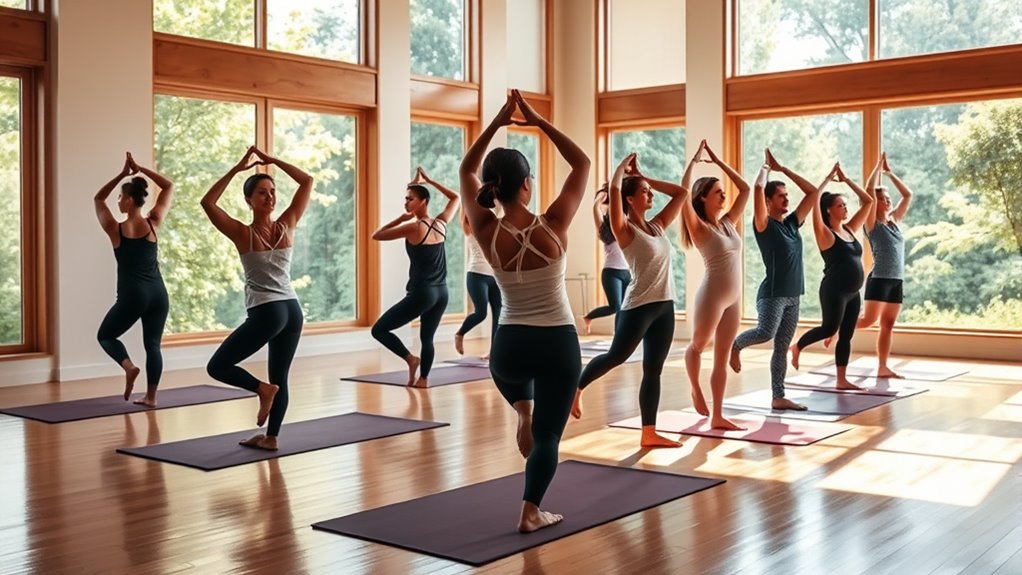
Have you ever wondered how a well-structured yoga sequence can transform your practice? When it comes to heart-opening yoga sequences, the way you approach each pose and the flow you create can deeply influence your emotional and physical well-being. These sequences aren’t just about stretching your chest and shoulders; they’re about cultivating a sense of vulnerability and compassion within yourself. To truly maximize their benefits, you should incorporate effective breathing techniques and meditation practices. These elements deepen your connection to each movement, helping you stay present and centered throughout your practice.
Breathing techniques, such as diaphragmatic breathing or Ujjayi breath, serve as anchors that enhance your heart-opening sequence. As you move through poses like Cobra, Bow, or Camel, conscious breathing helps release tension stored in your chest and shoulders. When you focus on inhaling fully and exhaling smoothly, you encourage your ribcage to expand, creating space around your heart. This expansion isn’t just physical—it’s emotional, too. By intentionally slowing down your breath, you foster a calming effect that allows your nervous system to relax, opening your heart to vulnerability and acceptance. Paired with meditation practices, these breathing techniques deepen your sense of mindfulness, making each pose a moment of inward reflection rather than just physical exertion.
Conscious breathing relaxes your chest, creates heart space, and deepens mindfulness for a transformative yoga experience.
Incorporating meditation into your flow is particularly powerful. Before beginning your sequence, take a few minutes to center yourself with a simple meditation practice—perhaps focusing on your breath or repeating a heart-centered mantra. As you progress through the sequence, maintain this awareness by consciously returning to your breath whenever your mind drifts. This emphasis on present-moment awareness amplifies the emotional release and vulnerability that heart-opening poses aim to cultivate. It’s about creating a safe space within yourself, where you can acknowledge feelings, fears, or hopes that may surface during your practice.
Moreover, integrating meditation practices helps you stay connected to your intention behind opening your heart. Whether your goal is to foster self-love, forgiveness, or emotional resilience, these practices reinforce that purpose. As you *transition* from pose to pose, remind yourself of your intention, allowing your breath and mindfulness to guide you deeper into each stretch. This intentional approach turns a physical practice into a profound journey of self-discovery, making your heart-opening sequence not just a series of poses but a transformative experience. Ultimately, the combination of mindful breathing, meditation, and thoughtfully curated sequences empowers you to *unlock* emotional barriers and cultivate a more open, compassionate heart. Recognizing the importance of color accuracy in visual clarity can also heighten your connection to the subtleties of each pose and breath, enriching your overall experience.
Frequently Asked Questions
Can Heart-Opening Poses Help With Emotional Healing?
Yes, heart-opening poses can help with emotional healing by encouraging emotional release and reducing stress. When you practice these poses, you open your chest and shoulders, which often helps release stored tension and emotional blockages. This physical openness fosters a sense of vulnerability and acceptance, making it easier to process feelings. Over time, you may notice increased emotional clarity and a calmer mind, supporting your overall emotional well-being.
Are There Any Contraindications for Heart-Opening Yoga?
If you have medical conditions or physical limitations, heart-opening yoga might not be suitable. For example, someone with a recent heart surgery or chest injury could risk complications by doing these poses. Always consult your healthcare provider before attempting heart-opening sequences. They can help determine if your physical limitations or health issues make these poses unsafe, ensuring you practice safely and avoid potential injuries.
How Often Should I Practice Heart-Opening Sequences?
You should practice heart-opening sequences 2 to 3 times a week, following the frequency guidelines for safe practice. Consistency is key to experiencing benefits like increased flexibility and emotional release. Listen to your body, and if you feel discomfort or pain, reduce the frequency or modify poses. Maintaining regular practice helps deepen your experience while avoiding overexertion, ensuring you enjoy the physical and emotional benefits safely.
Can Beginners Safely Perform Heart-Opening Yoga Poses?
Think of your body as a delicate flower; beginners can safely perform heart-opening yoga poses with proper modifications. You should start with gentle options like supported bridge or cobra, avoiding advanced variations until you’re more confident. Always listen to your body, and consider guidance from an instructor to guarantee safe practice. With patience, your heart will bloom, revealing strength and openness over time.
What Are the Common Mistakes to Avoid During These Sequences?
During heart-opening yoga sequences, you should avoid common mistakes like neglecting proper breathing techniques and making alignment errors. Focus on deep, steady breaths to enhance relaxation and avoid strain. Make certain your alignment is correct to prevent injury, especially in poses like Camel or Cobra. Don’t push beyond your comfort zone, and listen to your body. These steps help you safely deepen your practice and maximize benefits.
Conclusion
So, there you have it—your foolproof plan to open your heart and maybe even find a tiny bit of peace. Because, let’s face it, who doesn’t need a little more love and a lot less emotional baggage? Just remember, these sequences won’t cure heartbreak overnight, but they’ll make you look like you’re trying. So roll out that mat, breathe deep, and pretend you’re a zen master—at least until your phone buzzes again.