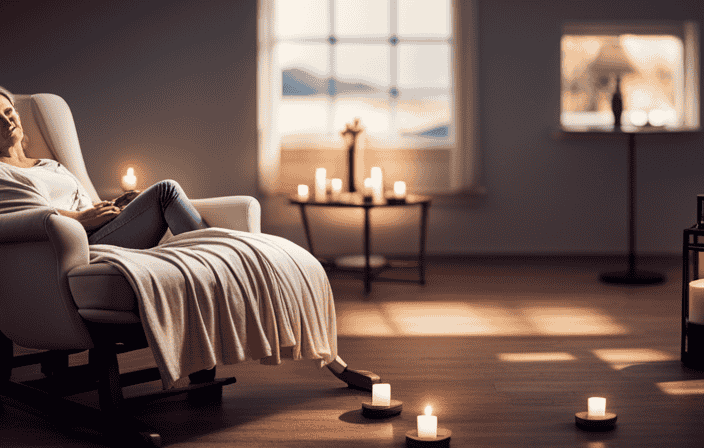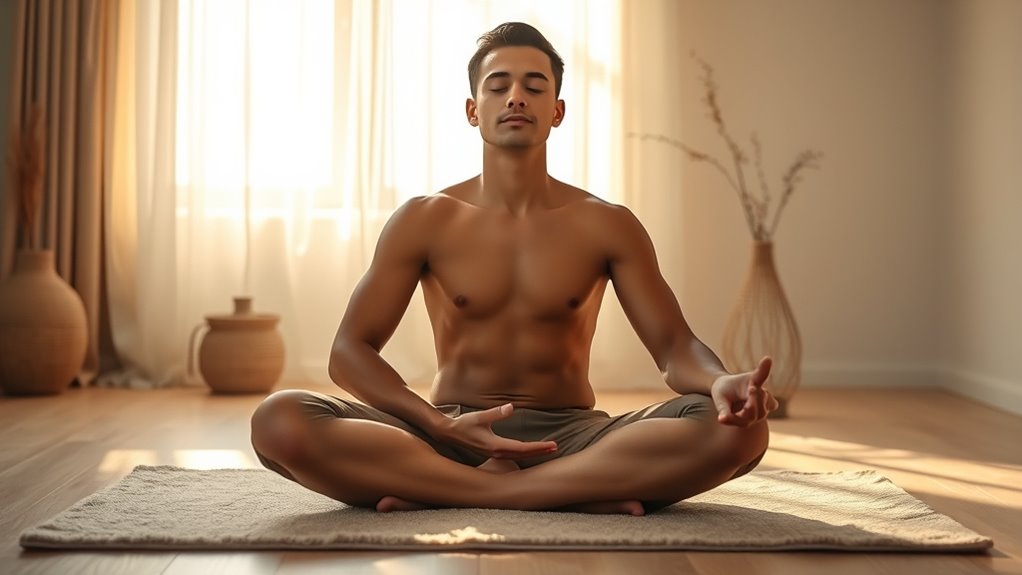

To cultivate awareness from head to toe, start by finding a quiet space and settling into a comfortable position. Close your eyes if you’d like and focus on each body part in turn, noticing sensations like warmth, tension, or tingling. Allow yourself to observe without judgment, relaxing areas that feel tense. As you continue, you’ll deepen your mindfulness and relaxation. Stay engaged to explore more effective techniques for this calming practice.
Key Takeaways
- Systematically focus attention on each body part from head to toe to enhance mindfulness and body awareness.
- Use deep breathing to relax muscles and release tension during the body scan.
- Notice sensations such as warmth, coolness, tingling, or tightness without judgment.
- Incorporate relaxation techniques for areas of tension, promoting overall calm and presence.
- Conclude by observing the entire body and gradually returning awareness to the surroundings.

Body scan meditation is a simple yet powerful practice that helps you connect with your physical sensations and cultivate awareness. It’s a technique that encourages you to pay close attention to different parts of your body, fostering a deeper understanding of how you feel at any given moment. By incorporating mindfulness techniques and relaxation exercises, you can develop a greater sense of calm and presence that extends beyond your meditation sessions. This practice is especially effective for reducing stress, easing tension, and improving your overall mental clarity.
Body scan meditation enhances awareness, reduces stress, and promotes calm through mindful attention to bodily sensations and relaxation.
To begin, find a quiet space where you won’t be disturbed. Lie down comfortably or sit in a relaxed position. Close your eyes if you like, and take a few deep breaths. As you inhale, feel the air filling your lungs, and as you exhale, let go of any tension you’re holding. This initial step sets the tone for your body scan, grounding you in the present moment. Throughout the practice, you’ll gently guide your awareness through your body, systematically noticing sensations without judgment. This helps you develop mindfulness techniques that deepen your connection to your physical self and foster relaxation exercises that ease built-up stress.
Start by shifting your attention to your toes. Notice any sensations—warmth, coolness, tingling, or even the absence of feeling. Don’t try to change what you observe; simply be aware of what’s there. Slowly move your focus up to your feet, ankles, and calves. Feel the muscles and tissues, observing any areas of tension or relaxation. Continue this process, moving upward through your knees, thighs, hips, and abdomen. With each area, take a moment to notice how it feels. Are there any tight spots or areas of comfort? Recognize these sensations without trying to alter them.
As you progress, bring your awareness to your chest and back, feeling the rise and fall of your breath. Then, focus on your shoulders—often a place where tension accumulates. Release any tightness as you breathe out. Move your attention to your arms and hands, feeling their weight and temperature. Continue upward to your neck, jaw, face, and scalp. Pay close attention to any sensations, tightness, or relaxation. This systematic approach allows you to cultivate mindfulness techniques that increase your awareness of the present and reinforce the relaxation exercises that help you unwind. Incorporating sleep hygiene practices into your routine can further enhance the benefits of meditation by promoting restful sleep, which in turn supports mental clarity.
Completing the body scan, spend a few moments simply observing your entire body as a whole. Notice how different parts feel together. When you’re ready, slowly bring your awareness back to your surroundings, opening your eyes or shifting your focus. Regular practice of this body scan meditation can become a essential part of your relaxation exercises, providing a calm foundation for handling daily stresses and enhancing your overall mindfulness.
Frequently Asked Questions
How Long Should Each Body Scan Session Last?
For a body scan meditation, aim for a session length of 10 to 30 minutes, following general duration guidelines. You can start with shorter sessions, around 10 minutes, and gradually extend as you become more comfortable. Focus on quality over quantity, ensuring you remain present. Remember, consistency matters more than duration, so find a length that fits into your schedule and allows you to stay mindful throughout.
Can Beginners Easily Practice Body Scan Meditation?
Imagine your mind as a peaceful lake, ready to reflect calmness—yes, beginners can easily practice body scan meditation. With simple beginner tips, you’ll open mindfulness benefits like reduced stress and increased focus. Start with just a few minutes, breathe deeply, and gently guide your awareness from head to toe. This gentle journey builds your meditation skills, making it accessible and rewarding, even for those new to mindfulness.
Are There Any Risks or Contraindications?
There are minimal risks with body scan meditation, but it’s important to prioritize meditation safety and consider health considerations. If you have severe anxiety, trauma, or physical injuries, consult a healthcare provider before starting. Some might experience temporary discomfort or emotional release. Always listen to your body, practice in a safe environment, and stop if you feel overwhelmed. Mindfulness practices generally promote well-being when done thoughtfully and with awareness of your health.
How Often Should I Practice for Best Results?
Think of meditation frequency as watering a garden—you need consistent effort for growth. You should practice body scan meditation daily or at least several times a week to see the best results. Practice consistency is key; even short daily sessions can deepen your awareness and relaxation over time. Starting with 10-15 minutes per session helps build a sustainable routine, allowing you to gradually increase as you become more comfortable.
Is Body Scan Meditation Effective for Stress Relief?
Yes, body scan meditation is effective for stress relief. It enhances mindfulness benefits by helping you become aware of physical sensations and release tension. As a stress reduction technique, it encourages relaxation and mental clarity. Regular practice, even for a few minutes daily, can markedly lower stress levels. By focusing on your body, you gain better control over your reactions, making it a powerful tool for managing stress and promoting overall well-being.
Conclusion
Practicing body scan meditation helps you cultivate deep awareness from head to toe. Imagine feeling tense in your shoulders, then gently releasing that tension as you breathe out, like Sarah did after a stressful day. With consistent practice, you’ll notice increased calm and clarity, even amid chaos. So, next time your mind races, take a moment to scan your body—you’ll find a simple way to reconnect and restore your inner peace.