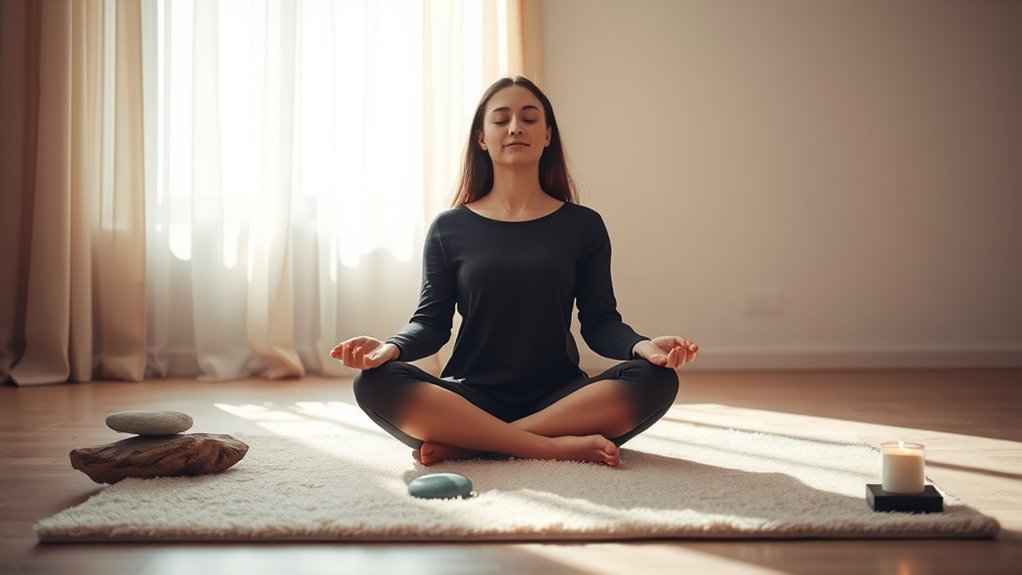

To meditate without distraction, focus on establishing a calm environment and practicing proper breathing and posture. Begin by sitting comfortably with your back straight, shoulders relaxed, and head aligned. Take slow, deep breaths to anchor your attention and calm your mind. Gently redirect your focus to your breath or body whenever distractions arise. Maintaining awareness of your posture and breath helps minimize mental chatter, and exploring these techniques further can deepen your practice.
Key Takeaways
- Establish a comfortable, upright posture to support alertness and prevent physical discomfort.
- Focus on slow, rhythmic breathing to create a stable mental anchor and calm the nervous system.
- Gently redirect attention to breath or body sensations whenever distractions arise, without judgment.
- Minimize external disturbances by choosing a quiet space and turning off notifications or devices.
- Incorporate mental anchors like counting breaths or repeating a mantra to maintain focus and reduce mental chatter.
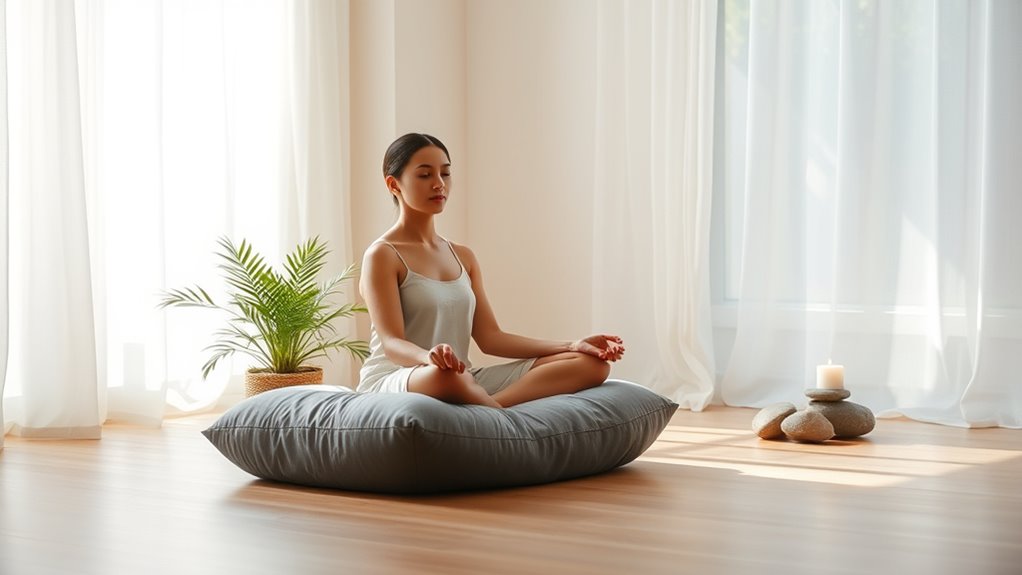
Meditation can be a powerful way to find calm and clarity, but distractions often make it challenging to stay focused. To overcome these hurdles, you need to establish a strong foundation that supports your practice. One of the most effective ways to do this is by paying attention to your breathing techniques and posture alignment. When you focus on your breath, it becomes easier to anchor your attention and reduce mental chatter. Try taking slow, deep breaths, inhaling through your nose, and exhaling gently through your mouth or nose. This not only calms your nervous system but also helps you stay present. Consistent breathing patterns create a rhythmic anchor, making it less likely for your mind to wander into distractions.
Alongside breathing, posture alignment plays a vital role in maintaining focus. Sitting with proper posture ensures that your body remains comfortable and alert, preventing physical discomfort from pulling your attention away from your meditation. Keep your back straight but relaxed, with your shoulders down and your chest open. Your head should be aligned with your spine, and your chin slightly tucked. Rest your hands comfortably on your lap or knees, whichever feels natural. When your body feels supported and balanced, your mind finds it easier to settle into the present moment. Avoid slouching or leaning forward, as these positions can cause fatigue and make it more difficult to sustain your focus.
To deepen your meditation, combine mindful breathing with conscious posture adjustments. Before you start, take a moment to check your alignment. Close your eyes gently, take a few deep breaths, and notice how your body feels. Adjust your posture if necessary, ensuring your spine remains straight and your shoulders are relaxed. As you breathe, pay attention to the sensation of air moving in and out of your nostrils or the rise and fall of your chest. When your mind drifts, gently bring it back to your breath and posture without judgment. This gentle redirection trains your attention to stay rooted in the present, minimizing distractions over time. Incorporating best practices from diverse meditation traditions can further enhance your focus and consistency.

Retrospec Sedona Meditation Cushion, Buckwheat Pillow, Meditation Pillow
NATURAL COMFORT & SUPPORT: Filled with sustainable buckwheat hulls, this meditation cushion elevates your practice by aligning your…
As an affiliate, we earn on qualifying purchases.
As an affiliate, we earn on qualifying purchases.
Frequently Asked Questions
Can Meditation Help With Chronic Pain Management?
Yes, meditation can help with chronic pain management by strengthening your mind-body connection. When you meditate, you learn to observe pain without judgment, which can alter your pain perception. This practice helps you become more aware of how pain affects you and reduces emotional distress. Over time, meditation can lead to better pain control, allowing you to manage discomfort more effectively and improve your overall quality of life.
What Are the Best Meditation Apps for Beginners?
You should try apps like Headspace or Calm, which offer guided sessions perfect for beginners. These apps feature calming ambient sounds that help create a distraction-free environment. They guide you step-by-step through meditation practices, making it easier to stay focused. With regular use, you’ll find it becomes easier to meditate without distraction, improving your overall relaxation and mindfulness. These apps are user-friendly and ideal to start your meditation journey.
How Long Should I Meditate Daily for Benefits?
You should aim for a meditation duration of about 10 to 20 minutes daily to experience benefits. Starting with shorter sessions helps you build a consistent daily practice without feeling overwhelmed. As you get more comfortable, gradually increase your meditation time. Regular, focused daily practice enhances mental clarity, reduces stress, and improves overall well-being. Consistency is key, so find a duration that fits into your routine and stick with it.
Is It Okay to Meditate Lying Down?
Sure, lying down during meditation isn’t the worst idea—unless you’re aiming for alertness. While meditation posture in a seated position helps keep you awake, lying down can make you too relaxed, risking sleep. If you prefer lying down, do it on a firm surface and stay mindful of your body to avoid drifting off. Remember, the goal is still focus, not a nap!
How Do I Stay Motivated to Meditate Regularly?
To stay motivated to meditate regularly, you should set routines and incorporate mindfulness techniques into your daily schedule. Remind yourself of the benefits, like reduced stress and better focus, to keep your motivation high. Start with short sessions, then gradually increase them. Make meditation a non-negotiable part of your day, like brushing your teeth, so it becomes a habit you look forward to and stick with consistently.

Criss Cross Legged Meditation Chair, Exquisite Home Office Furniture, Ergonomic Kneeling Chair with Lumbar Support and Adjustable Height Stool, for ADHD Adults
【For Your Happiness】The cross legged office chair is ideal for those who like to sit in different positions.Teddy…
As an affiliate, we earn on qualifying purchases.
As an affiliate, we earn on qualifying purchases.
Conclusion
Don’t let the fear of distraction keep you from meditating. With practice, your mind will become calmer and more focused. Remember, even experienced meditators face distractions—they simply learn to let them go. If your mind wanders, gently bring your focus back without judgment. Meditation is a journey, not perfection. Stick with it, and you’ll find that over time, distractions diminish, allowing you to enjoy deeper peace and clarity every day.
breath focus meditation timer
As an affiliate, we earn on qualifying purchases.
As an affiliate, we earn on qualifying purchases.

ProCase NRR 28dB Noise Reduction Ear Muffs, Foldable Adjustable Passive Noise Cancelling Headphones for Adults Kids Autism, Hearing Protection for Shooting, Construction, Mowing, Studying -Red
Reliable Passive Hearing Protection: The ear muffs achieve NRR 28 dB (SNR 34 dB) rating, ANSI S3.19 (US)…
As an affiliate, we earn on qualifying purchases.
As an affiliate, we earn on qualifying purchases.