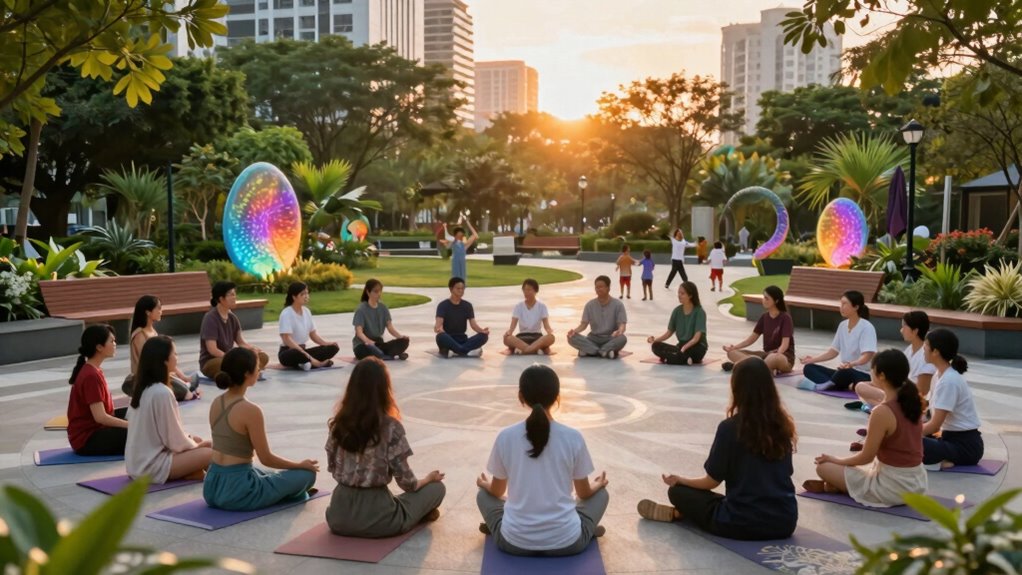

To explore energy awareness in social spaces, start by observing how lighting, appliances, and heating are used, noting any natural light or energy-efficient devices. Support sustainable infrastructure like solar panels and motion sensors, and encourage community programs focused on green practices. Educate visitors on energy conservation and promote eco-friendly initiatives. By actively engaging with these aspects, you’ll uncover ways to boost sustainability. Keep exploring to discover even more innovative ideas and opportunities.
Key Takeaways
- Conduct on-site observations of lighting, appliances, and natural light utilization to assess energy consumption practices.
- Promote and evaluate the installation of renewable energy sources and energy-saving devices in social spaces.
- Educate community members on energy conservation benefits and sustainable practices through workshops and informational campaigns.
- Support community initiatives and events focused on energy awareness and sustainable infrastructure development.
- Explore innovative technologies like energy-efficient projectors and smart systems to enhance sustainability in social environments.

Have you ever thought about how energy consumption shapes the social spaces we frequent? Every café, park, or community center you visit relies on energy, often coming from non-renewable sources that harm the environment. But you can play a part in shifting this dynamic by promoting awareness of renewable resources and energy conservation. By understanding how energy use impacts these spaces, you become more equipped to make mindful choices that foster sustainability and community well-being.
Recognize how energy use in social spaces impacts the environment and embrace mindful choices for sustainability.
When exploring energy awareness in social spaces, start by observing how energy is used. Are there energy-efficient lighting, appliances, or heating systems? Do these spaces promote energy conservation through simple actions like turning off unused devices or utilizing natural light? Recognizing these practices helps you see how small behavioral changes can add up to significant environmental benefits. Supporting places that prioritize renewable resources—such as solar-powered parks or community centers with green energy initiatives—encourages a shift toward cleaner, more sustainable energy sources. Your involvement can influence others by highlighting the importance of choosing venues that actively invest in renewable resources.
Engaging with the management of these social spaces is another effective way to explore energy awareness. Suggest implementing energy conservation measures, like installing motion sensors in restrooms or using energy-efficient LED bulbs. Advocate for the use of renewable resources by encouraging the installation of solar panels or wind turbines where feasible. Your voice matters in shaping policies that emphasize sustainability. Additionally, educating fellow visitors about the benefits of renewable resources and energy conservation can foster a community mindset focused on environmental responsibility. Sharing information about how these practices reduce carbon footprints and preserve natural resources empowers others to participate actively. Promoting energy-efficient infrastructure within these spaces can further enhance sustainability efforts. Incorporating renewable energy sources into community planning can significantly reduce reliance on non-renewable energy and set a positive example. Recognizing the role of energy consumption in social spaces underscores the importance of adopting sustainable practices.
You can also participate in or organize community events that focus on energy awareness. Workshops on reducing energy consumption, eco-friendly upgrading projects, or cleanup drives that emphasize sustainability can create ripple effects across social spaces. These activities not only raise awareness but also build a collective sense of responsibility. As someone invested in your community’s future, supporting initiatives that promote the use of renewable resources and energy conservation demonstrates your commitment to creating healthier social environments. Incorporating energy-efficient lighting and other sustainable practices can further inspire positive change in community venues. Over time, these actions can inspire broader change, encouraging social spaces to become models of sustainability.
In essence, exploring energy awareness in social spaces involves observation, advocacy, and active participation. By understanding the importance of renewable resources and practicing energy conservation, you help foster environments that are sustainable and inviting. Your choices and influence can lead to social spaces that prioritize eco-friendly practices, benefiting everyone in the community and contributing to a healthier planet. Additionally, understanding projector technology and its role in creating engaging visual experiences can inspire innovative ways to promote energy-efficient solutions in communal settings.
energy-efficient LED light bulbs
As an affiliate, we earn on qualifying purchases.
As an affiliate, we earn on qualifying purchases.
Frequently Asked Questions
How Can Individuals Detect Hidden Energy Distractions in Social Settings?
You can detect hidden energy distractions by paying close attention to non-verbal cues like body language, facial expressions, and subtle shifts in posture. Notice ambient influences such as noise levels, lighting, and room temperature, which can also affect the energy. When you observe these signs, you become more aware of underlying distractions, allowing you to adjust your focus or create a more positive environment, enhancing your social interactions.
What Are Quick Tips to Reset Energy During Social Interactions?
Picture yourself as a calm lake, ripples settling after each disturbance. To reset your energy during social interactions, take a deep breath, visualizing energy fluctuations calming down. Practice social mindfulness by gently tuning into your body and surroundings, then silently affirm your center. This quick reset helps you stay grounded, enhancing your presence and connection. A moment of stillness restores clarity, allowing you to engage more authentically.
How Does Cultural Background Influence Energy Awareness in Social Spaces?
Your cultural background shapes how you perceive and respond to energy in social spaces. Cultural perceptions influence what’s considered appropriate energy levels, like the amount of eye contact or personal space. Energy norms vary widely; some cultures value high-energy interactions, while others prefer calm and subtle exchanges. Recognizing these differences helps you adapt your behavior, enhancing connection and comfort in diverse social settings.
Can Energy Awareness Improve Long-Term Relationships?
Yes, energy awareness can profoundly improve long-term relationships. When you’re attuned to emotional resonance and non-verbal cues, you better understand your partner’s feelings and needs. This heightened awareness fosters empathy, trust, and deeper connection. By paying attention to subtle signals and adjusting your energy accordingly, you create a more supportive environment. Over time, this active engagement strengthens your bond, making your relationship more resilient and fulfilling.
What Are Common Misconceptions About Energy in Social Environments?
Many believe that social energy is purely about being extroverted or energetic, but that’s a misconception. Energy myths often suggest that only certain personalities can have strong social energy, when in reality, it’s about awareness and balance. You might think that social environments drain you, but understanding your energy can help you manage and even boost it. Recognizing these myths allows you to navigate social spaces more effectively and authentically.
As an affiliate, we earn on qualifying purchases.
Conclusion
By becoming more conscious of energy use in social spaces, you can make a real difference. Did you know that buildings account for nearly 40% of global energy consumption? Small actions, like turning off unused lights or encouraging eco-friendly habits, can collectively lead to significant change. So, next time you’re in a social space, remember your power to influence positive energy awareness—your choices truly matter in shaping a sustainable future.
As an affiliate, we earn on qualifying purchases.
As an affiliate, we earn on qualifying purchases.