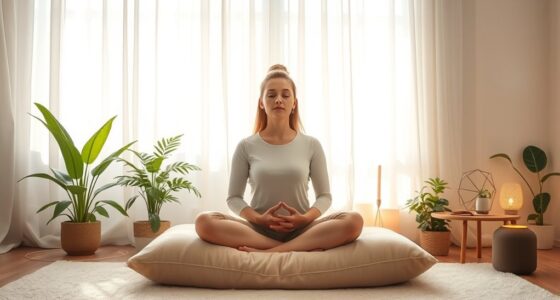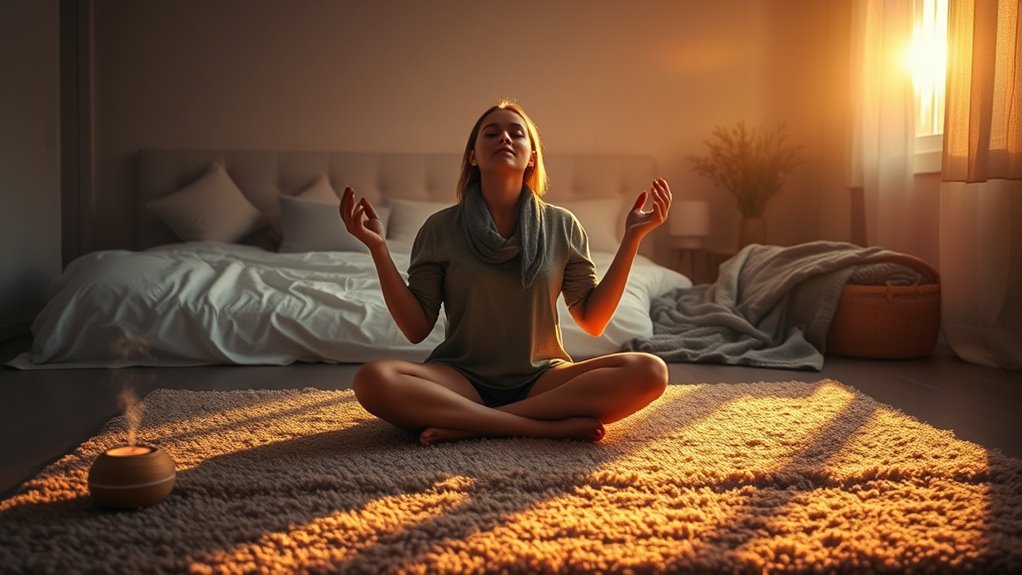

Practicing breathing meditation before bed helps calm your mind and relax your body, making it easier to fall asleep naturally. By focusing on slow, deep breaths, you activate your parasympathetic nervous system, reducing stress and clearing racing thoughts. This simple, drug-free technique encourages mindfulness and relaxation, leading to better sleep quality. If you keep practicing, you’ll discover effective ways to incorporate breathing into your nightly routine for deeper, more restorative rest.

Turn your wind-down time into listening time
- Thousands of audiobooks, podcasts and originals
- Listen on your phone, tablet or Echo — also offline
- Cancel anytime
Key Takeaways
- Focused breathing activates the parasympathetic nervous system, promoting relaxation and faster onset of sleep.
- Deep diaphragmatic breathing clears racing thoughts and reduces nighttime stress, easing the transition to restful sleep.
- Incorporating simple breathing exercises into nightly routines enhances sleep quality and decreases waking frequency.
- Conscious breathing helps manage insomnia symptoms by calming the mind and promoting mental clarity before bed.
- Regular practice of breathing meditation fosters emotional calmness and a peaceful mindset for improved sleep health.
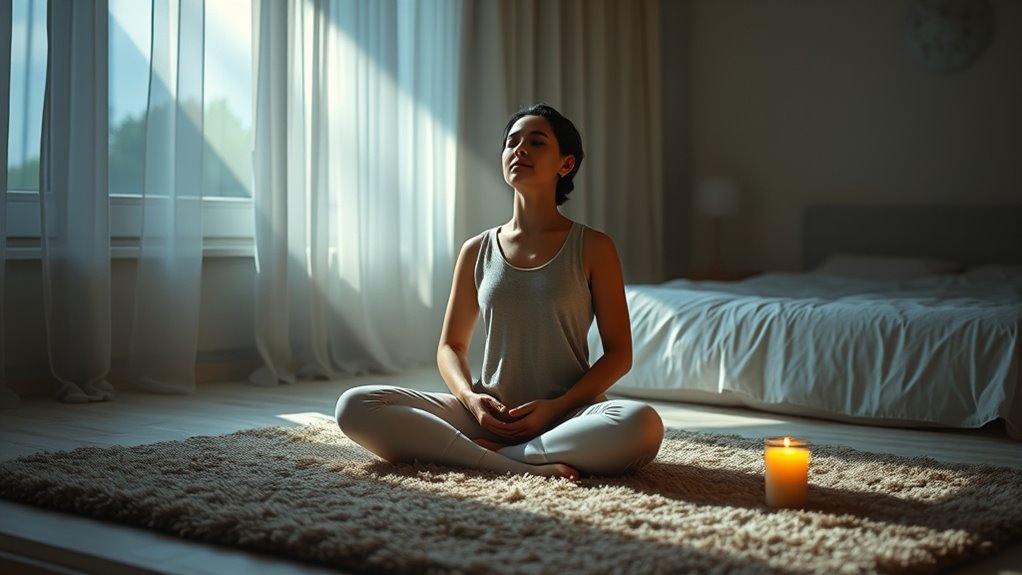
Have you ever wondered how a simple breath can help you find calm amid chaos? It’s incredible how just a few conscious breaths can shift your mood and ease your mind. Breathing techniques are powerful tools in meditation, especially when it comes to improving sleep. When you focus on your breath, you activate your parasympathetic nervous system, which helps your body relax and prepares you for rest. This simple act of mindful breathing can make a noticeable difference in how quickly you fall asleep and the quality of your sleep throughout the night.
Focusing on your breath activates relaxation, helping you fall asleep faster and enjoy better sleep quality.
Practicing breathing techniques before bed can clear your mind from racing thoughts and reduce stress. If you’ve ever lain in bed staring at the ceiling, caught in a cycle of worries or to-do lists, you know how disruptive that can be. Mindful breathing encourages you to stay present, anchoring your attention on each inhale and exhale. This shift from a busy mind to a calm state is a core meditation benefit, helping you shift smoothly from daytime to sleep mode. It’s a natural, drug-free way to let go of tension accumulated during the day.
To get started, find a comfortable position—whether sitting or lying down—and close your eyes. Breathe in slowly through your nose, feeling your abdomen expand as your lungs fill with air. Then, exhale gently through your mouth or nose, whichever feels more natural. Focus on the rhythm of your breath, counting each inhale and exhale if it helps. Deep, diaphragmatic breathing promotes relaxation more effectively than shallow chest breathing. With consistent practice, this simple technique becomes a calming ritual, signaling to your brain that it’s time to unwind. Incorporating relaxation techniques into your routine can amplify these benefits and deepen your sense of calm.
The benefits of incorporating breathing techniques into your nightly routine extend beyond just falling asleep faster. Regular practice can improve overall sleep quality, reduce nighttime awakenings, and even lessen insomnia symptoms. It’s easy to integrate into your evening—just a few minutes of mindful breathing can reset your nervous system and create a peaceful transition into sleep. Many find that combining breath awareness with other calming activities, like reading or gentle stretches, enhances the meditation benefits even further.
In essence, mastering breathing techniques isn’t just about better sleep—it’s about giving yourself a practical tool to manage stress and foster mental clarity. When you harness the power of your breath, you’re taking a simple yet profound step toward restful, rejuvenating sleep every night.
As an affiliate, we earn on qualifying purchases.
Frequently Asked Questions
Can Breathing Meditation Replace Medication for Insomnia?
Breathing meditation can markedly improve your sleep and may reduce medication dependency, but it might not fully replace medication for everyone. Its effectiveness varies based on individual needs and the severity of insomnia. You should consult your healthcare provider before making changes. Incorporating meditation can be a helpful supplementary approach, especially for managing stress and anxiety, but it’s important to follow an all-encompassing treatment plan for best results.
How Long Should I Practice Breathing Meditation Nightly?
You should practice breathing meditation for about 10 to 20 minutes nightly, following the duration guidelines for relaxation techniques. Consistency is key, so aim to meditate at the same time each evening to build a habit. Over time, this daily practice can improve your sleep quality, helping you unwind and reduce stress. Stick with it, and you’ll likely notice the benefits more quickly than with sporadic sessions.
Is Breathing Meditation Suitable for Children or Seniors?
Breathing meditation is perfect for children and seniors, turning everyday relaxation into an extraordinary journey! For child relaxation, simple, playful breathing exercises can calm tiny minds and ease big worries. Seniors benefit from mindfulness, transforming their evenings into peaceful retreats. You’ll be amazed how these gentle techniques create calming waves, making bedtime smoother and days brighter. It’s a powerful, accessible way to bring calm and clarity at any age!
Are There Any Side Effects of Breathing Meditation?
Breathing meditation is generally safe, but you should still consider meditation safety and be mindful of how breathing techniques affect you. Some people might feel lightheaded, anxious, or uncomfortable if they breathe too rapidly or deeply. If you experience any negative symptoms, stop the practice and consult a healthcare professional. Always listen to your body and modify your breathing techniques to guarantee a comfortable, safe meditation experience.
Can Breathing Meditation Help With Sleep Apnea?
Breathing techniques can improve your sleep quality, but they aren’t a cure for sleep apnea. While calming breathing exercises may reduce stress and promote relaxation, they don’t directly address the airway obstructions caused by sleep apnea. If you have sleep apnea, it’s essential to consult a healthcare professional for proper diagnosis and treatment. Incorporating breathing meditation can support overall sleep health but shouldn’t replace medical interventions.
diaphragmatic breathing exercises
As an affiliate, we earn on qualifying purchases.
As an affiliate, we earn on qualifying purchases.
Conclusion
Now that you’ve learned to breathe mindfully, sleep can become more peaceful. The chaos of your day fades as calm fills your mind, silence replacing noise. With each steady inhale and gentle exhale, stress dissolves, leaving you relaxed and ready. It’s not just about breathing; it’s about reclaiming your nights. Embrace this simple practice, and watch how restful sleep transforms your mornings. Calmness is within your reach—just breathe, and let peace follow.
As an affiliate, we earn on qualifying purchases.
As an affiliate, we earn on qualifying purchases.
Fall Picks
fall essentials
As an affiliate, we earn on qualifying purchases.