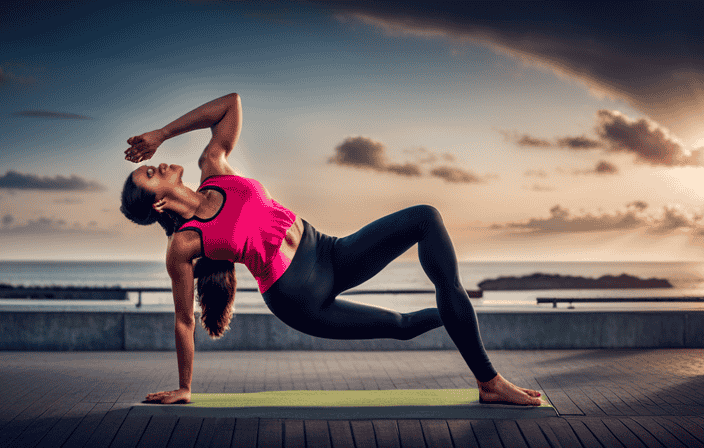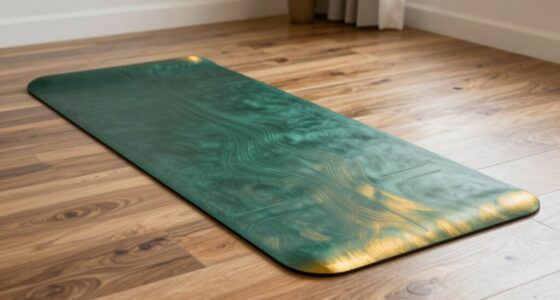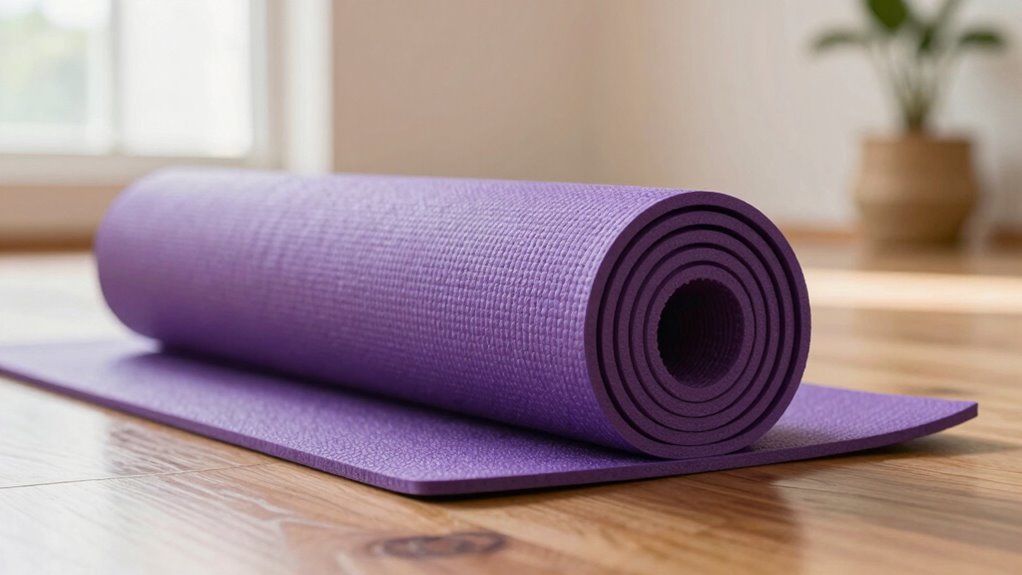

Choosing an extra-thick yoga mat offers more cushioning and joint protection, especially if you have sensitive knees or prefer comfort. However, too much thickness can reduce stability and make balancing challenging, which may hinder progress for beginners. Eco-friendly materials and slip-resistant textures are also important for safety and sustainability. Balancing these factors helps you find the right mat for your practice. If you want to discover more about making the best choice, keep exploring this debate.

Turn your wind-down time into listening time
- Thousands of audiobooks, podcasts and originals
- Listen on your phone, tablet or Echo — also offline
- Cancel anytime
Key Takeaways
- Extra-thick mats offer enhanced joint cushioning but may compromise stability and balance, especially for beginners.
- Thicker mats can reduce grip and traction, increasing the risk of slipping during dynamic poses.
- Eco-friendly, durable materials in thick mats support sustainability and long-term use.
- Portability may be affected, as bulkier mats are heavier and less convenient to carry.
- The ideal mat balances thickness for comfort with stability for safe, confident practice.
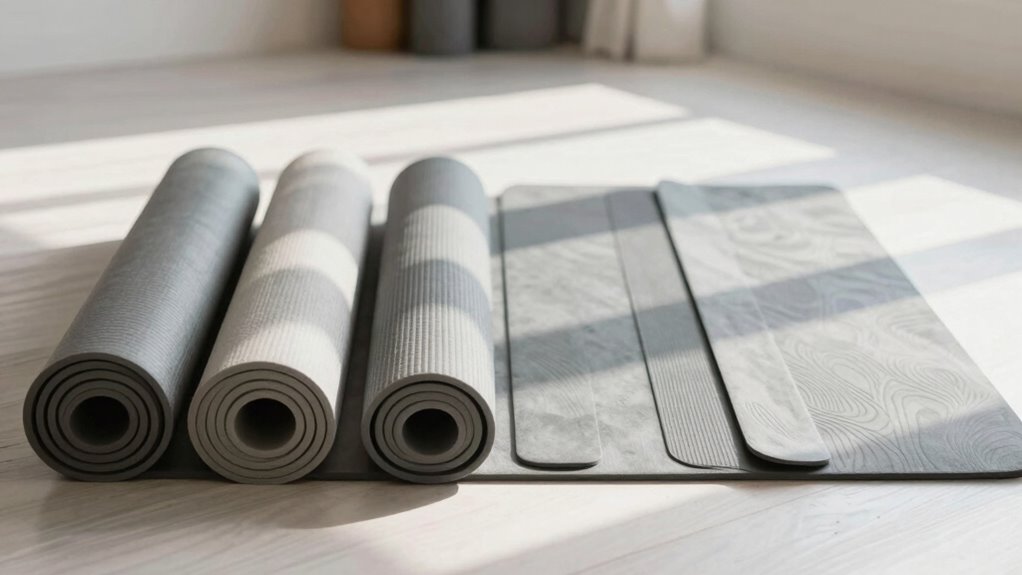
The debate over yoga mats has become a hot topic among practitioners and studios alike. When you’re choosing an extra-thick yoga mat, it’s crucial to consider not just comfort but also how your mat aligns with your values and safety needs. Many beginners overlook the importance of eco-friendly materials. These mats are made from sustainable resources like natural rubber, cork, or TPE, which reduce environmental impact and avoid harmful chemicals. If you’re environmentally conscious, opting for eco-friendly options allows you to practice with a clear conscience, knowing your mat supports sustainability without sacrificing performance.
Choosing eco-friendly yoga mats supports sustainability and safety without compromising performance.
Another critical factor is non-slip textures, especially on thicker mats. Extra thickness can sometimes compromise grip, making it harder to hold poses securely. That’s why many manufacturers incorporate textured surfaces designed to increase traction, even when your hands and feet get sweaty. When you look for a mat, guarantee it has a well-designed non-slip surface that provides confidence during challenging poses. This is particularly essential if you practice hot yoga or sweat heavily, as slipping can lead to injuries. The right non-slip texture keeps you grounded, letting you focus on your practice instead of worrying about sliding around on your mat. Additionally, choosing mats made from eco-friendly materials can further support your commitment to sustainability and health.
While extra thickness offers undeniable cushioning, it can also influence stability. You might feel more comfortable cushioning your joints, but some people find that overly thick mats make balancing more difficult. This is because the added height can throw off your sense of equilibrium, especially if you’re new to yoga. To counter this, look for mats that strike a balance—thick enough to protect your joints but not so thick that you lose connection with the ground. Many companies now design mats with a layered structure, combining eco-friendly materials and textured surfaces that support both comfort and stability. Incorporating sustainable materials into the design can further enhance your eco-conscious practice. Additionally, understanding the importance of indoor air quality and proper humidity levels can help create a healthier environment for your practice space, supporting your overall well-being.
In addition to comfort and safety, durability matters. High-quality eco-friendly mats with reinforced non-slip textures tend to last longer, resisting wear and tear from regular use. They also tend to be lightweight enough to carry easily to classes, which is a plus if you’re commuting to a studio. Remember, though, that thicker mats might be bulkier, so consider how you’ll transport yours. Incorporating sustainable materials into the design can further enhance your eco-conscious practice. Ultimately, your choice should reflect your practice style, environmental values, and safety needs. An extra-thick yoga mat, properly selected, can elevate your practice, offering both comfort and security, so take your time to find one that aligns with your goals.
extra thick yoga mat with non-slip surface
As an affiliate, we earn on qualifying purchases.
As an affiliate, we earn on qualifying purchases.
Frequently Asked Questions
How Do Thickness Levels Affect Grip and Stability?
Thicker yoga mats can influence your grip and stability, depending on the material and surface. Generally, increased thickness may reduce material grip, making it more slippery and harder to stay balanced during poses. However, a high-quality material can improve surface stability even on thicker mats. To guarantee safe practice, choose a mat with good material grip and sufficient surface stability that suits your comfort and balance needs, especially if you’re a beginner.
Are Extra-Thick Mats Suitable for Travel?
Extra-thick mats aren’t the best choice for travel because they can be bulky and heavy, creating travel convenience issues. You might find portability challenging, especially if you’re flying or commuting. These mats offer great comfort and stability at home, but for travel, a thinner, lightweight mat is more practical. It’s easier to pack, carry, and store, making your yoga sessions more convenient on the go.
Do Thicker Mats Impact Balance During Poses?
You might find that thicker mats gently sway your balance during poses, like a boat on calm waters. Their material durability and plush cushioning comfort can cushion your joints, but may also make balancing a tad more challenging. The extra padding can sometimes cause your feet or hands to sink slightly, requiring a bit more focus. With practice, you’ll adapt, and their cozy support will become a trusted companion on your yoga journey.
What Are the Cleaning Differences for Thick vs. Thin Mats?
Thick yoga mats often require gentler cleaning methods because their material durability may be lower, especially if they’re made from softer materials. You might need to clean them more frequently to prevent odor retention, which thick mats can trap more easily. Use mild soap and avoid harsh chemicals to preserve the mat’s integrity. Thin mats, being more durable, are generally easier to wipe down without worrying about damage or retained odors.
How Long Do Extra-Thick Mats Typically Last?
Extra-thick yoga mats typically last between 1 to 3 years, depending on how often you practice and how well you care for them. Durability concerns and material longevity play key roles in their lifespan. If you use high-quality materials like natural rubber or PVC and clean them regularly, your mat can stay supportive and comfortable longer. Avoid excessive exposure to sunlight or harsh chemicals to maximize its lifespan.
As an affiliate, we earn on qualifying purchases.
Conclusion
Ultimately, choosing the right yoga mat thickness is like finding the perfect pair of shoes — it should support your journey without weighing you down. Whether you prefer extra cushioning or a closer connection to the ground, trust your instincts and experiment. Remember, your mat is your foundation, but it’s your practice that truly builds strength. So, select what feels right, and let your yoga journey unfold like a well-composed symphony.
best stability yoga mat for beginners
As an affiliate, we earn on qualifying purchases.
As an affiliate, we earn on qualifying purchases.
heavy-duty yoga mat for hot yoga
As an affiliate, we earn on qualifying purchases.
As an affiliate, we earn on qualifying purchases.
Halloween Picks
halloween
As an affiliate, we earn on qualifying purchases.