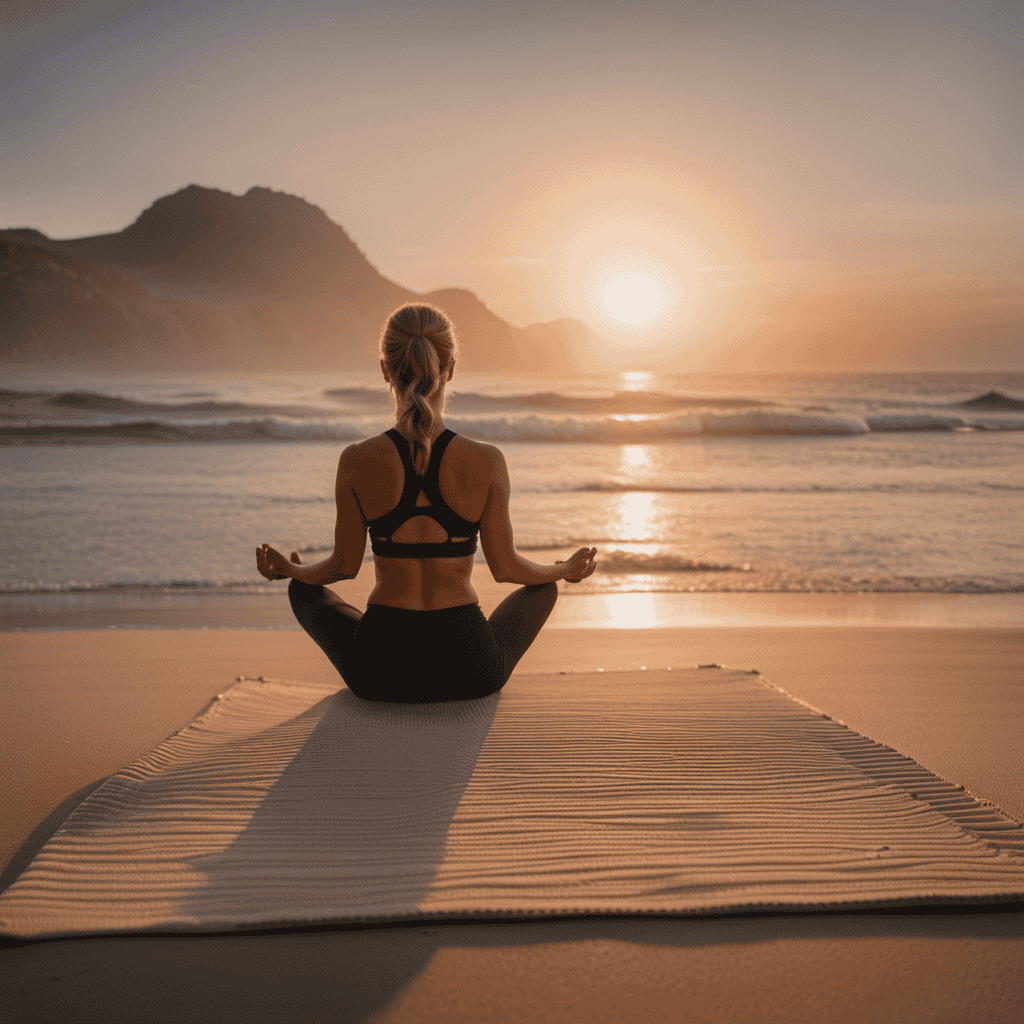

To build a grounding yoga sequence at home, start with breath awareness and visualize your root chakra to establish stability. Move into gentle poses like Child’s Pose or Forward Folds to connect physically with the ground, and incorporate sound vibrations or tactile contact for added relaxation. Strengthen your balance with Warrior poses while imagining roots extending from your feet. End with relaxed breathing and visualization techniques to leave feeling centered and secure. Keep exploring for more tips to deepen your practice.

Turn your wind-down time into listening time
- Thousands of audiobooks, podcasts and originals
- Listen on your phone, tablet or Echo — also offline
- Cancel anytime
Key Takeaways
- Start with breath awareness and root chakra visualization to establish mental focus and energetic stability.
- Incorporate gentle grounding poses like Child’s Pose and Forward Folds to connect physically with the earth.
- Use tactile contact and sound vibrations to deepen relaxation and reinforce a sense of security.
- Include standing poses such as Warrior I and II to strengthen legs and promote emotional stability.
- End with relaxation techniques like Savasana and visualization to integrate grounding energy and promote calmness.
Have you ever felt overwhelmed by the chaos of daily life and needed a moment to reconnect? Building a grounding yoga sequence at home can help you find that calm and restore your sense of stability. The key lies in creating a flow that encourages presence, breath awareness, and chakra balancing, especially focusing on the root chakra, which is the foundation of your energetic system. When you tune into your breath, you anchor yourself in the present moment, making it easier to let go of stress and feel grounded in your body.
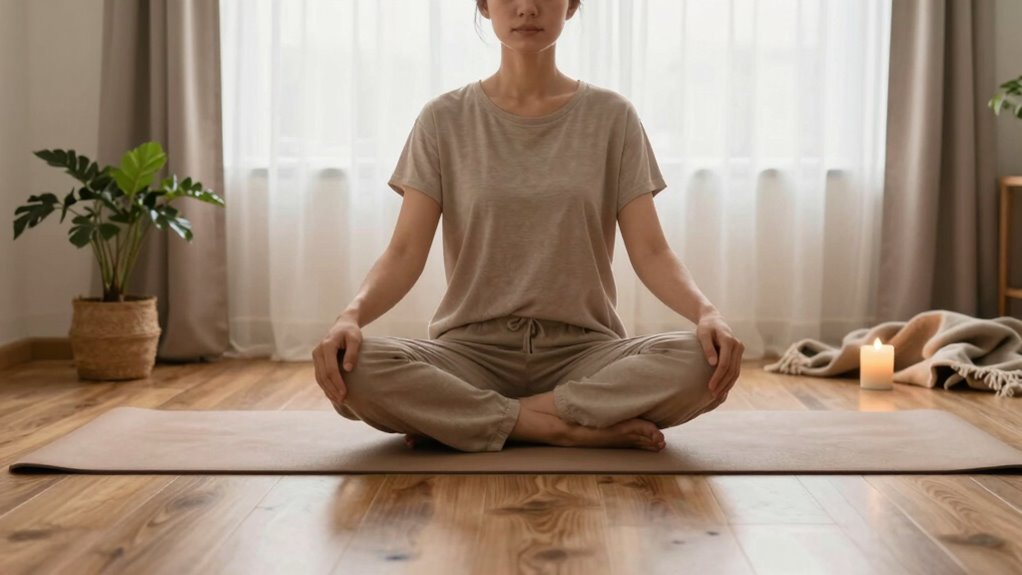
Start your sequence with simple seated or lying poses that promote breath awareness. Sit comfortably, close your eyes, and take slow, deep inhales through your nose. Feel the breath fill your belly and chest, then exhale fully. This practice calms your nervous system and helps you connect with your body’s natural rhythm. As you deepen your breath awareness, visualize your root chakra at the base of your spine, imagining it as a red, glowing orb that grounds you. Focus on maintaining steady, mindful breaths throughout your practice to enhance chakra balancing and deepen your sense of stability.
Begin with gentle seated or lying poses, focusing on breath to ground and balance your root chakra.
Next, move into gentle grounding poses like Child’s Pose, Cat-Cow, or Forward Folds. These poses stretch your lower back, hips, and legs, reinforcing your physical connection to the earth. As you hold each pose, keep your attention rooted in your breath, feeling each inhale energize your body and each exhale release tension. Incorporating grounding techniques can further deepen your sense of stability and help you stay present in your practice. Engaging in mindful awareness of your body’s contact with the ground, sensing the support beneath you, can be complemented by understanding body awareness practices that enhance your connection to the earth. This tactile connection fosters a sense of security and helps you cultivate a calm, centered mind. Additionally, focusing on sound vibrations during your practice, such as soft chanting or ambient sounds, can amplify your feeling of groundedness and deepen your relaxation.
To deepen your grounding, include poses like Warrior I and II, which strengthen your legs and establish a stable stance. As you settle into each posture, visualize roots extending from your feet into the earth, anchoring you securely. Focus on your breath to maintain balance and presence, allowing your energy to flow smoothly through your body. During these poses, you also work on balancing your chakras by activating the root and sacral chakras, restoring a sense of security and emotional stability.
Finish your sequence with a calming pose such as Savasana or seated meditation. As you lie down or sit comfortably, take a few moments to breathe deeply, imagining that you’re drawing up grounding energy from the earth with each inhale. Let this energy fill your entire body, leaving you feeling centered and refreshed. Regularly practicing this grounding sequence at home nurtures your physical and energetic stability, helping you face daily challenges with resilience and calm.
As an affiliate, we earn on qualifying purchases.
Frequently Asked Questions
Can I Customize My Grounding Yoga Sequence for Specific Ailments?
Yes, you can customize your grounding yoga sequence for specific ailments. Use personalization options to tailor poses that target your needs, and incorporate ailment-specific modifications to make your practice safer and more effective. For example, if you have lower back pain, focus on gentle stretches and avoid deep twists. Listening to your body is key, and consulting a professional can help you create a sequence that supports your healing process.
How Long Should Each Pose Be Held in a Grounding Sequence?
Hold each pose for about 3 to 5 minutes to deepen your grounding practice. Think of it like planting a seed—giving it enough time to settle and grow. Incorporate breathing techniques and meditation practices during each pose to enhance relaxation and awareness. If you feel discomfort, gently release and breathe, ensuring your grounding experience remains calming and effective. This duration allows your mind and body to truly unwind.
What Props Are Necessary for a Grounding Yoga Practice at Home?
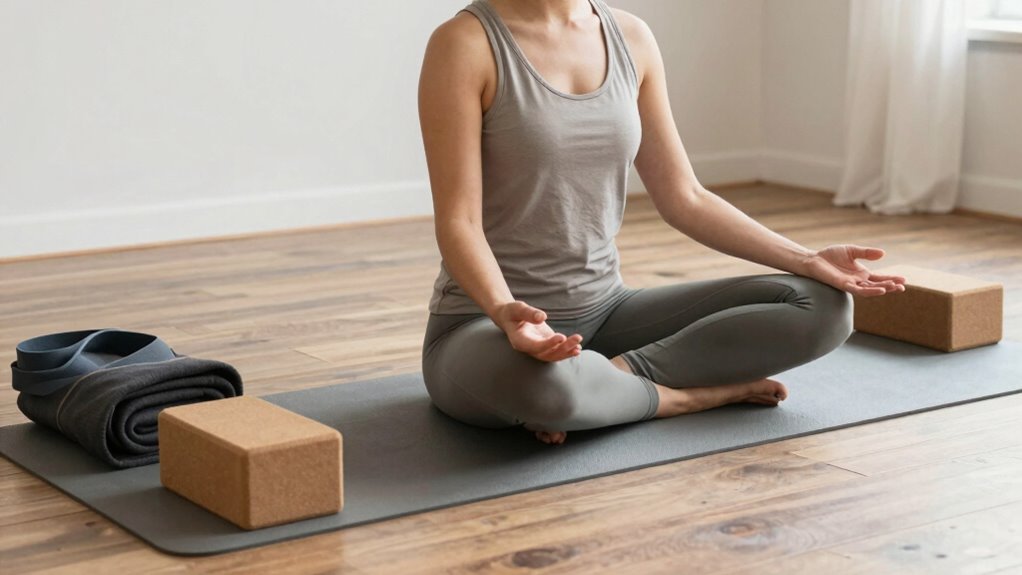
For a grounding yoga practice, you’ll want props that enhance stability and comfort, like a sturdy yoga block, a bolster or cushion, and a yoga strap. Props selection should prioritize safety considerations, ensuring they support your body without strain. Use them mindfully to deepen poses or modify poses as needed. These tools help you stay grounded, prevent injury, and create a calming, accessible practice at home.
How Often Should I Practice Grounding Yoga for Best Results?
You should practice grounding yoga daily or at least several times a week to see the best results. Incorporate mindfulness techniques and breathing exercises into each session to deepen your connection to the present moment. By doing so, you’ll cultivate a sense of stability and calmness, helping you manage stress and improve overall well-being. Consistency is key, so make it a regular part of your routine to experience lasting benefits.
Is It Suitable for Complete Beginners or Only Experienced Practitioners?
Think of grounding yoga as a gentle river guiding everyone, from beginners to seasoned practitioners. It’s absolutely suitable for complete beginners because it emphasizes simple breathing techniques and meditation practices that help cultivate calm and stability. You don’t need prior experience—just a willingness to connect with your breath and stay present. With patience, you’ll find this practice nurturing, grounding your energy regardless of your skill level.
As an affiliate, we earn on qualifying purchases.
Conclusion
By creating a grounding yoga sequence, you invite stability, calmness, and focus into your daily routine. You build strength, cultivate mindfulness, and nurture your inner peace. You embrace the practice, honor your body, and connect with the present moment. Remember, consistency fosters growth, intention deepens practice, and patience brings progress. So, keep exploring, stay committed, and let your grounding practice become an essential part of your life’s journey toward balance and serenity.
chakra balancing meditation cushion
As an affiliate, we earn on qualifying purchases.
As an affiliate, we earn on qualifying purchases.
As an affiliate, we earn on qualifying purchases.
Columbus Day / Indigenous Peoples' Day Picks
long weekend sales
As an affiliate, we earn on qualifying purchases.