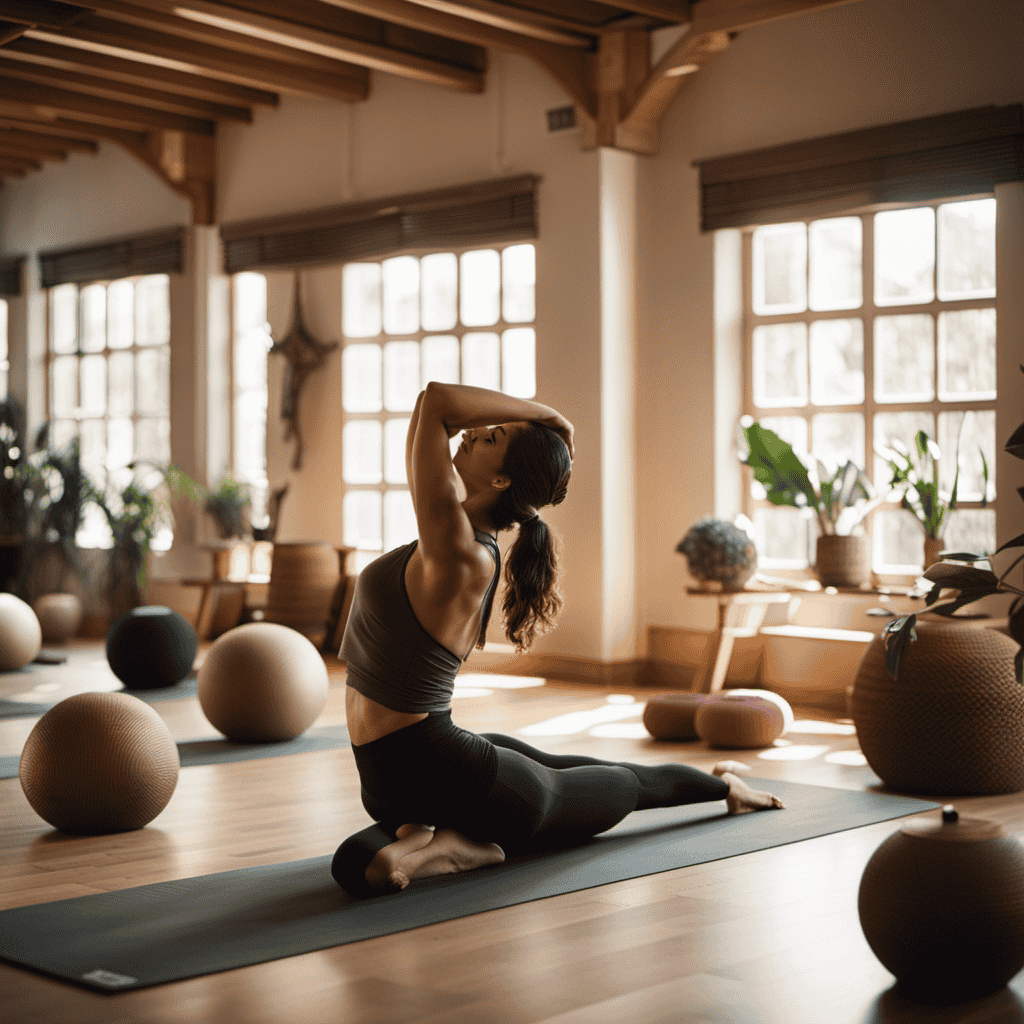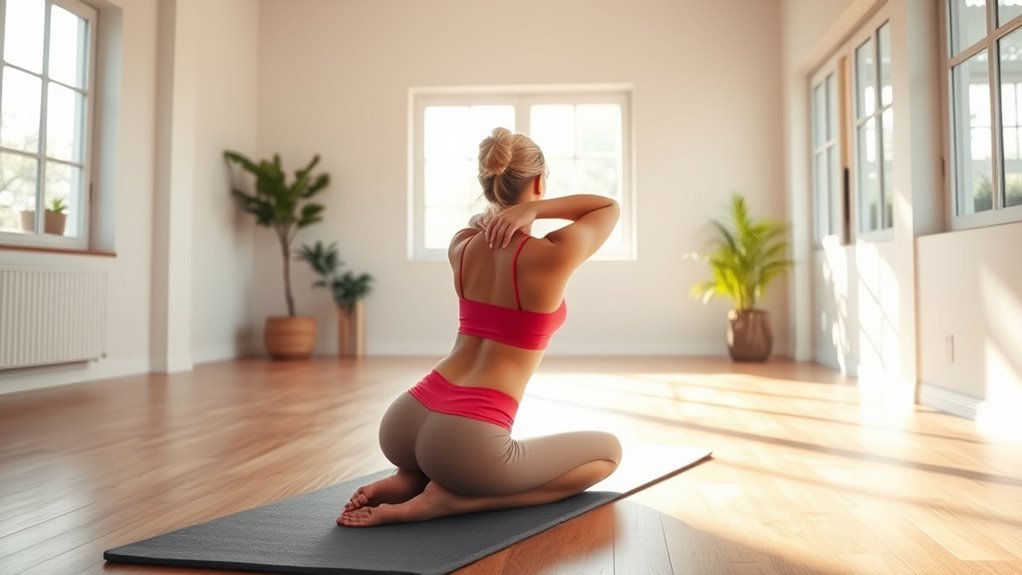

To open tight hips with yoga, focus on gentle seated stretches that target hip flexibility and promote relaxation. Poses like sitting cross-legged or the figure-four position can help release tension and improve mobility, especially when done regularly with mindful breathing. Be patient and avoid forcing movements beyond your comfort. Keep practicing these stretches consistently, and you’ll notice greater ease and comfort in your hips over time. Discover techniques that suit your needs to achieve lasting relief.
Key Takeaways
- Incorporate seated stretches like cross-legged poses to gently loosen hip muscles and improve flexibility.
- Use seated figure-four poses to target the piriformis and outer hips effectively.
- Practice slow, controlled movements with deep breathing to avoid strain and enhance relaxation.
- Combine seated stretches with regular hip exercises for sustained flexibility and mobility.
- Consistent practice of seated yoga poses can alleviate tightness and promote better hip function over time.
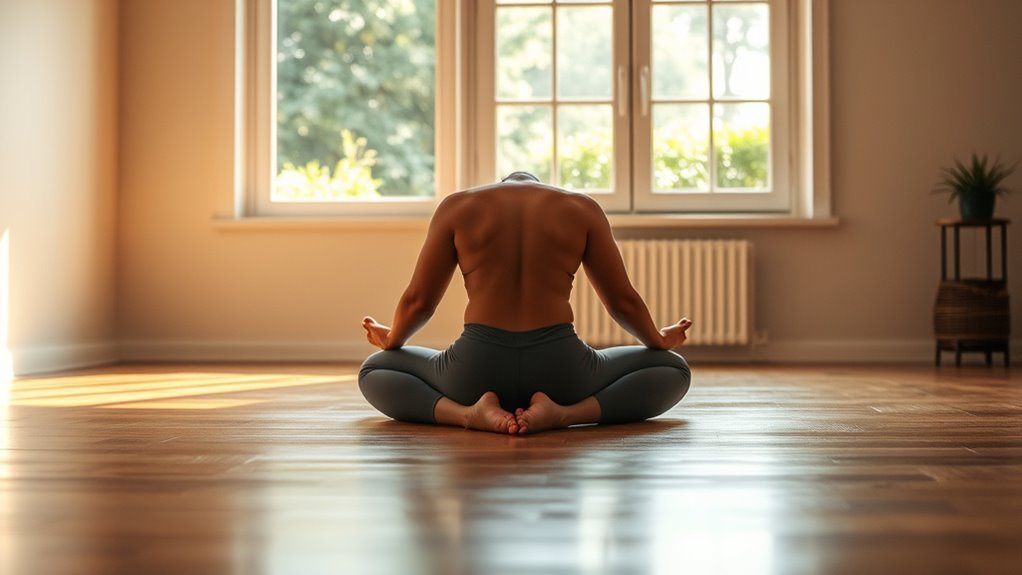
Have tight hips been holding you back from comfortable movement or causing discomfort during your daily activities? If so, you’re not alone. Many people experience tightness in their hips, which can limit mobility, cause pain, and even affect posture. Luckily, yoga offers effective ways to improve hip flexibility and reduce tightness. One simple yet powerful method is incorporating seated stretches into your routine. These stretches are accessible, require minimal space, and can be done anywhere, making them perfect for easing tight hips gradually.
Seated stretches target the hip area directly, helping to loosen the muscles and connective tissues. When you sit, you can focus on gentle, controlled movements that stretch the hip flexors, rotators, and adductors. For example, sitting cross-legged with your back straight allows you to gently press your knees toward the floor, opening the hips. If you find this position uncomfortable, sitting in a tailored position or using props like cushions can provide extra support. The key is to move slowly and breathe deeply, allowing your muscles to relax and stretch naturally. Regular practice of seated stretches can gradually increase your hip flexibility, making everyday activities more comfortable and reducing stiffness.
Seated stretches loosen hip muscles through gentle, controlled movements and deep breathing for increased flexibility and comfort.
Another effective seated stretch is the figure-four pose while seated. Sit upright, cross one ankle over the opposite thigh, and gently lean forward into the stretch. This position targets the piriformis and outer hip muscles, which often contribute to tightness. When performed consistently, this stretch can release tension and improve overall mobility. Remember to keep your movements gentle; forcing a stretch can cause strain or injury. Instead, listen to your body, and with time, you’ll notice your hips becoming more open and less restrictive. Additionally, incorporating hip flexibility exercises can enhance the benefits of these stretches and further improve your overall mobility.
Adding seated stretches into your daily routine doesn’t just improve flexibility; it also promotes better circulation and reduces stress in the hips. Over time, you’ll find it easier to perform other yoga poses that deepen your hip opening, such as lunges or pigeon pose. The beauty of focusing on seated stretches is their simplicity and adaptability—they can be done at your desk, on your couch, or in bed. Consistency is key, so aim to dedicate a few minutes each day to these stretches. As your hips loosen up, you’ll experience less discomfort, more freedom of movement, and a greater sense of ease throughout your day.
Incorporating these seated stretches into your yoga practice is a gentle yet effective way to combat tight hips. By focusing on hip flexibility, you’ll gradually notice improvements that enhance your overall comfort and mobility. Remember, patience and persistence are essential in seeing lasting results. Keep at it, and your hips will thank you.
Frequently Asked Questions
How Often Should I Practice Yoga for Hip Flexibility?
You should practice yoga for hip flexibility at least three to four times a week. This practice frequency helps you see steady progress without risking overuse or injury. For the best schedule, aim for sessions lasting 20-30 minutes, focusing on deep stretches and gentle holds. Consistency is key, so incorporate hip-opening poses into your routine regularly, and you’ll gradually improve your flexibility and reduce tightness.
Are There Any Contraindications for Tight Hips?
You should be cautious if you have hip arthritis or have had a hip replacement. Yoga poses that stretch or compress the hips might cause discomfort or worsen symptoms. Always consult with your healthcare provider before starting any new routine. Modify poses as needed, avoid deep stretches, and focus on gentle movements to improve flexibility safely. Listening to your body is key to preventing injury and ensuring safe practice.
Can Yoga Help With Hip Pain Caused by Injury?
Sure, yoga can be your hero in hip pain caused by injury—if you’re not expecting miracles overnight. It boosts hip mobility and supports injury recovery, gently restoring flexibility and strength. Just remember, don’t push through pain or ignore your doctor’s advice. With patience and proper poses, yoga helps you move better and heal smarter. So, yes, you can definitely use yoga as part of your recovery toolkit.
What Other Exercises Complement Yoga for Hip Opening?
To improve hip mobility and enhance your stretching routines, consider adding strength training exercises like clamshells and bridges. Dynamic movements such as leg swings and lunges also support hip flexibility. Incorporate foam rolling to release tight muscles and improve circulation. These exercises complement yoga by targeting different muscle groups, helping you achieve more effective hip opening and reducing tightness over time. Consistency is key for lasting results.
How Long Does It Take to Notice Improvements?
You might notice progress in just a few weeks, especially if you track your improvements regularly. Consistent practice enhances not only your flexibility but also your mental benefits, like reduced stress and increased focus. Sometimes, a small change sparks motivation, making you realize how far you’ve come. Keep practicing, stay patient, and celebrate each milestone—your hips and mind will thank you for the dedication.
Conclusion
So, you thought tight hips would stay stubborn forever? Think again. With these simple yoga poses, you’ll soon be swapping discomfort for freedom—who knew opening up could be so effortless? It’s funny how just a few stretches can transform your day, isn’t it? So, keep at it, and before you know it, those tight hips will be a thing of the past—probably wondering how they ever held you back in the first place.