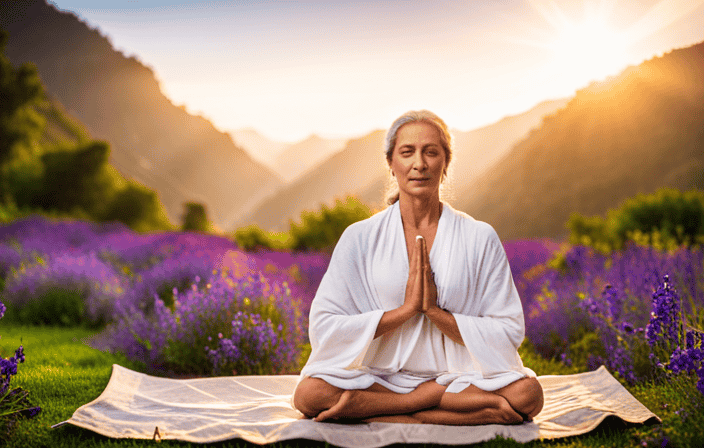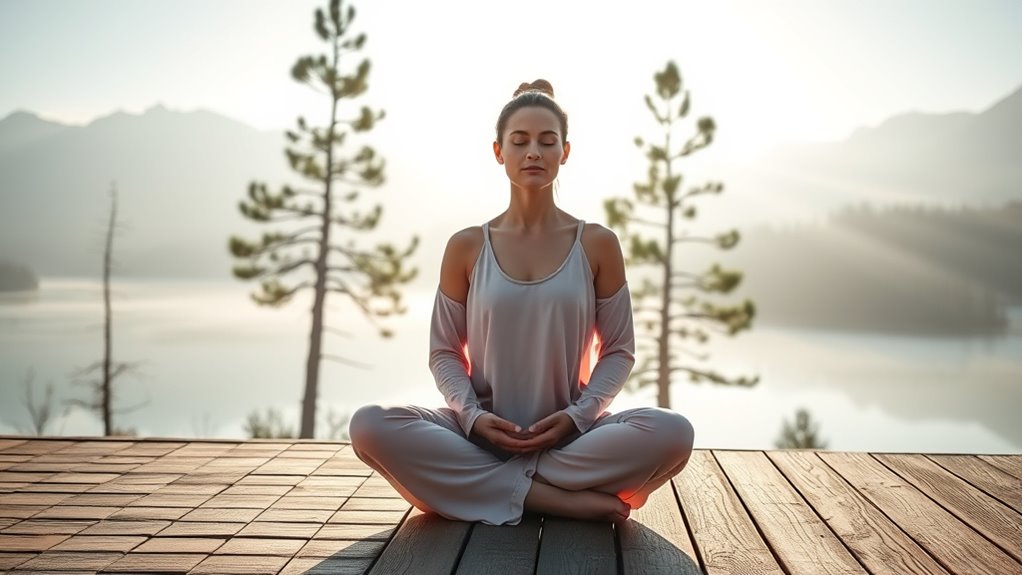

Practicing yoga that combines mindfulness meditation and breath control can greatly enhance your emotional balance and mental clarity. By staying present and observing your thoughts without judgment, you’ll cultivate inner calm. Incorporating breath techniques activates your relaxation response, helping you stay centered during stressful times. This integration sharpens your awareness of emotional patterns, allowing for conscious responses instead of reactions. Keep exploring these practices to discover how they can transform your emotional well-being and bring you greater peace.
Key Takeaways
- Incorporate gentle yoga poses that promote relaxation and release emotional tension, such as forward bends and restorative postures.
- Practice mindful breathing techniques during yoga to enhance emotional regulation and foster inner calm.
- Focus on present-moment awareness throughout yoga sessions to improve mental clarity and emotional balance.
- Use sequences that stimulate the parasympathetic nervous system, like slow, deep breathing combined with calming postures.
- Regularly integrate mindfulness meditation with yoga to develop emotional resilience and cultivate a balanced mind.
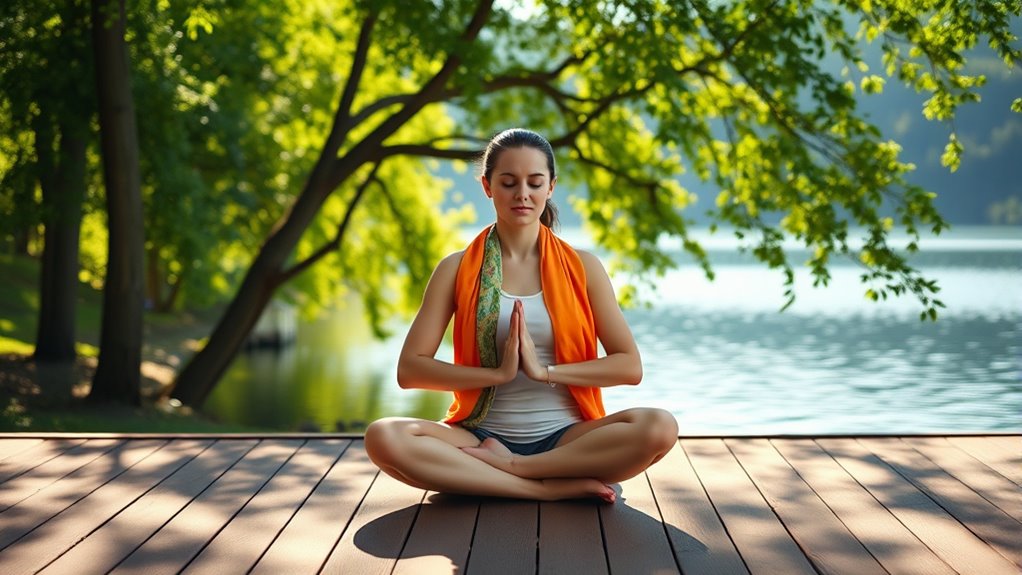
Yoga offers a powerful way to cultivate emotional balance and gain mental clarity. One of the most effective methods to achieve this is through mindfulness meditation, a practice that encourages you to stay present and observe your thoughts without judgment. When combined with breath control techniques, mindfulness meditation becomes even more potent, helping you anchor your awareness and reduce emotional turbulence. As you focus on your breath, you learn to notice the subtle shifts in your mood and thoughts, which allows you to respond rather than react impulsively. This heightened awareness creates a space where emotional reactions become less overwhelming, giving you a sense of calm and stability.
Breath control, or pranayama, is a cornerstone of yoga that directly influences your emotional state. When you intentionally regulate your breathing, you activate your parasympathetic nervous system, which promotes relaxation and counters stress. Deep, slow breaths signal your body to relax, lowering cortisol levels and calming your mind. This practice not only reduces anxiety but also enhances your ability to stay centered during challenging moments. Over time, consistent breath control helps you develop resilience, making it easier to manage emotional upheavals and maintain clarity amidst life’s chaos.
Incorporating mindfulness meditation into your yoga routine encourages you to observe your feelings and thoughts with kindness and curiosity. Instead of getting caught up in emotional reactions, you learn to acknowledge them without attachment. This skill is especially valuable when emotions run high, as it prevents you from becoming overwhelmed and allows you to respond thoughtfully. Regular practice of mindfulness meditation also sharpens your mental focus, clearing mental clutter and fostering a sense of inner peace. When paired with breath control, this combination becomes a powerful tool for emotional regulation, helping you cultivate a balanced mind that is resilient against daily stressors.
As you deepen your practice, you’ll notice that both mindfulness meditation and breath control contribute to a greater sense of mental clarity. You become better at identifying your emotional patterns and understanding their triggers. This awareness empowers you to make conscious choices rather than reacting impulsively. Over time, these practices develop into habits that support emotional stability and mental sharpness, guiding you toward a more balanced and fulfilled life. Whether you’re new to yoga or have been practicing for years, integrating mindfulness meditation and breath control into your routine can transform your emotional landscape, leading to a more peaceful, clear-minded existence.
Frequently Asked Questions
Can Yoga Help With Severe Emotional Trauma?
Yes, yoga can aid in trauma healing by helping you process and release intense emotions. Through mindful movement and breathwork, you create space for emotional release, which is essential for recovery. Yoga encourages you to reconnect with your body, reduce stress, and build resilience. While it’s not a substitute for professional therapy, incorporating yoga into your healing journey can support emotional stabilization and foster a sense of safety and calm.
How Often Should I Practice for Emotional Benefits?
Picture yourself gently watering a blooming garden; regular practice nurtures emotional benefits. To see these benefits, aim for at least 3-5 times a week. Consistency helps your mind unwind like leaves in a breeze, fostering calm and clarity. While daily practice can deepen your emotional resilience, even a few sessions weekly can make a noticeable difference. Find a rhythm that feels sustainable, and watch your emotional landscape flourish.
Is Yoga Suitable for All Age Groups?
Yoga is suitable for all age groups because it promotes age inclusivity and offers adaptable poses tailored to your needs. Whether you’re a child, adult, or senior, you can benefit from gentle stretches or more active practices. You should choose classes or routines that match your ability level. Always listen to your body, and consult a healthcare professional if you have concerns or specific health conditions.
Do I Need Prior Experience to Start Yoga for Emotional Balance?
You don’t need prior knowledge to start yoga for emotional balance—think of it as opening a new chapter in your book. Beginner questions are common, and instructors welcome newcomers with open arms. Yoga is designed for all levels, so you can comfortably begin without experience. Just bring your curiosity and willingness to learn, and you’ll find that each pose helps you cultivate clarity and emotional harmony.
Are There Specific Yoga Styles Recommended for Emotional Clarity?
You should try gentle styles like Hatha or Yin Yoga, which emphasize mindfulness meditation and breath control. These styles help you focus inward, releasing emotional tension and gaining clarity. You don’t need prior experience; just approach each session with patience and an open mind. By practicing regularly, you’ll enhance your emotional balance, deepen your awareness, and improve your overall well-being through mindful movement and controlled breathing.
Conclusion
By embracing these mindful moves, you’ll master your mood and manifest mental clarity. Regularly practicing yoga cultivates calm, confidence, and a connected core. With consistent commitment, you’ll create a confident, clear, and centered mind, overcoming chaos with calm. So, step into serenity, stretch your stress, and seize your serenity—because your journey to joyful, jubilant balance begins with simple, soulful stretches. Embrace the practice, and watch your emotional equilibrium evolve effortlessly.