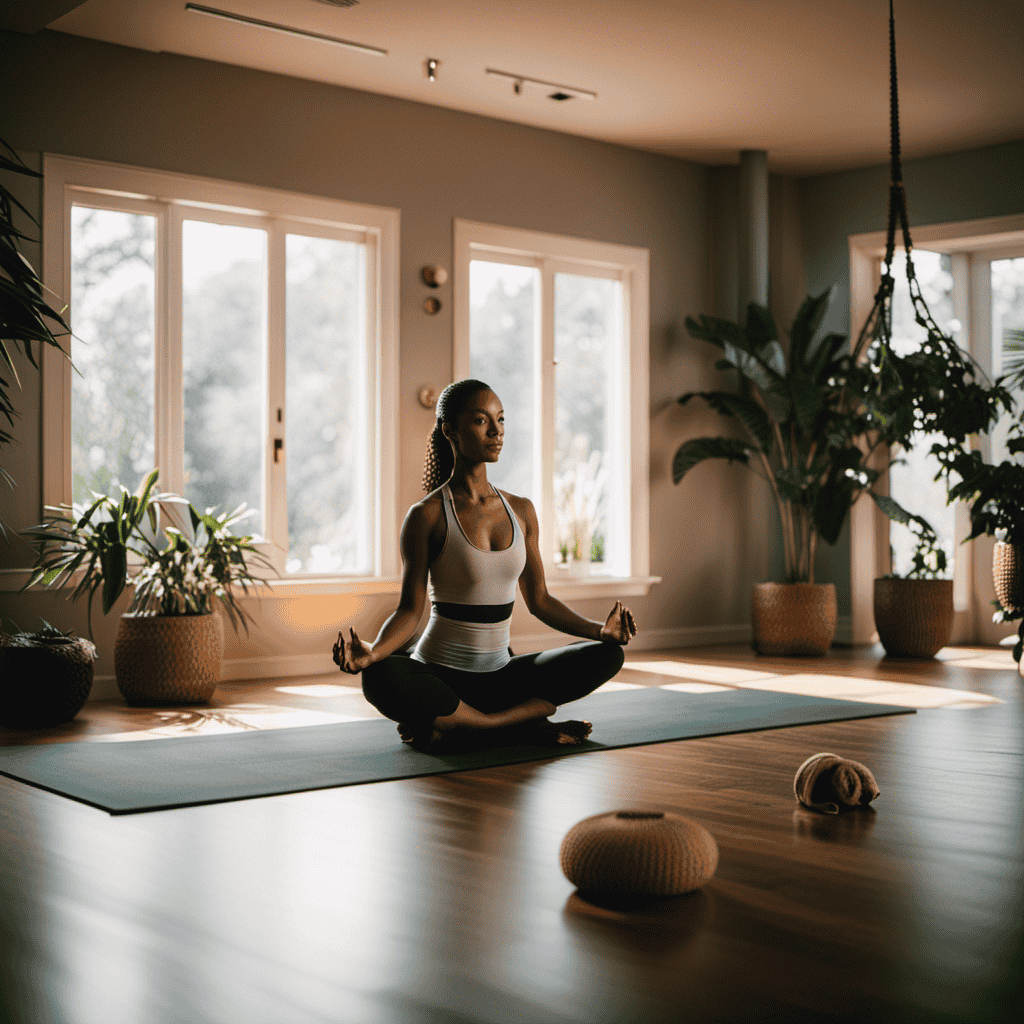
Slow yoga is more powerful than fast flows because it emphasizes mindful movement and deep awareness of your body and breath. This approach quiets mental chatter, reduces stress, and helps you feel each stretch or twist more fully. It strengthens your control, improves flexibility, and fosters emotional balance over time. By focusing on quality instead of speed, you build resilience and inner calm. Keep exploring to discover how slow yoga can reveal powerful benefits for your mind and body.

Turn your wind-down time into listening time
- Thousands of audiobooks, podcasts and originals
- Listen on your phone, tablet or Echo — also offline
- Cancel anytime
Key Takeaways
- Slow yoga enhances mindfulness, deepening awareness and emotional stability beyond the fleeting effects of fast flows.
- It allows for precise movement control, reducing injury risk and promoting sustainable, long-term progress.
- The focus on breath and presence quiets mental chatter, fostering greater mental clarity and resilience.
- Slow practice emphasizes full engagement with each pose, increasing flexibility, strength, and balance more effectively over time.
- It cultivates a deeper mind-body connection, empowering practitioners to access inner calm and emotional balance.
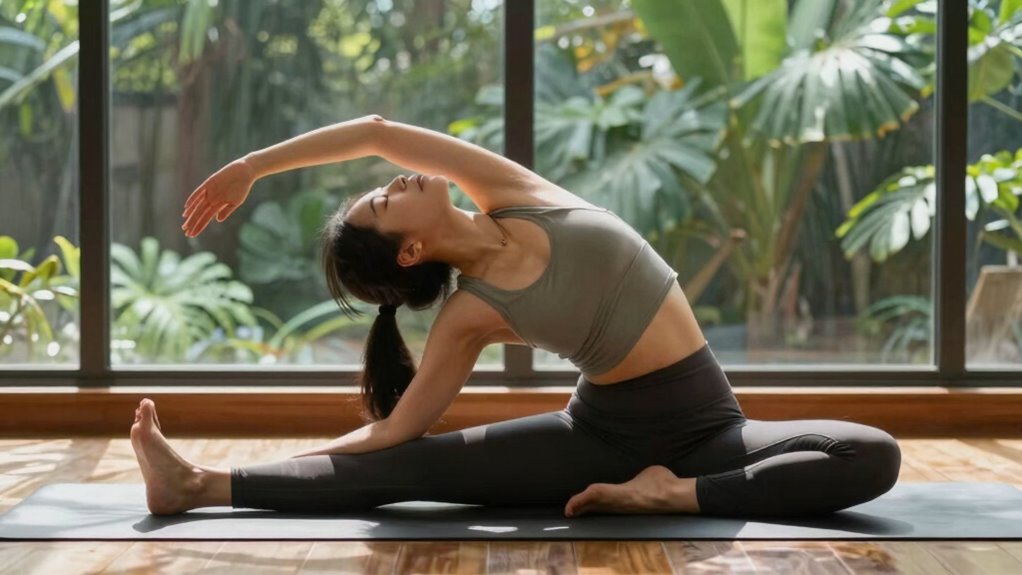
In a fast-paced world, slow yoga offers a revitalizing pause to reconnect with your body and mind. Unlike quick sequences that push you through movements rapidly, slow yoga invites you to move with intention and awareness. This deliberate pace allows you to focus on your breathing techniques, which are essential for grounding yourself in each pose. When you slow down, you become more attuned to your breath, noticing how it flows in and out, deepening your connection to the present moment. This increased awareness enhances your mindfulness practices, making every movement a conscious act rather than a hurried effort to complete a sequence.
Slow yoga encourages mindful movement and deep breathing, fostering presence and inner calm in every pose.
By practicing slow yoga, you give yourself the opportunity to truly feel each stretch, twist, or hold. This mindful approach helps you identify areas of tension and release them more effectively. When you’re not rushing, you can observe subtle sensations within your muscles and joints, fostering a deeper understanding of your body’s needs. This heightened sensitivity isn’t just physical—it also cultivates mental clarity. As you focus on your breathing and movement, you quiet mental chatter, reducing stress and promoting emotional balance.
Slow yoga also empowers you to develop better control over your movements and your breath. With each deliberate inhale and exhale, you strengthen your capacity for calm and resilience. This control translates beyond the mat into your daily life, helping you manage anxiety, stay present, and respond thoughtfully to challenges. The emphasis on mindfulness practices in slow yoga encourages you to stay fully engaged with every moment, rather than being distracted or overwhelmed. Over time, these practices foster a sense of inner peace and stability that fast flows often can’t provide. Additionally, incorporating emerging trends in digital content can help deepen your understanding and motivation for consistent practice.
Furthermore, slow yoga is accessible to everyone, regardless of fitness level. It emphasizes quality over quantity, allowing you to deepen your practice without risking injury or burnout. You learn to listen carefully to your body’s signals, respecting its limits while gently exploring new ranges of motion. This gentle approach promotes sustainable practice and long-term benefits, including improved flexibility, balance, and strength.
In essence, slow yoga’s power lies in its capacity to cultivate mindfulness, refine your breathing techniques, and foster a profound connection between body and mind. It’s not about how fast you move but about how deeply you engage with each movement. When you embrace the slow flow, you create space for true self-awareness, making your practice not just a physical exercise but a mindful journey toward overall well-being.
As an affiliate, we earn on qualifying purchases.
Frequently Asked Questions
Can Slow Yoga Improve Flexibility Faster Than Fast-Paced Styles?
Yes, slow yoga can improve your flexibility faster than fast-paced styles. By focusing on meditative stretching and mindful movement, you become more aware of your body’s limits and gradually deepen each stretch. This intentional approach allows you to release tension more effectively, increase range of motion, and prevent injury. Over time, the consistent, gentle effort enhances flexibility, making slow yoga a powerful tool for lasting progress.
Is Slow Yoga Suitable for Beginners With Limited Mobility?
Yes, slow yoga is perfect for beginners with limited mobility. Studies show that gentle stretches combined with mindful breathing can improve flexibility and strength over time. As you move slowly, you gain better control and awareness of your body, making it safer and more effective. This approach allows you to build confidence gradually, making yoga accessible and beneficial regardless of your mobility level.
How Does Slow Yoga Impact Mental Health Compared to Vigorous Practices?
You’ll find that slow yoga profoundly impacts your mental health by fostering mindfulness meditation and stress reduction. Unlike vigorous practices, slow flows allow you to focus deeply on breath and body sensations, calming your mind. This mindful approach helps lower anxiety, improve mood, and build resilience. By practicing at a gentle pace, you create space for mental clarity and emotional balance, making slow yoga a powerful tool for overall mental well-being.
Are There Specific Health Conditions That Benefit Most From Slow Yoga?
You’ll find slow yoga especially beneficial if you have chronic stress, anxiety, or respiratory issues. It emphasizes breathing techniques that promote relaxation and stress reduction, helping calm your nervous system. By practicing at a gentle pace, you improve flexibility and strength while reducing tension. This approach is gentle yet powerful, making it ideal for managing health conditions that benefit from mindful breathing and calming movements.
Can Slow Yoga Help With Injury Recovery and Prevention?
Yes, slow yoga can aid injury rehabilitation and prevention. By focusing on gentle movements, you promote muscle relaxation and improve flexibility without risking further damage. This mindful approach helps you regain strength gradually, ensuring proper alignment and reducing tension. Incorporating slow yoga into your routine supports healing, minimizes re-injury, and enhances overall muscle resilience, making it an effective tool for both recovery and long-term injury prevention.
As an affiliate, we earn on qualifying purchases.
Conclusion
So, next time you feel like rushing through your yoga, remember—slowing down isn’t just a choice, it’s a superpower. By moving gently and mindfully, you reveal strength and peace that could crush mountains! Slow yoga isn’t just about stretching; it’s about transforming into a yoga ninja, wielding calm like a mighty sword. Embrace the slow, and watch your world change faster than you ever imagined—because sometimes, the slowest path leads to the greatest power!
As an affiliate, we earn on qualifying purchases.
As an affiliate, we earn on qualifying purchases.
Halloween Picks
halloween
As an affiliate, we earn on qualifying purchases.