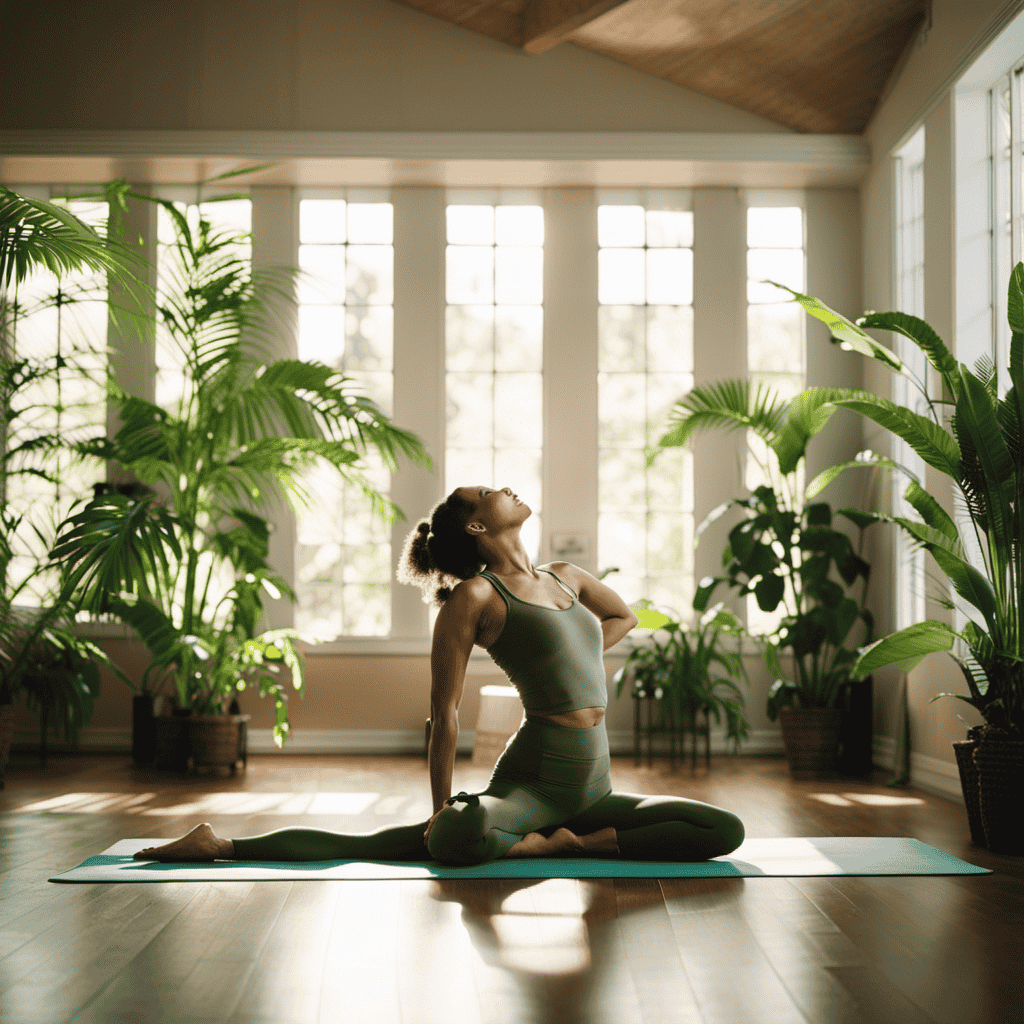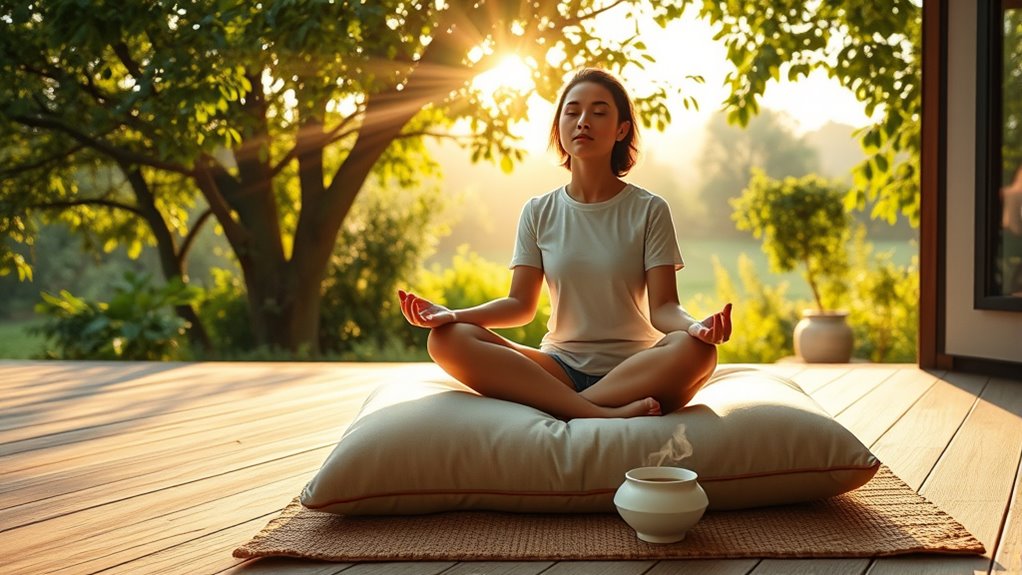

To build a daily meditation habit, choose a specific time and create a designated space to anchor your practice. Keep it simple by focusing on breath awareness or guided meditations, and start with manageable sessions. Be patient and consistent, celebrating small wins along the way. Over time, this routine becomes natural, improving your emotional resilience and overall well-being. If you keep practicing, you’ll discover even more tips to deepen your mindfulness journey.
Key Takeaways
- Establish a consistent daily time and dedicated space to anchor your meditation routine.
- Start with brief sessions focused on breath awareness or guided meditations to build habit gradually.
- Use physical cues and existing routines to signal the start of meditation, reinforcing consistency.
- Practice non-judgmental awareness of distractions, celebrating small progress and staying persistent.
- Recognize that patience and kindness toward yourself are essential for long-term habit formation.

Have you ever wondered how to make meditation a consistent part of your daily routine? You’re not alone. Many people struggle with establishing a steady practice, often feeling overwhelmed by meditation challenges or unsure of where to start. The key to building a daily meditation habit lies in integrating simple mindfulness techniques that fit seamlessly into your day. Instead of aiming for long, perfect sessions right away, focus on small, manageable steps. This approach helps you develop consistency without feeling pressured or discouraged.
One effective way to overcome meditation challenges is to set clear, realistic intentions. Decide on a specific time each day to meditate—whether it’s first thing in the morning, during lunch, or before bed. By anchoring your practice to an existing routine, you create a habit that becomes automatic over time. You might find it helpful to keep a dedicated meditation space, even if it’s just a corner with a cushion or chair. This physical cue signals your brain that it’s time to shift gears into mindfulness. When you’re consistent with your timing and environment, the practice becomes less of a chore and more of a natural part of your day.
Incorporating mindfulness techniques can make meditation more accessible and enjoyable. Focus on your breath, noticing each inhale and exhale, or use guided meditations to steer your attention. If your mind wanders, acknowledge the distraction without judgment and gently bring your focus back. This practice of non-attachment to thoughts is fundamental to mindfulness and helps you develop patience with your progress. Remember, meditation isn’t about achieving a perfect state but cultivating awareness and presence.
As you face inevitable meditation challenges, like difficulty sitting still or racing thoughts, remind yourself that persistence is more important than perfection. It’s normal for your mind to wander; the goal isn’t to eliminate thoughts but to observe them without attachment. Over time, these mindfulness techniques become second nature, and you’ll notice your ability to remain present increases. Celebrate small victories—like sticking with your routine for a week or noticing moments of calm during busy days. These wins reinforce your commitment and make it easier to stay motivated.
Building a daily meditation habit requires patience and intentional effort. By implementing simple mindfulness techniques and proactively addressing meditation challenges, you set yourself up for success. Keep your expectations realistic, stay consistent, and be kind to yourself on this journey. Research supports that mindfulness practices can significantly improve emotional regulation and resilience, making your meditation routine even more beneficial. With time, meditation will become an integral part of your life, offering clarity, calm, and resilience whenever you need it.
Frequently Asked Questions
What Is the Ideal Meditation Duration for Beginners?
For beginners, the ideal meditation duration is about 5 to 10 minutes daily. Following beginner guidelines, start with shorter sessions to avoid feeling overwhelmed and gradually increase the time as you become more comfortable. Consistency matters more than length, so focus on establishing a routine. Over time, you can extend your meditation duration to deepen your practice and enjoy greater mental clarity and relaxation.
How Can I Stay Motivated to Meditate Daily?
Staying motivated to meditate daily involves setting clear goals, creating a routine, and finding inspiration. You can use mindfulness apps and meditation podcasts to keep your practice fresh and engaging. Remind yourself of the benefits, celebrate small victories, and connect with a community. Incorporate new techniques, explore different guided sessions, and track your progress to stay committed and inspired on your journey to mindfulness.
What Are Common Obstacles Faced When Starting Meditation?
You might face common obstacles like meditation misconceptions, thinking you need to clear your mind completely, which is unrealistic for beginners. Beginner pitfalls include feeling impatient or discouraged when your mind wanders. Distractions and time constraints can also hinder your practice. To overcome these, remind yourself that meditation is a journey, not perfection, and that consistency matters more than perfection. Accepting these obstacles helps you stay committed and enjoy the process.
Is It Necessary to Meditate at the Same Time Every Day?
No, it’s not necessary to meditate at the same time every day, but maintaining meditation consistency helps solidify your habit. Daily scheduling can be flexible; find a time that fits your routine and stick to it as much as possible. This way, you build a reliable meditation routine, making it easier to stay committed and enjoy the benefits of regular practice without feeling pressured to meditate at a specific moment.
Can Meditation Replace Other Stress-Relief Techniques?
Meditation can complement but shouldn’t replace other stress-relief techniques like exercise. While mindfulness promotes relaxation and mental clarity, physical activity releases endorphins that boost your mood. Combining meditation with exercise creates a balanced approach to stress management, tapping into both relaxation and physical health. You’ll find that integrating these practices enhances your overall well-being, making stress easier to manage rather than relying solely on meditation.
Conclusion
By making meditation a daily routine, you create clarity, calmness, and focus. By dedicating time each day, you build consistency, strengthen your mindfulness, and develop resilience. By committing to your practice, you nurture your well-being, enhance your awareness, and transform your life. Remember, every day you meditate is a step toward a healthier mind and a more centered you. Keep showing up, keep practicing, and watch your habits grow stronger every single day.