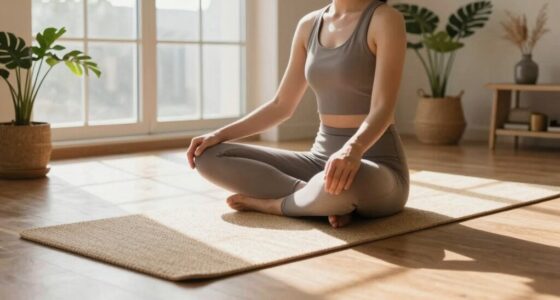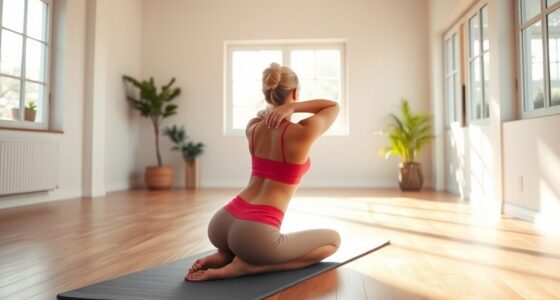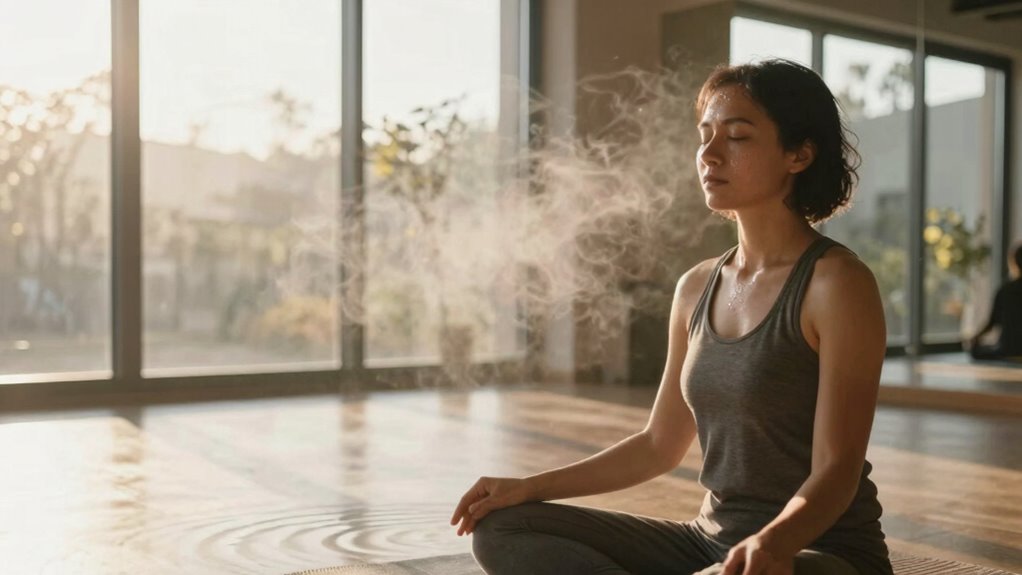

Your breath controls your entire yoga experience, shaping your energy, focus, and emotional balance. When you tune into your breathing, you deepen your awareness, improve your alignment, and prevent tension. Conscious breath guides your movement, making poses more effective and helping you stay present. Techniques like Pranayama can shift your mental and physical states, transforming your practice. If you keep exploring, you’ll discover even more ways your breath can elevate your yoga journey.
Key Takeaways
- Breath awareness deepens presence, making yoga poses more meaningful and enhancing overall practice effectiveness.
- Controlled breathing through Pranayama shifts internal states from tension to calm, enriching mental clarity.
- Conscious breathing supports proper posture and alignment, preventing tension and promoting stability.
- Breath acts as a mindfulness tool, anchoring attention and reducing distractions during practice.
- Integrating breath techniques unlocks yoga’s full potential, fostering internal harmony and transformative growth.

Have you ever wondered how your breath can influence your overall well-being? It’s a simple act, yet it holds immense power in shaping your yoga practice and your mental state. When you focus on breath awareness, you start to notice how your breathing patterns affect your energy, emotions, and even your physical alignment. In yoga, breath isn’t just a byproduct of movement; it’s a guiding force that connects your body and mind. By consciously paying attention to your breath, you unlock a deeper level of presence, allowing each pose to become more meaningful and effective.
Practicing Pranayama techniques amplifies this connection. These breathing exercises are designed to control and extend your breath, helping you cultivate calmness, focus, and vitality. When you integrate Pranayama into your yoga routine, you’re not just performing physical postures—you’re actively shaping your internal landscape. Techniques like Ujjayi breath create a gentle, oceanic sound that calms the nervous system, while Nadi Shodhana, or alternate nostril breathing, balances your energy and clears mental clutter. Each breath becomes a tool for transformation, shifting your state from tension to relaxation or from distraction to clarity. Understanding the significance of contrast ratio can deepen your appreciation for how visual clarity enhances the sensory experience of your practice.
Pranayama deepens your practice, transforming tension into calm and clarity through mindful, controlled breathing techniques.
Your breath also influences your posture and movement. As you become more aware of your breathing, you naturally learn to align your body better. For example, deep, diaphragmatic breathing encourages an open chest and lengthened spine, which enhances your stability in poses. When you breathe consciously, you avoid holding tension or collapsing into your joints. Instead, each inhale expands your chest, and each exhale gently grounds you, creating a sense of ease that sustains your practice longer and with more mindfulness. Additionally, focusing on your breath can help you develop better body awareness, leading to improved posture both on and off the mat. Recognizing the importance of respiratory patterns can further optimize your physical and mental benefits, as they are integral to mind-body connection.
Furthermore, breath awareness during yoga helps you stay present. Instead of rushing through sequences or getting lost in thoughts, you anchor yourself in the rhythm of your breath. This mindfulness makes your practice more than just physical movement; it becomes a meditative experience. Over time, this heightened awareness can spill into your daily life, reducing stress and improving emotional resilience. Your breath becomes a bridge, connecting your physical, mental, and emotional states, and transforming your yoga session from a series of poses into a holistic journey inward.
In essence, your breath is the key to unlocking the full potential of yoga. It’s a powerful, accessible resource that can deepen your practice, boost your well-being, and foster a profound sense of harmony within. When you harness the power of breath awareness and incorporate Pranayama techniques, you don’t just move through yoga—you breathe life into it. Recognizing how emerging trends in digital publishing can help spread awareness about the significance of breath in yoga can further motivate practitioners to deepen their understanding and practice.

Light on Prãnãyãma: The Yogic Art of Breathing
As an affiliate, we earn on qualifying purchases.
As an affiliate, we earn on qualifying purchases.
Frequently Asked Questions
How Does Breathing Influence Emotional States During Yoga?
Your breathing directly influences your emotional states during yoga by promoting emotional regulation and stress reduction. When you breathe deeply and intentionally, you activate the parasympathetic nervous system, calming your mind and reducing anxiety. This mindful breathing helps you stay present, manage emotions better, and deepen your practice. As a result, you experience a more peaceful, centered state, making your yoga session more restorative and emotionally balanced.
Can Breath Techniques Improve Focus Outside of Yoga Practice?
Yes, breath techniques can improve your focus outside of yoga. By practicing breath awareness and mindful inhalation, you strengthen your ability to stay present, calm your mind, and manage stress. These techniques help you develop mental clarity and emotional resilience. When you incorporate breath awareness into daily activities, you train your mind to stay focused, making it easier to handle challenges with calmness and confidence.
What Are Common Breathing Mistakes Beginners Make?
As a beginner, you often make mistakes like shallow breath control, which limits oxygen flow, and improper inhalation techniques that cause tension. You may also forget to breathe deeply from your diaphragm, leading to inefficient breathing. To improve, focus on slow, steady inhalation, and exhalation, ensuring your breaths are full and relaxed. With practice, your breath becomes more controlled, enhancing your yoga experience and overall well-being.
How Does Breath Affect Muscle Engagement in Poses?
Your breath is the engine that powers muscle engagement in poses. When you master diaphragmatic control, you fuel each movement with steady, deep breaths. Breath pacing acts like a metronome, keeping your muscles synchronized and engaged. If you rush or hold your breath, muscles weaken and lose their rhythm. Calm, controlled breathing releases your strength, turning each pose into a symphony of precise muscle activation.
Are There Specific Breaths for Different Yoga Styles?
Yes, different yoga styles often use specific breath patterns and Pranayama sequences. For example, Vinyasa incorporates smooth, flowing breath linked to movement, while Kundalini emphasizes powerful, rhythmic breathwork. Hatha may focus on slow, deep breaths to promote relaxation. By practicing these varied breath patterns, you enhance your experience, deepen poses, and cultivate mindfulness. Adjusting your breath to each style helps you connect more fully with your practice.

Minglewood Trading White – Breathe Sanskrit Symbol Vinyl Sticker – Pranayama Ujjayi Yoga – V1 Die Cut Decal – 2w x 5h inches
- Versatile Application: Suitable for campers, trucks, walls
- Surface Compatibility: Adheres to painted wood, glass, metal, plastic
- Durable Material: Outdoor lifespan up to 6 years
As an affiliate, we earn on qualifying purchases.
As an affiliate, we earn on qualifying purchases.
Conclusion
Your breath is the silent conductor of your yoga symphony, guiding each movement and shaping your inner world. When you breathe mindfully, you release a wellspring of calm and clarity, transforming your practice into a dance with the universe. Like a gentle breeze stirring still waters, your breath can stir your spirit and deepen your connection to yourself. Embrace each inhale and exhale, and watch your entire yoga journey blossom into a sacred, harmonious flow.

Health Benefits Wooden Yoga Danda Stick Improved Breath Flow in Nostrils and for Meditation Practices (New Danda)
- Material: Exquisitely carved wood
- Length: Approximately 48 cm
- Design: T-shaped wooden stick
As an affiliate, we earn on qualifying purchases.
As an affiliate, we earn on qualifying purchases.
Yoga Journal Presents Restorative Yoga for Life: A Relaxing Way to De-stress, Re-energize, and Find Balance
As an affiliate, we earn on qualifying purchases.
As an affiliate, we earn on qualifying purchases.