
TL;DR

Turn your wind-down time into listening time
- Thousands of audiobooks, podcasts and originals
- Listen on your phone, tablet or Echo — also offline
- Cancel anytime
A Fit&Well writer reported that year-round step-ups and Bulgarian split squats helped them feel steadier while hiking to a 5,889-foot summit in Albania. The exercises train one leg at a time and can be adapted with bodyweight or added weight, though the account is personal experience rather than evidence that they will prevent injuries or improve every walker’s performance.
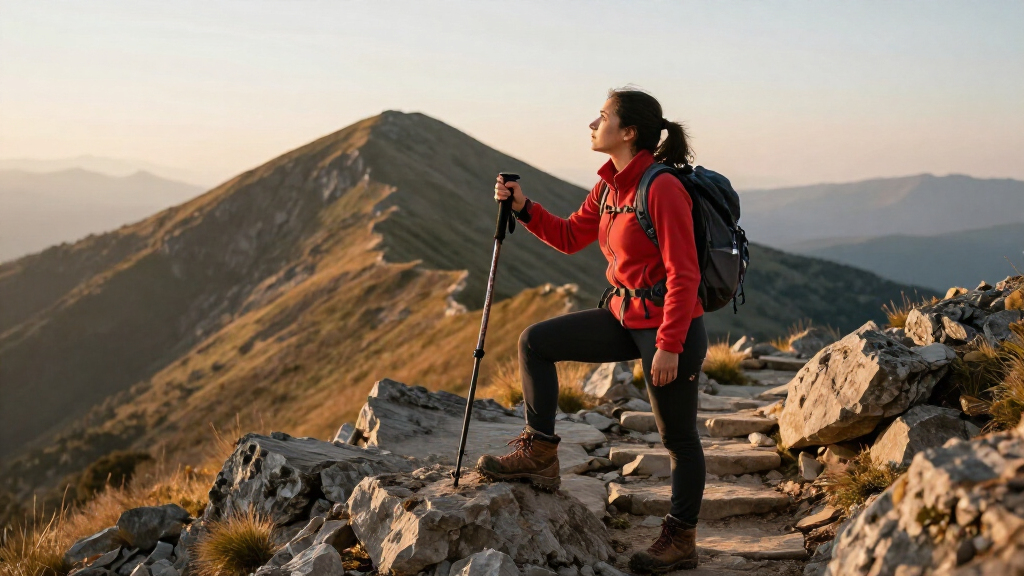
A Fit&Well writer says regular step-ups and Bulgarian split squats helped them feel steady while hiking to a 5,889-foot (1,795-meter) summit in the Albanian Alps. The report presents the exercises as practical ways to train for uphill walking, but the result is the writer’s personal account, not a guarantee that the exercises will improve every hiker’s performance or prevent knee discomfort.
The writer, who lives in London and says challenging terrain is not readily available nearby, described making several trips a year to hike further afield. On the Albanian Alps trip, they said they were able to move over boulders and rocks with confidence and had no knee niggles on the descent. They credited year-round single-leg training for helping them manage the outing.
The two movements in the report are the step-up and the Bulgarian split squat. The writer said both feature in a coach’s training plan and are exercises they also program for personal-training clients. The report says they work the hips, hamstrings, quadriceps and glutes, while challenging core stability. These are descriptions of the exercises, not findings from a study cited in the material.
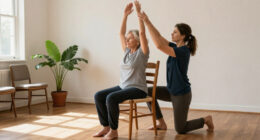
For step-ups, the report suggests eight to 12 repetitions per side. The person places one foot on a box or stable chair, presses through it to stand, then lowers the other foot with control. A lower platform can make the movement easier; a higher platform or a weight held at the chest can increase the challenge. The Bulgarian split squat also calls for eight to 12 repetitions per side: one foot remains on the floor while the top of the other foot rests on a chair or bench behind the body. The person bends the front knee to lower, then presses through that foot to stand.
Training One Leg for Uphills
Uphill walking repeatedly asks each leg to support and raise the body. The report’s practical point is that single-leg strength exercises can be performed without access to hills, making them an option for walkers who train at home or in a gym. Step-ups have a movement pattern that resembles climbing onto a higher surface, while split squats provide a way to practice controlled lowering and rising on one side at a time.
The exercises are also adjustable: a beginner can start with bodyweight and a low, stable platform, while a more experienced person may add load or use a higher step. That flexibility makes the suggestions relevant to a broad range of walkers, but the report does not offer a tested training schedule or establish how much preparation is needed for a specific mountain route. A personal success story can offer ideas; it cannot establish a universal result.
Products Worth Considering

Bowflex SelectTech 840 Adjustable Kettlebell

LEVOIT Vital 200S-P Smart Air Purifier for Large Rooms

Hyperice Hypervolt 2 Pro Handheld Percussion Massage Gun
As an affiliate, we earn on qualifying purchases.
From London to the Albanian Alps
The original report is a first-person account from Fit&Well, a fitness and wellbeing publication. Its writer says access to demanding hills is limited where they live in London and that they travel farther afield a few times annually to walk in more challenging terrain. The reported summit measured 5,889 feet, or 1,795 meters.
The article connects that hike to exercises the writer says they do throughout the year, rather than describing a new training study, medical recommendation or formal walking program. It gives basic setup and progression instructions for each movement and suggests a chair or bench as a home option. The supplied report does not identify the mountain by name or say how long the hike lasted.
“I felt steady on my feet as I lunged confidently over boulders and large rocks, and suffered no knee niggles on my way down.”
— Fit&Well writer
What the Personal Account Cannot Show
The supplied material does not name the summit, give the hike’s route or duration, or provide details of the writer’s full training plan. It also does not compare hikers who did these exercises with those who did not, or cite a study showing that the movements prevent knee pain, reduce injury risk or make uphill walking easier for all people.
The writer’s experience of having no knee niggles on the descent should be understood as an individual outcome. The report does not specify how often the exercises were performed, how long they had been part of the routine, or whether other factors—such as walking experience, pace, footwear or trail conditions—contributed. The instructions are general, and the source material does not describe modifications for people with existing injuries or mobility limitations.
How Walkers Can Use the Suggestions
The report offers no announced follow-up study or scheduled next development. Its immediate takeaway is a pair of exercises readers can consider incorporating into strength training: controlled step-ups and rear-foot-raised split squats. It recommends starting with bodyweight and an appropriate, stable surface, then adjusting the height or adding weight to change the difficulty. The listed range is eight to 12 repetitions on each side for both movements.
Anyone trying the exercises should choose a level that allows controlled movement and stop if they experience pain. The source does not provide individualized coaching or medical guidance; people with injuries or concerns about whether a movement is suitable can seek advice from a qualified fitness or health professional. Whether these exercises translate to easier climbs for other walkers remains a matter for their individual training and experience.
Key Questions
Which two exercises did the Fit&Well writer use?
The writer named step-ups and Bulgarian split squats, saying both were regular parts of their training.
What peak did the writer climb?
The report says the writer reached a summit in the Albanian Alps at 5,889 feet (1,795 meters). The supplied material does not name the peak.
How many repetitions does the report suggest?
It lists eight to 12 repetitions per side for each exercise. This is the report’s suggested range, not a personalized prescription.
Does the report prove these exercises prevent knee pain?
No. The writer reported no knee niggles on their descent, but that is personal experience. The supplied material does not establish that the exercises prevent pain or injury for other walkers.
Can the exercises be made easier or harder?
Yes. The report suggests a lower platform for an easier step-up and a higher platform or added weight for more difficulty. For split squats, it describes adding weights to increase the challenge.
Source: fitandwell.com