
You can boost your well-being by engaging with music and sound, which influence your emotions and physical state. Listening to calming music, practicing sound therapy, or using instruments like singing bowls can reduce stress, balance energy, and promote relaxation. These practices help you process emotions, improve mood, and enhance overall resilience. By exploring how sound affects your mind and body, you’ll discover simple ways to foster peace and healing that go beyond ordinary routines.
Key Takeaways
- Music and sound promote emotional regulation, relaxation, and mental clarity through therapeutic practices like music therapy and sound healing.
- Specific sound frequencies and vibrations can restore balance, clear energy blockages, and support physical health.
- Engaging with music and sound encourages emotional expression, processing trauma, and fostering resilience.
- Mindfulness during sound practices enhances presence, reduces stress, and improves overall well-being.
- Regular participation in sound-based activities cultivates emotional balance, self-awareness, and holistic health.
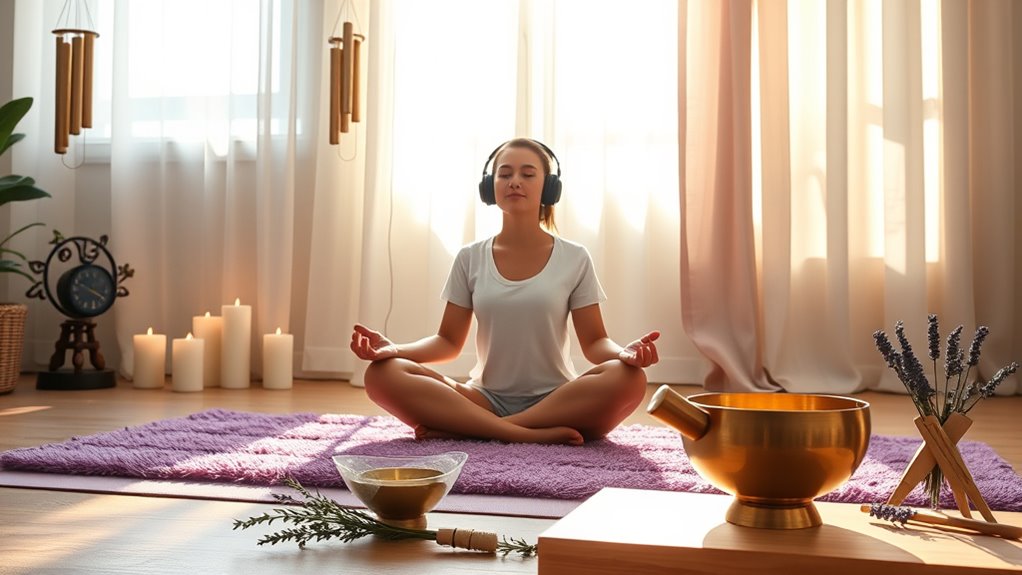
Have you ever noticed how music can instantly lift your mood or help you relax? That’s no coincidence. Music has a profound ability to influence your emotions and physical state, which is why it’s often used in practices like music therapy and sound healing. These methods harness the power of sound to promote mental, emotional, and physical well-being. When you participate in music therapy, a trained professional guides you through listening, creating, or singing music to address specific issues such as stress, anxiety, or even trauma. It’s a personalized approach that taps into your innate connection to sound, encouraging expression and healing through musical engagement. Sound healing, on the other hand, involves the use of specific frequencies and vibrations to restore balance within your body. Instruments like singing bowls, tuning forks, or gongs produce sounds that resonate with your body’s energy centers, or chakras, helping to clear blockages and promote relaxation. Both practices recognize that sound isn’t just a form of entertainment but a potent tool for wellness.
When you’re immersed in sound healing sessions, you might notice a deep sense of calm washing over you. The gentle vibrations can slow your heart rate, reduce cortisol levels, and even lower blood pressure. This creates a state of relaxation that’s difficult to achieve through conventional methods alone. Music therapy extends this benefit by actively engaging your mind and emotions. Whether you’re listening to calming melodies or creating your own music, you’re participating in a process that can improve your mood, boost your cognitive function, and help you process complex feelings. It’s especially effective for those dealing with depression, anxiety, or trauma, as it provides a safe outlet to express emotions that might be hard to articulate otherwise. Additionally, the use of specific sound frequencies can further enhance the therapeutic effects by aligning your body’s energy and promoting healing.
Both music therapy and sound healing emphasize intentionality and presence. As you focus on sound, your mind shifts away from worries, allowing you to experience a moment of mindfulness. This can enhance your overall sense of well-being and resilience. You don’t need to be a musician or have any special skills to benefit—your openness and willingness to engage are what matter most. Over time, integrating these practices into your routine can cultivate a greater sense of peace and emotional balance. Whether you’re seeking relief from stress or simply looking to deepen your connection with yourself, exploring music therapy and sound healing offers a natural, accessible path to wellness through sound.
Frequently Asked Questions
Can Sound Therapy Help With Chronic Pain Management?
Yes, sound therapy can help with chronic pain management through musical analgesia and auditory modulation. You might find relief as specific sounds or music reduce your pain perception, engaging your brain in a calming way. By actively listening or participating in sound therapy sessions, you can modulate your auditory experiences, which may decrease inflammation and discomfort. This non-invasive approach offers a supportive option to manage chronic pain effectively.
Are There Specific Musical Genres Best for Relaxation?
You’ll find that genres for meditation, like ambient, classical, and soft acoustic music, are best for relaxation. Calming soundscapes help slow your breathing and reduce stress. Try exploring these genres, focusing on gentle melodies and minimalistic arrangements, to create a peaceful environment. Listening regularly can enhance your relaxation, improve mood, and promote better sleep. Experiment with different styles to discover what personally helps you unwind most effectively.
How Does Sound Healing Affect Mental Health?
Sound healing acts like a gentle tide, washing over your mind and soothing stress. Through resonance therapy and vibrational healing, it helps reduce anxiety and improve mood by aligning your mental state with calming frequencies. This process stimulates your brain’s natural relaxation response, fostering mental clarity and emotional balance. By tuning into these vibrations, you create a sanctuary within, where mental health can flourish, and inner peace takes root.
Is There Scientific Evidence Supporting Music Therapy?
Yes, there’s scientific evidence supporting music therapy. Neuroplasticity research shows that music can rewire brain pathways, improving mood and cognitive function. Certified music therapists use evidence-based techniques to help manage mental health issues like anxiety and depression. When you work with trained professionals holding music therapy certifications, you benefit from proven methods that harness sound’s power to promote healing and emotional well-being.
Can Sound Baths Replace Traditional Meditation Practices?
Sound baths can’t fully replace traditional meditation practices, but they complement them well. They use meditative frequencies and vibrational healing to promote relaxation and stress relief. While sound baths help you achieve a calming state through immersive soundscapes, they lack some of the mindful focus and breathing techniques found in meditation. So, consider them as a supportive tool rather than a complete substitute for your regular meditation routine.
Conclusion
Incorporating music and sound into your routine can considerably boost your well-being; studies show that listening to calming music reduces stress hormones by up to 25%. By actively engaging with sound, you create a powerful tool for relaxation, focus, and emotional balance. So, next time life feels overwhelming, turn to your favorite melodies or soothing sounds—your mind and body will thank you for it. Embrace the rhythm of wellness and let sound transform your health.