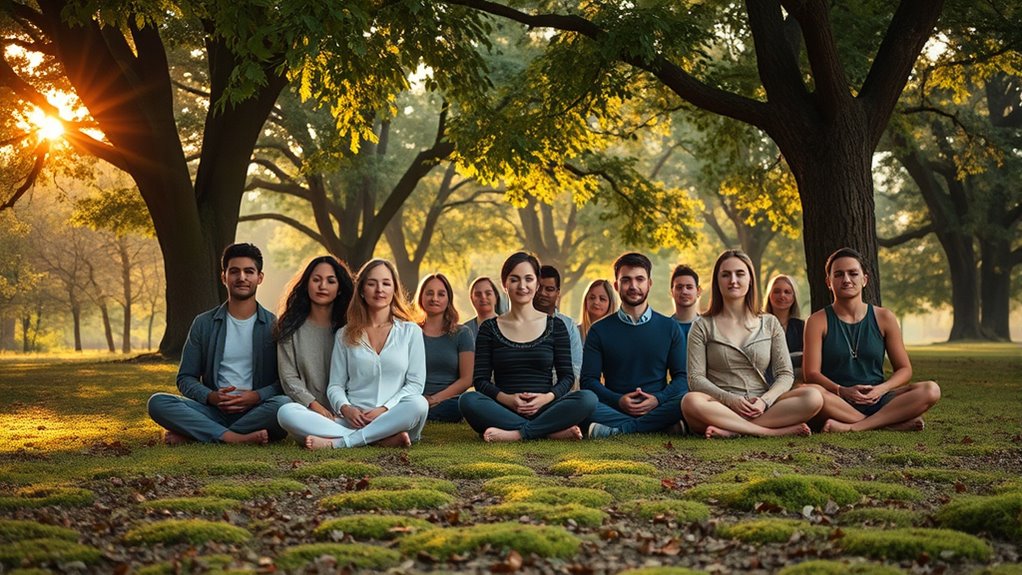

Loving-kindness meditation, or Metta, involves focusing on cultivating feelings of compassion and goodwill toward yourself and others through silent phrases like “May I be happy” or “May you be healthy.” You start by encouraging positive emotions inward, then extend them outward to friends, strangers, and even difficult people. Regular practice helps reduce stress, build resilience, and foster a caring outlook. If you keep exploring, you’ll discover more ways to deepen your emotional well-being through this heart-opening practice.
Key Takeaways
- Loving-kindness meditation involves silently repeating affirmations like “May I be happy” to cultivate compassion inwardly.
- The practice starts with focusing on oneself, then extends to loved ones, acquaintances, and all beings.
- Regular practice reduces stress, enhances emotional resilience, and promotes feelings of warmth, empathy, and interconnectedness.
- It encourages non-judgmental awareness of emotions and helps rewire negative responses into caring attitudes.
- Over time, loving-kindness meditation fosters a more compassionate, forgiving, and joyful outlook in daily life.

Loving-kindness meditation, also known as Metta, is a practice that encourages you to cultivate compassion and goodwill toward yourself and others. When you engage in this meditation, you’re actively working with specific cultivation techniques designed to foster positive emotions and reduce feelings of anger, resentment, or frustration. These techniques typically involve silently repeating affirmations or phrases that express wishes for happiness, health, and peace, both for yourself and for those around you. As you progress, you begin to notice a shift in your emotional landscape, experiencing increased feelings of warmth, connection, and understanding.
Loving-kindness meditation cultivates compassion, positive emotions, and emotional resilience through silent affirmations and heartfelt wishes for well-being.
The core of loving-kindness meditation is rooted in cultivating an open heart. You start by focusing inward, directing kind thoughts toward yourself. This initial step is essential because it establishes a foundation of self-compassion, making it easier to extend those feelings outward. As you repeat phrases like “May I be happy,” “May I be healthy,” or “May I be safe,” you actively reinforce positive emotions, which over time become more natural and automatic. These cultivation techniques aren’t just about positive thinking; they involve a conscious effort to rewire your emotional responses, fostering a more caring and forgiving attitude.
Throughout your practice, you’ll notice the emotional benefits gradually revealing themselves. Regularly engaging in loving-kindness meditation can reduce stress, ease feelings of loneliness, and promote resilience during challenging times. The practice encourages you to develop a non-judgmental awareness of your own feelings, which helps you respond with kindness instead of defensiveness or negativity. As your emotional state becomes more balanced, you may find yourself more patient, empathetic, and less prone to anger or resentment. This emotional shift extends beyond the meditation session, influencing how you interact with loved ones, colleagues, and even strangers.
Moreover, loving-kindness meditation can deepen your sense of interconnectedness. When you genuinely wish happiness and well-being for others, it cultivates a sense of shared humanity. This perspective can lead to increased compassion not just toward acquaintances but also toward those you find difficult. Over time, these cultivation techniques become ingrained habits, helping you carry the emotional benefits of the practice into daily life. As you nurture this compassionate mindset, you build a more resilient, joyful, and empathetic outlook, making loving-kindness meditation a powerful tool for emotional growth and well-being.
Frequently Asked Questions
Can Loving-Kindness Meditation Help With Depression?
Yes, loving-kindness meditation can help with depression by fostering self-compassion and emotional resilience. When you practice, you learn to be kinder to yourself and others, which reduces negative feelings. This increased self-awareness helps you manage difficult emotions better and builds resilience over time. Regular practice can boost your mood, promote positive thinking, and support your mental health, making it a valuable tool for those dealing with depression.
How Long Should Each Session of Loving-Kindness Meditation Last?
If you start a loving-kindness meditation practice, aim for 10 to 15 minutes per session. Imagine someone feeling overwhelmed by stress, finding relief after just a few weeks of practicing daily. The ideal meditation session length balances focus and comfort; beginners often benefit from shorter practice durations, gradually increasing as they become more accustomed. Consistency matters more than duration, so find what feels sustainable for you.
Is Loving-Kindness Meditation Suitable for Children?
Yes, loving-kindness meditation can be suitable for children when you adapt it with child-friendly practices and age-appropriate techniques. You can make it engaging by using simple language, storytelling, or visualizations that resonate with their age. Shorter sessions work best, around 5 to 10 minutes, and always prioritize a relaxed, playful environment. This helps children develop empathy, patience, and emotional awareness effectively.
What Are Common Challenges Faced During Practice?
You might find that about 60% of practitioners struggle with mind wandering during loving-kindness meditation. Emotional resistance is common, too, as it can be hard to genuinely send loving thoughts to others. These challenges can cause frustration, but with patience, you learn to gently bring your focus back. Remember, persistence helps you build compassion and mindfulness, making your practice more meaningful over time.
Can Loving-Kindness Meditation Improve Relationships?
Loving-kindness meditation can profoundly improve your relationships by strengthening emotional connection and fostering compassion development. As you practice, you’ll become more empathetic and understanding, which helps you connect deeply with others. This increased emotional awareness encourages kindness and patience, reducing conflicts and enhancing trust. Over time, your genuine compassion can create a more supportive and loving atmosphere in your personal and social interactions, making your relationships more meaningful and resilient.
Conclusion
As you finish your loving-kindness meditation, remember it’s like planting seeds of compassion that grow within you. With each practice, your heart becomes a garden blooming with kindness, patience, and understanding. Keep nurturing these feelings, even when it’s tough. Like the sun’s gentle rays, your intentions can brighten the world around you. Embrace this journey, knowing that every moment of kindness you cultivate radiates outward, creating ripples of love that reach far beyond yourself.