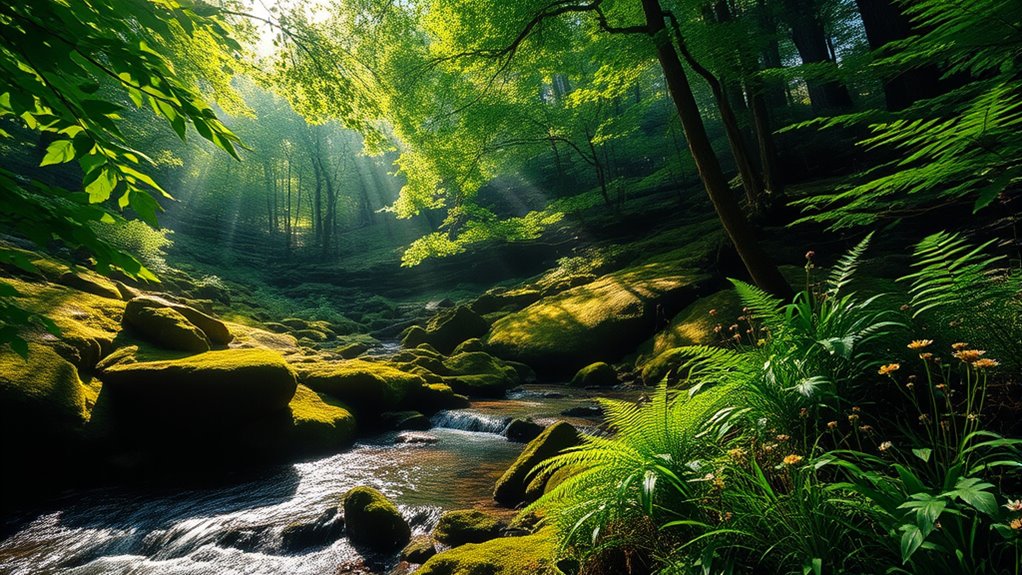

Healing through nature immersion allows you to reconnect with the natural world, which can rejuvenate your body and calm your mind. By stepping outside and engaging your senses—touching bark, listening to leaves, smelling the earth—you deepen your experience and lower stress. Mindful walking in wooded areas heightens awareness and encourages emotional balance. 지속적 nudges like these promote mental clarity and physical renewal. Continue exploring these practices to unleash even more profound benefits for your well-being.

Turn your wind-down time into listening time
- Thousands of audiobooks, podcasts and originals
- Listen on your phone, tablet or Echo — also offline
- Cancel anytime
Key Takeaways
- Immersing in natural environments promotes physical and mental restoration by activating the body’s innate healing processes.
- Mindful walking in nature enhances relaxation, reduces stress, and fosters present-moment awareness.
- Engaging the senses deeply in natural settings strengthens the mind-body connection and calms the nervous system.
- Regular forest therapy and sensory engagement improve emotional well-being and mental clarity.
- Connecting with nature encourages slowing down, fostering emotional balance and overall health.

Nature has a remarkable ability to restore and rejuvenate both your body and mind. When you step outside and immerse yourself in the natural world, you release a powerful healing process. One of the most accessible and effective ways to tap into this healing is through mindful walking. Instead of rushing through a park or trail, focus your attention on each step—feel the ground beneath your feet, notice the rhythm of your breathing, and observe the sights and sounds around you. This simple act of being present helps quiet your mind and reduces stress. It’s a form of meditation in motion that allows you to disconnect from daily worries and reconnect with the present moment.
Incorporating forest therapy into your routine can amplify these benefits. Forest therapy involves immersing yourself fully in a wooded environment, engaging your senses to deepen your connection with nature. As you walk slowly among the trees, let your senses guide you—touch the bark, listen to the rustling leaves, smell the earthy aroma, and observe the intricate patterns of nature. This intentional engagement calms your nervous system, lowers blood pressure, and boosts your mood. It’s not about exercise or hiking for fitness; it’s about slowing down and experiencing nature at a mindful pace.
When you combine mindful walking with forest therapy, you create a healing experience that’s both calming and revitalizing. Instead of rushing through a trail, you take deliberate steps, grounding yourself in the present. As your senses become more attuned to your surroundings, you may notice details you’ve never seen before—an intricate spider web, a vibrant patch of wildflowers, or the gentle sway of tall grass. This heightened awareness fosters a sense of peace and clarity, helping you clear mental clutter and find emotional balance.
Moreover, engaging in these practices regularly can improve your overall well-being. You’ll find it easier to manage stress, enhance your focus, and develop a deeper appreciation for the natural world. The act of mindful walking in nature encourages you to slow down and be present, providing a much-needed respite from the constant demands of modern life. Forest therapy, with its emphasis on sensory engagement, deepens this connection, allowing your body and mind to reset and heal. An important aspect of this process is understanding how indoor air quality can impact your health, especially if you spend a lot of time indoors. In the end, nature offers a simple yet profound way to nurture your health—if you’re willing to step outside and embrace these mindful practices.
As an affiliate, we earn on qualifying purchases.
Frequently Asked Questions
How Long Should a Nature Immersion Session Last for Optimal Healing?
For ideal healing, aim for a nature immersion session lasting at least 30 minutes to an hour. Duration guidelines suggest that spending this amount of time in nature helps reduce stress, boost mood, and improve overall well-being. You should tailor the session to your comfort, but consistently dedicating this time allows you to fully experience nature’s restorative effects. Remember, quality often matters more than quantity, so immerse yourself fully during your time outdoors.
Are Certain Types of Environments More Beneficial for Healing Than Others?
Like Alice falling down the rabbit hole, you find that certain environments, especially diverse ecosystems and lush urban green spaces, are more beneficial for healing. These settings offer richer sensory experiences and greater biodiversity, which promote relaxation and mental clarity. You’ll notice that immersing yourself in a variety of natural environments amplifies the restorative effects, helping you reconnect with nature and restore your well-being more effectively than in monotonous or less diverse surroundings.
Can Nature Immersion Help With Specific Mental Health Conditions?
Yes, nature immersion can help with specific mental health conditions. Forest therapy, for example, reduces stress and anxiety, while nature journaling encourages mindfulness and emotional expression. You might find that spending time in green spaces boosts your mood and clarity, especially if you incorporate these practices. Regularly immersing yourself in nature allows you to reconnect, relax, and improve mental well-being through these therapeutic activities.
Is Guided Nature Therapy More Effective Than Solo Immersion?
Guided therapy often proves more effective than solo experiences because a trained guide can tailor the session to your needs, offer support, and deepen your connection with nature. With guided therapy, you benefit from structure, expert insights, and accountability, making it easier to achieve mental health goals. While solo immersion fosters independence, a guided approach provides added reassurance and focus, leading to potentially greater healing and personal growth.
How Often Should One Engage in Nature Immersion for Sustained Benefits?
You should aim for weekly nature immersion to experience sustained benefits, like feeling the warmth of sunlight on your face or hearing the rustling leaves. Consistency matters, so try to create a routine despite seasonal changes—maybe more frequent visits in winter and summer, adjusting as needed. This regular connection helps your mind relax and your body recharge, turning nature into a natural healer over time.
As an affiliate, we earn on qualifying purchases.
Conclusion
As you step back into the world, remember that nature’s embrace is like a gentle river flowing through your soul, carrying away worries and filling you with renewed strength. Just as a tree’s roots anchor it firmly, your connection to nature grounds you, offering silent healing. Embrace these moments of immersion, letting them be the seeds of resilience and hope, blooming quietly within you, reminding you that sometimes, healing is simply returning to your roots.
nature immersion meditation cushion
As an affiliate, we earn on qualifying purchases.
As an affiliate, we earn on qualifying purchases.
As an affiliate, we earn on qualifying purchases.
Fall Picks
fall essentials
As an affiliate, we earn on qualifying purchases.