Guided meditation for anxiety relief helps you relax and regain control during stressful moments. It teaches practical techniques like deep breathing and body scans that calm your nervous system, reduce tension, and promote mindfulness. Regular practice strengthens your ability to manage anxiety outside sessions, making it easier to respond calmly to stressors. If you keep exploring, you’ll discover more ways to incorporate these calming techniques into your daily routine for lasting relief.
Key Takeaways
- Guided meditation helps relax the mind and body, reducing anxiety symptoms through focused techniques like breathing and body scans.
- Combining breath awareness with body scans deepens relaxation and promotes a calming rhythm for the nervous system.
- Regular practice lowers cortisol levels, signaling safety and helping the body manage stress more effectively.
- Guided sessions empower individuals to develop coping skills they can use outside of meditation to manage anxiety.
- Consistent meditation improves emotional regulation and reduces reactivity to stressors over time.
If anxiety is making it hard to find calm, guided meditation can be a powerful tool to help you relax and regain control. When your mind races and your body feels tense, focusing on specific techniques can make a real difference. One effective method is practicing breathing techniques, which help slow your breath and calm your nervous system. As you listen to a guided meditation, you’ll be encouraged to take slow, deep breaths, inhaling through your nose and exhaling softly through your mouth. This simple act reduces cortisol levels and signals your body that it’s safe to relax. Over time, these breathing exercises become a natural way to soothe anxiety whenever it surfaces.
Another core element of guided meditation for anxiety relief is the body scan. This technique involves systematically bringing attention to different parts of your body, starting from your toes and moving upward. As you follow the guide’s instructions, you’ll notice areas of tension or discomfort, and then intentionally release that tension. Focusing on your body in this way anchors you in the present moment, pulling your mind away from anxious thoughts about the future or past. The body scan fosters a gentle awareness of physical sensations, which can diminish feelings of overwhelm and help you reconnect with your body’s natural state of relaxation. Developing a mindfulness practice like this can be especially helpful in managing ongoing anxiety.
During a guided session, you might find it helpful to combine breathing techniques with the body scan. For instance, as you direct your attention to each body part, you can synchronize your breath with the scan—taking a deep breath as you focus on your shoulders or stomach, and exhaling slowly as you relax that area. This integration deepens your sense of calm and creates a rhythm that helps your nervous system settle. The guided nature ensures you stay focused and supported, especially when your thoughts try to hijack your attention.
Regularly practicing these techniques enhances your ability to manage anxiety outside of meditation sessions. Over time, you’ll notice that your body responds more quickly to calming signals, and your mind becomes less reactive to stressors. Guided meditation, with its emphasis on breathing techniques and body scan, empowers you to take control of your anxiety rather than letting it control you. It’s a simple, accessible practice that, with consistency, can transform how you experience and cope with anxiety in daily life.
Frequently Asked Questions
Can Guided Meditation Replace Medication for Anxiety?
Guided meditation can’t fully replace medication for anxiety, especially if your condition is severe. While meditation effectiveness varies, it can considerably reduce anxiety symptoms and help you manage stress better. However, relying solely on meditation might lead to medication dependency if your anxiety is intense. Talk to your healthcare provider to find a balanced approach, combining meditation with medication or other therapies, tailored to your needs.
How Often Should I Practice Guided Meditation for Best Results?
You should practice guided meditation daily or at least several times a week for the best results. Focus on maintaining consistency to build a routine, which helps your mind adapt and reduces anxiety effectively. Keep your session duration around 10 to 20 minutes, gradually increasing if needed. Regular practice strengthens your mindfulness and calming skills, making it easier to manage anxiety over time.
What Is the Ideal Environment for Meditation Sessions?
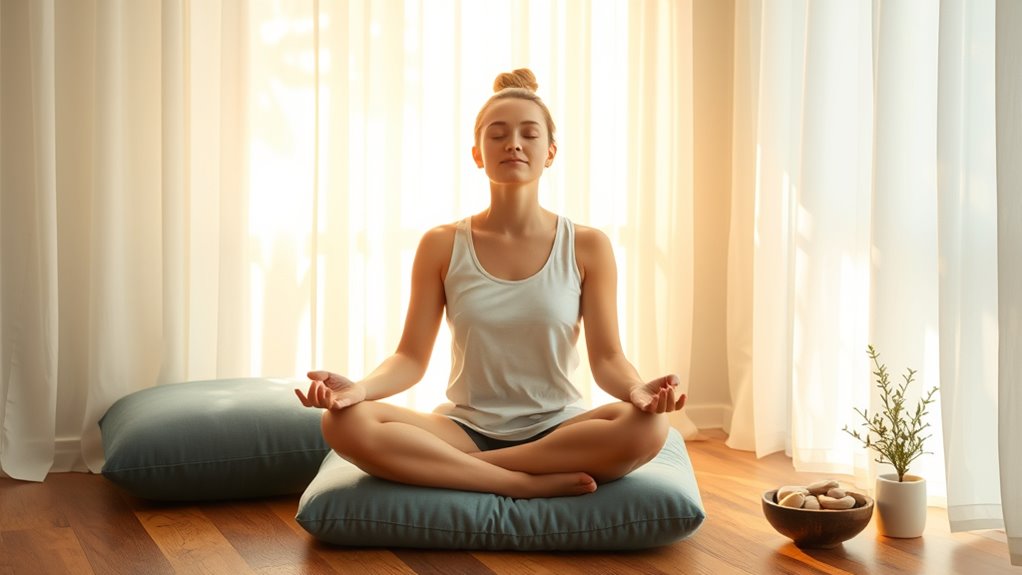
You should create a calming meditation space with ambient lighting to enhance your practice. Find a quiet, clutter-free area where you won’t be disturbed, and set up a comfortable seat or cushion. Dim the lights or use soft, warm lighting to promote relaxation. This environment helps you focus, reduces distractions, and makes it easier to immerse yourself in your guided meditation, ultimately boosting its effectiveness for anxiety relief.
Are There Specific Guided Meditations Tailored for Severe Anxiety?
Imagine you’re in a time machine, and yes, there are guided meditations tailored for severe anxiety. You can find personalized sessions with anxiety-specific scripts designed to target your unique triggers. These meditations help you gently manage overwhelming feelings, guiding you to breathe easier and find calm. Choose recordings created by professionals that focus on your needs, providing a safe space to work through intense anxiety episodes effectively.
How Long Does It Take to Notice Anxiety Reduction From Meditation?
You might start noticing anxiety reduction within a few sessions, but the effectiveness timeline varies. Some people experience immediate calming effects, while others see gradual improvements over weeks of regular practice. Consistency is key, so setting aside time daily helps build the benefits. Typically, with regular meditation, you can expect to see meaningful changes in your anxiety levels within a month, though individual results may differ depending on your unique situation.
Conclusion
As you finish this meditation, remember that just like a storm eventually calms, your anxiety can ease with practice. One person I know felt overwhelmed until they realized their racing thoughts were like clouds passing in the sky—temporary and ever-changing. With each session, you’re building a peaceful sky within your mind, where calm replaces chaos. Keep practicing, and you’ll find that even the busiest storms inside can settle into serene, clear skies.