
TL;DR

Turn your wind-down time into listening time
- Thousands of audiobooks, podcasts and originals
- Listen on your phone, tablet or Echo — also offline
- Cancel anytime
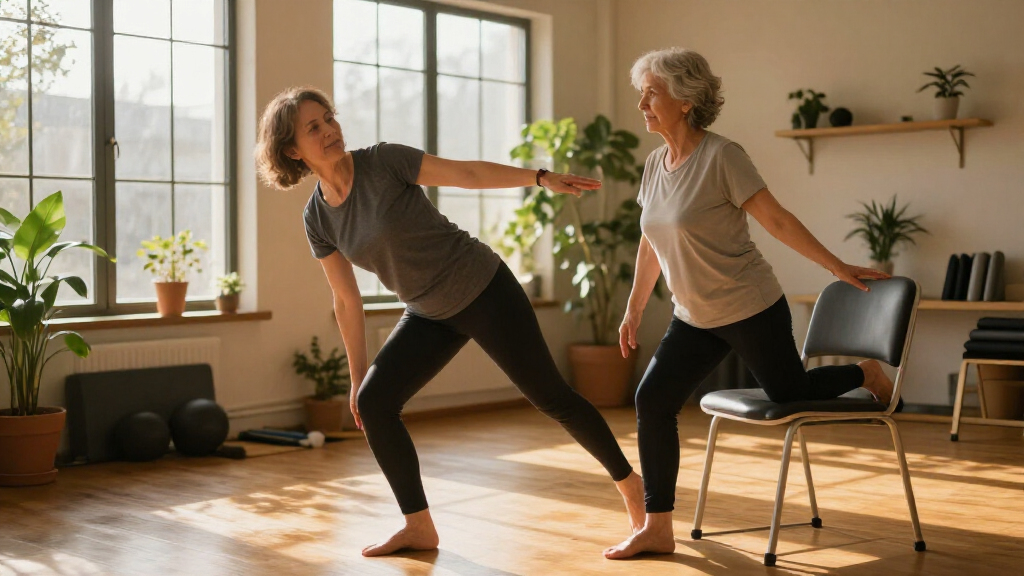
Physiotherapist and Pilates instructor Helen O’Leary shared four standing exercises for people who struggle with floor-based workouts. The moves target rotation, hip movement, balance and core stability, with options to use a nearby surface for support.
Physiotherapist Helen O’Leary has outlined four standing Pilates moves for people who find it difficult to exercise on the floor, in a workout report published by Fit&Well. The exercises—standing book opener, scooter, marching and hip abduction—are intended to work on mobility, balance and core stability, and can be done with a nearby surface for support.
O’Leary, clinical director at Complete Pilates, said standing exercises can challenge the body differently from floor-based Pilates. “Standing Pilates exercises might sound as though they’re easy, but they test you in many ways that floor-based moves won’t,” she said. She also said the upright positions can challenge core strength and encourage posture changes that counter prolonged sitting. Those are her explanations of the exercises’ potential benefits, not results from a study cited in the report.
The first move, the standing book opener, uses a hip-width stance with hands behind the head. Rotate the rib cage and head to one side, pause for a couple of breaths, then repeat on the other side. O’Leary recommends keeping the pelvis facing forward to increase the feeling of rotation. The report suggests three sets of four to five repetitions per side.
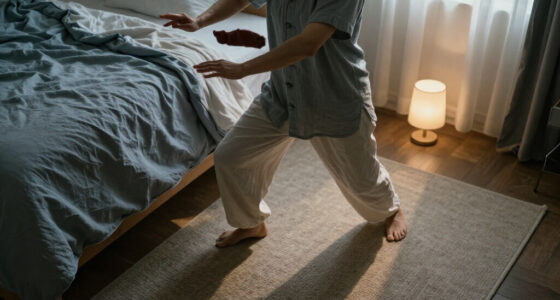
For the scooter, place your hands lightly on a stable surface, hinge forward at the hips and shift weight onto one leg. Slide the other foot back and forward while keeping its toes on the floor, then change sides. Fit&Well suggests three rounds of 10 to 15 repetitions per side. A sock or towel under the moving foot may help it slide on a wooden floor, according to the report.
A Standing Option for Pilates
The routine offers an alternative format for people who have difficulty getting down to, or back up from, the floor. It also keeps the movements upright, which may make them easier to adapt around a chair, table or countertop. The source does not say the exercises are appropriate for every person or condition, so the format should not be taken as a guarantee of safety or suitability.
The exercises address several distinct movement demands: the book opener involves torso rotation, while the scooter, march and hip abduction involve leg movement and single-leg balance. O’Leary says the upright work can engage the core as the body stays balanced. The report provides suggested repetitions, but it does not include research comparing this sequence with other Pilates routines or measuring health outcomes.
For readers looking for a low-equipment routine, the instructions are brief and require only a stable surface for optional support. However, the report does not establish how long the workout takes, how often it should be done, or what level of effort participants should use. Those details matter when adapting any exercise plan to individual ability.
Products Worth Considering

Fitbit Versa Smart Watch – Black Aluminum, One Size (S & L Bands Included)

Fitbit Sense Advanced Smartwatch – Sage Grey/Silver (One Size, S & L Bands Included)

Philips Sonicare DiamondClean 9900 Prestige Electric Toothbrush
As an affiliate, we earn on qualifying purchases.
Four Moves, No Mat Required
Pilates is often associated with mat work or reformer equipment, but the Fit&Well report focuses on exercises performed standing. Its central premise is that a person does not have to kneel or lie down to practise Pilates-inspired movements. O’Leary’s suggestions are presented as home exercises, with support available from furniture or a countertop.
The remaining two moves are marching and standing hip abduction. For marching, stand on one leg, lift the other leg as high as is comfortable, lower it and switch sides. The report recommends three rounds of 10 to 15 repetitions per side and suggests holding a chair or counter if needed. O’Leary said the movement works the hips and lower body while testing balance and engaging the core to help keep the body upright.
For hip abduction, stand on one leg, straighten the other and move it out to the side before lowering it. The suggested amount is up to 10 repetitions before changing legs. Fit&Well says to lower the moving leg when balance begins to go, and notes that the range of movement may increase with practice. The source does not give a named publication date or report clinical testing of the four-move sequence.
““Standing Pilates exercises might sound as though they’re easy, but they test you in many ways that floor-based moves won’t.””
— Helen O’Leary, physiotherapist and clinical director at Complete Pilates
What the Workout Report Leaves Open
The source does not provide a publication date, independent evaluation or evidence that the four exercises improve posture, mobility or core strength. Those benefits are described by O’Leary as the rationale for the routine; the report does not cite measurements or a study showing how much benefit participants can expect.
It is also unclear who should avoid particular moves, how to modify them for injuries or health conditions, and what counts as an appropriate range or intensity for an individual. The instructions offer support options and advise lowering the leg when balance starts to fail, but they do not replace individualized guidance. Anyone with health concerns or uncertainty about exercising should consult a qualified health professional before changing their routine.
How to Approach the Routine
The report presents the exercises as a sequence readers can try at home, with the stated repetitions as a starting guide: three sets of four to five book openers per side, three rounds of 10 to 15 scooter and marching repetitions per side, and up to 10 hip abductions on each side. A stable chair, table or countertop can provide support for the balance-focused movements.
Fit&Well does not announce a follow-up study, program or additional guidance, and the source provides no schedule for repeating the workout. Readers who choose to try the moves can follow the listed cues and use support as needed; people seeking advice tailored to their circumstances can speak with a qualified professional.
Key Questions
Which standing Pilates exercises did Helen O’Leary recommend?
She recommended the standing book opener, scooter, marching and standing hip abduction. Fit&Well presented them as a home routine for people who find floor-based exercise difficult.
Can the moves be done with support?
Yes. The report suggests using a chair, table or countertop for support during moves such as marching and the scooter. It also advises lowering the leg during hip abduction when balance begins to go.
What benefits does O’Leary say standing Pilates may offer?
O’Leary says upright Pilates can challenge core strength and balance in ways floor-based moves may not, and may encourage better posture. The report does not cite a study establishing these outcomes for this particular routine.
How many repetitions does the report suggest?
It lists three sets of four to five book openers per side; three rounds of 10 to 15 scooter and marching repetitions per side; and up to 10 hip-abduction repetitions on each side. These are the report’s suggested counts, not individualized exercise guidance.
Is the routine suitable for everyone?
The report does not establish that the moves are suitable for every person or health condition. Anyone uncertain about whether they can exercise safely should consult a qualified health professional for advice specific to their circumstances.
Source: fitandwell.com