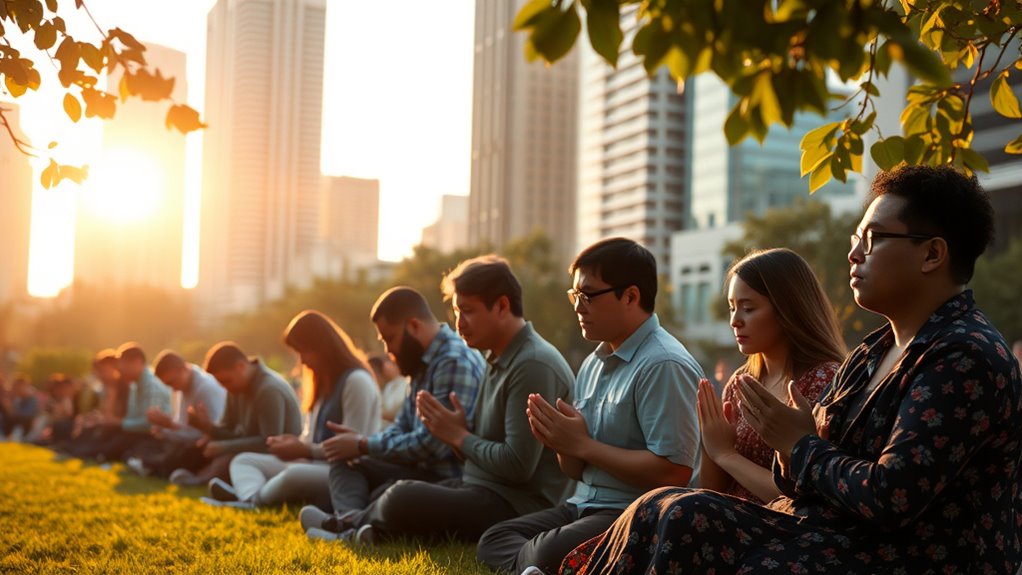

In modern times, prayer remains a powerful practice that offers you emotional comfort, hope, and healing amid rapid societal changes. It helps reduce stress, boost resilience, and build a sense of community—even when you’re physically alone. Prayer fosters personal growth, provides a calming refuge, and strengthens your mental and spiritual well-being. If you explore further, you’ll discover how prayer’s influence continues to grow and support people worldwide today.
Key Takeaways
- Prayer provides emotional stability and spiritual guidance amid societal reliance on technology and scientific advancements.
- Belief in healing miracles through prayer reinforces faith and offers hope during health crises.
- Regular prayer reduces stress and anxiety, fostering mental well-being and emotional resilience.
- Prayer sustains a sense of community and connection, counteracting loneliness in modern individualistic societies.
- It remains a vital source of hope and inner strength, supporting personal growth despite cultural shifts.
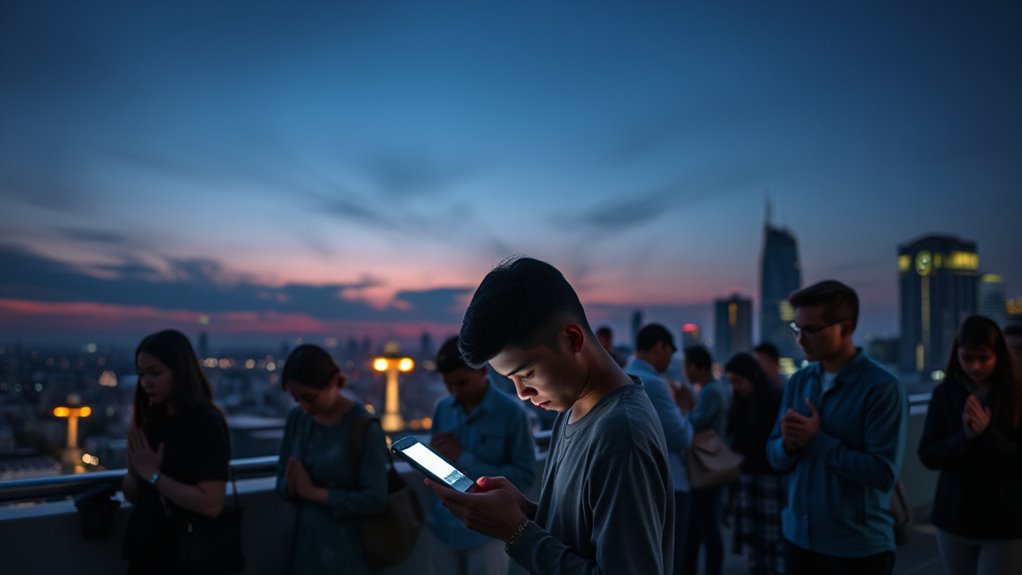
In today’s fast-paced world, many people still turn to prayer as a source of comfort, guidance, and strength. While modern life often emphasizes technology and scientific progress, prayer remains a powerful tool that offers tangible benefits. For many, prayer is more than just a spiritual practice; it’s a means to experience healing miracles and improve mental health. When you pray, you create a moment of connection—whether with a higher power, your inner self, or the universe—that can lead to profound transformations. You might not see these changes immediately, but over time, prayer can foster resilience, hope, and a sense of purpose that helps you navigate life’s challenges.
Healing miracles associated with prayer are often described as moments where physical or emotional pain diminishes unexpectedly. These experiences can reinforce your belief in the power of prayer, encouraging you to seek solace in your spiritual routines during difficult times. Many individuals report that prayer has helped them recover from illnesses, find peace amidst chaos, or gain clarity in confusing situations. These stories, whether rooted in personal experience or shared community narratives, highlight the potential for prayer to catalyze extraordinary outcomes. While science may not fully explain every miracle, the psychological and emotional impact of believing in divine intervention can be deeply curative.
Beyond physical or miraculous healings, prayer also provides significant mental health benefits. Engaging in prayer can reduce stress, anxiety, and feelings of loneliness. When you pray regularly, you often experience a calming effect—a moment to pause, breathe, and reflect. This mindfulness aspect of prayer acts similarly to meditation, helping you manage overwhelming emotions and develop a more positive outlook. Prayer allows you to express gratitude, seek forgiveness, or ask for guidance, which can lead to greater self-awareness and emotional stability. The sense of being heard and supported through prayer can diminish feelings of isolation, fostering a sense of community and connection even when you’re physically alone. Additionally, understanding the psychological benefits of prayer can deepen your appreciation for its enduring relevance in modern society.
Furthermore, prayer encourages hope and resilience. When life feels unpredictable or overwhelming, turning to prayer can reinforce your belief that you’re not alone and that challenges can be overcome. This mental shift can boost your confidence and motivation, aiding in recovery from setbacks or mental health struggles. Over time, the consistent practice of prayer can become a source of inner strength, helping you face everyday stresses with a calmer mind and a hopeful heart. In modern times, prayer continues to serve as an essential practice that nurtures both your body and mind, proving that its power endures despite societal changes.
Frequently Asked Questions
Can Prayer Truly Influence Real-World Events Today?
Yes, prayer can truly influence real-world events today. Through sincere communication with a higher power, you invite divine intervention and experience spiritual influence in your life and others’. When you pray with faith, you open yourself to guidance, strength, and hope that can lead to positive changes. While outcomes aren’t guaranteed, your heartfelt prayers can serve as a catalyst for transformation and resilience in challenging times.
How Does Prayer Differ Across Various Religions?
You’ll notice that prayer differs across religions through unique prayer rituals and practices. In interfaith dialogue, people share these diverse traditions to foster understanding, respecting each faith’s approach. For example, some pray silently, others recite specific texts or perform physical gestures. Despite differences, the core intent often remains similar: connecting with a higher power or seeking spiritual guidance, highlighting the universal importance of prayer across faiths.
Is There Scientific Evidence Supporting Prayer’s Effectiveness?
You might wonder if science backs prayer’s power, and while it’s not an unstoppable force, there’s intriguing evidence. Studies suggest prayer can influence physiological responses, like reducing stress, and some even explore connections to quantum physics principles. Although definitive scientific proof remains elusive, many find that prayer fosters a sense of hope and well-being, making it a powerful tool for personal resilience and emotional health.
Can Prayer Help With Mental Health Issues?
Yes, prayer can help with mental health issues by providing emotional resilience and a sense of support. When you pray, you may experience mental health benefits like reduced stress, increased hope, and a calming effect. Engaging in prayer allows you to connect with your inner self and find comfort, which can improve your overall emotional well-being. Incorporate prayer into your routine to help strengthen your mental health.
How Has Technology Changed the Way We Pray?
Technology has transformed how you pray by enabling digital devotion through prayer apps and online platforms. You can now access guided prayers, meditate, or connect with faith communities anytime, anywhere. These tools make prayer more accessible and personalized, allowing you to deepen your spiritual practice. By integrating technology into your routine, you stay connected to your faith, fostering daily reflection and support, no matter your busy schedule.
Conclusion
In today’s world, prayer remains a powerful tool for many, helping you find comfort, hope, and strength amid chaos. Remarkably, a 2020 Gallup poll revealed that nearly 55% of Americans pray daily, showing its enduring relevance. Embrace prayer as a personal practice that can ground you in challenging times. By doing so, you tap into a timeless source of peace and resilience, proving that even in modern life, faith continues to hold immense power.