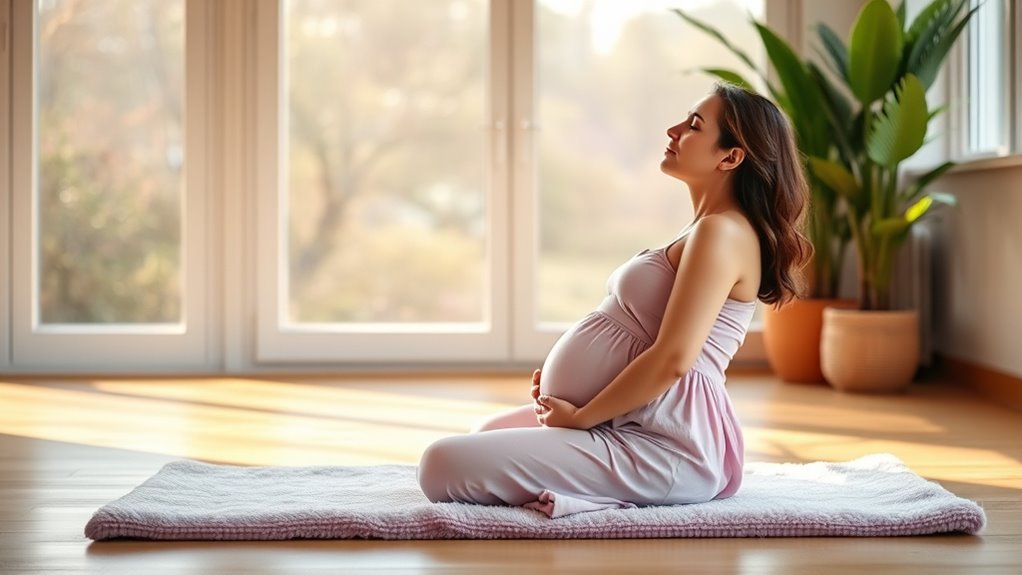

Prenatal yoga is a wonderful way to strengthen your body, improve flexibility, and promote relaxation during pregnancy. It helps you connect with your baby, manage stress, and prepare for labor through targeted breathing and gentle movements. Practicing regularly can boost your emotional well-being, ease discomfort, and foster mindfulness. Plus, simple tools like deep breathing, meditation, and aromatherapy can make a big difference. Keep exploring to discover more ways to enhance your pregnancy experience.
Key Takeaways
- Prenatal yoga enhances strength, flexibility, and relaxation, supporting physical well-being during pregnancy.
- It incorporates breathing techniques like diaphragmatic and Ujjayi breaths to manage stress and discomfort.
- Meditation practices foster emotional resilience, connection with the baby, and mental peace throughout pregnancy.
- Regular practice promotes mindfulness, better sleep, and helps manage pregnancy-related fatigue and anxiety.
- Additional tools like aromatherapy and gentle movement improve overall relaxation and emotional balance for expecting mothers.
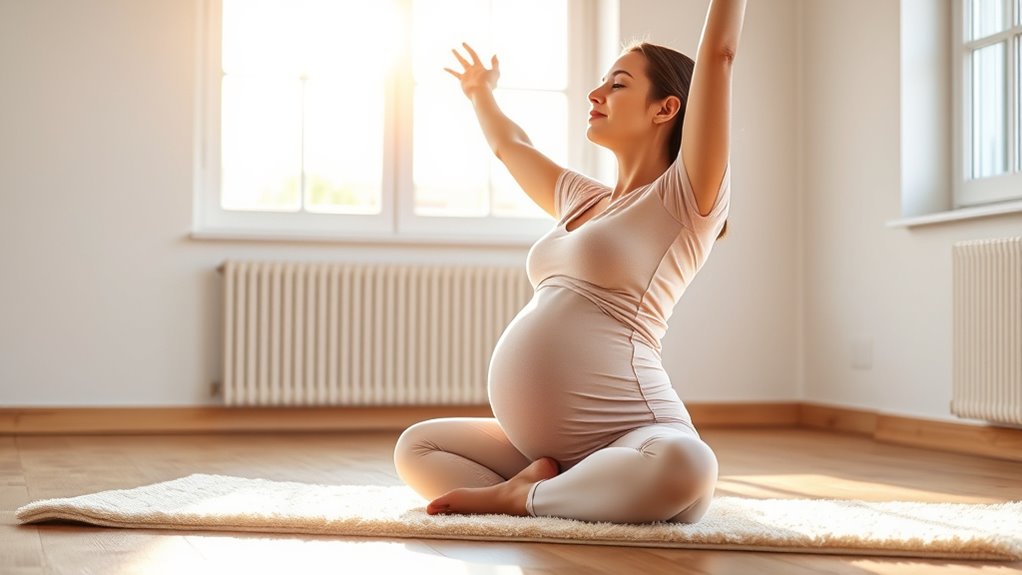
Expecting mothers often turn to prenatal yoga as a safe and effective way to stay active during pregnancy. It’s a gentle form of exercise that promotes physical strength, flexibility, and relaxation. One of the key benefits of prenatal yoga is how it helps you connect with your body and your baby. As you practice, you learn breathing techniques that can help manage stress, ease discomfort, and prepare you for labor. These breathing exercises focus on deep, mindful breaths that increase oxygen flow, calm your nervous system, and foster a sense of calmness. By consciously controlling your breath, you can reduce anxiety and stay centered during challenging moments.
In addition to breathing techniques, meditation practices are an integral part of prenatal yoga. Meditation helps you cultivate a peaceful mindset, which can be particularly valuable during pregnancy’s emotional rollercoaster. As you sit or lie in gentle poses, you’re encouraged to focus inward, letting go of worries and connecting with your baby. Guided meditations can help you visualize a smooth, healthy labor or simply create a moment of stillness in a busy day. These practices not only enhance your mental well-being but also strengthen your ability to stay present and grounded, which benefits both you and your baby.
You might find that incorporating breathing techniques into your daily routine makes a noticeable difference in how you handle pregnancy discomforts like shortness of breath, fatigue, or anxiety. When practiced regularly, these techniques become second nature, empowering you to manage stress more effectively. Meditation, on the other hand, can serve as a refuge during moments of uncertainty, helping you develop patience and resilience. Many prenatal yoga classes teach specific breathing patterns designed for pregnancy, such as diaphragmatic breathing or Ujjayi breath, which can be easily adapted to your needs.
As you progress through pregnancy, you’ll notice how these practices help improve your overall sense of well-being. They encourage mindfulness, promote better sleep, and foster a positive outlook. By integrating breathing techniques and meditation practices into your prenatal routine, you’re not just preparing your body for labor but also nurturing your mental health. This holistic approach ensures you feel more in control, relaxed, and connected to your growing baby. Additionally, practicing aromatic inhalation with essential oils can further enhance relaxation and emotional balance during your pregnancy journey. Remember, these tools are always accessible, simple to learn, and can be practiced anywhere, making them invaluable companions throughout your pregnancy journey.
Frequently Asked Questions
Can Prenatal Yoga Be Done in the First Trimester?
Yes, you can do prenatal yoga in the first trimester. It’s a gentle way to stay active, but you should prioritize exercise safety by avoiding poses that strain your stomach or cause dizziness. Listen to your body and consult your healthcare provider before starting or continuing yoga. The first trimester is a good time to focus on gentle stretches and breathing exercises that support your pregnancy journey.
Are There Specific Yoga Poses to Avoid During Pregnancy?
Don’t be a damsel in distress, avoid high-risk poses during pregnancy. You should steer clear of abdominal twists and poses that put pressure on your belly, as these can be unsafe. Also, avoid deep backbends and lying flat on your stomach. Always listen to your body, and consult your healthcare provider before trying new poses. Remember, safety comes first, so modification is key to a safe yoga practice.
How Can I Modify Yoga Poses as My Pregnancy Progresses?
As your pregnancy progresses, you should modify yoga poses by incorporating breathing modifications to stay comfortable and avoid strain. Use balance adjustments, like standing near a wall or chair for support, to prevent falls. Avoid deep twists or poses that put pressure on your belly. Focus on gentle stretches, listen to your body, and communicate with your instructor to guarantee safe, effective practice throughout your pregnancy.
Is Prenatal Yoga Safe if I Have a High-Risk Pregnancy?
If you have a high-risk pregnancy, consult your healthcare provider before starting prenatal yoga. Generally, it can be safe if you follow proper yoga modifications tailored to your condition. Make sure to choose gentle poses, avoid lying flat on your back after the first trimester, and skip any poses that cause discomfort or strain. Always listen to your body and stop if you experience pain or unusual symptoms.
Can Prenatal Yoga Help With Labor Preparation and Delivery?
Prenatal yoga gently guides you toward a smoother labor and delivery. By practicing breathing techniques, you learn to stay calm and focused, easing stress. Pelvic floor exercises strengthen muscles needed during birth, helping with pushing and recovery. This mindful preparation fosters confidence and resilience, making your experience more comfortable. Embrace these practices, and you’ll find yourself better equipped to navigate labor’s natural flow with grace and strength.
Conclusion
As you practice prenatal yoga, remember it’s a journey, not a race. Stay patient and gentle with yourself, knowing each pose helps you bond with your baby and prepare for labor. Trust your body’s wisdom and listen to what it needs. With consistency, you’ll find that you’re building strength and calmness, making the days ahead a little easier. Keep in mind, Rome wasn’t built in a day, so enjoy every step of this beautiful experience.