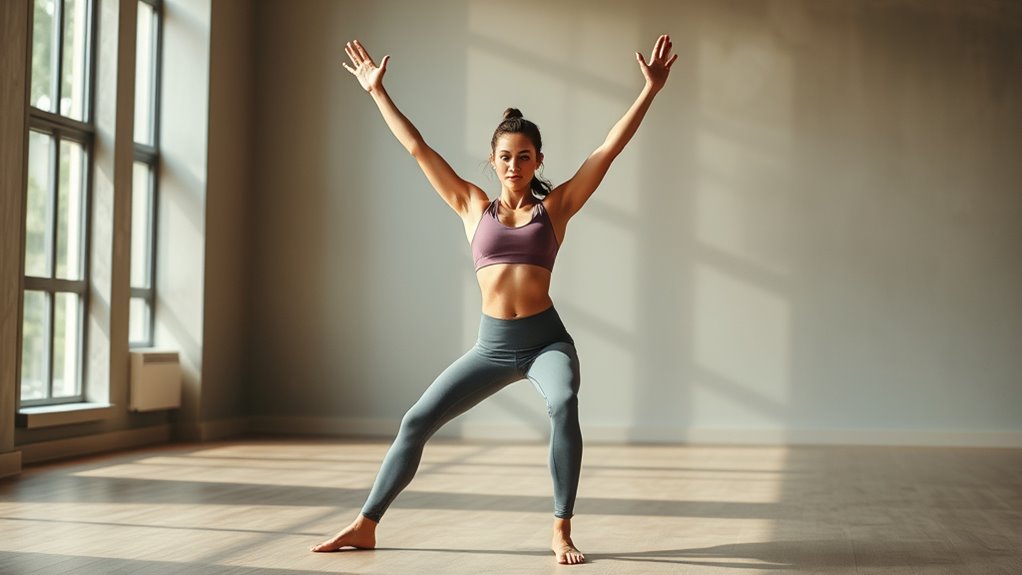

Power yoga boosts your mental resilience by combining dynamic movement with breath control and mindfulness. As you stay present during poses, you develop calm, focused mental states that extend beyond your practice. Using breath techniques, you can manage stress better and respond thoughtfully to challenges. Consistent practice helps you build emotional stability and confidence in handling setbacks. Keep exploring, and you’ll discover how these tools can transform your mental toughness in everyday life.
Key Takeaways
- Power yoga combines mindfulness and breath control to enhance mental focus and resilience during challenging poses and daily stressors.
- Regular practice develops emotional regulation skills, helping individuals detach from reactive patterns and respond thoughtfully.
- Breath techniques activate relaxation responses, reducing anxiety and strengthening mental toughness over time.
- Mindfulness meditation during yoga fosters present-moment awareness, increasing confidence in handling setbacks and adversity.
- Outdoor power yoga sessions amplify stress reduction, mental clarity, and adaptability in real-world situations.
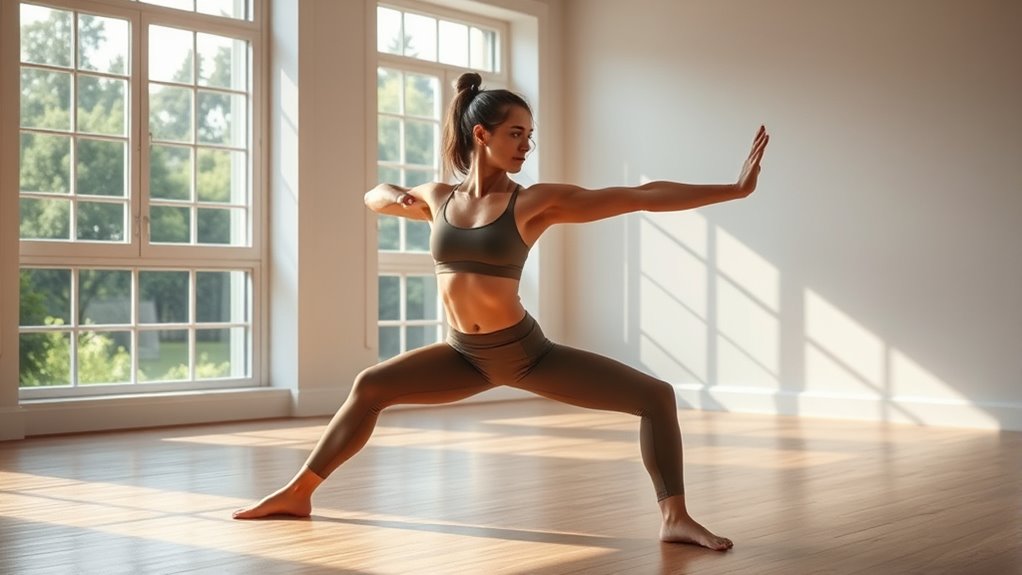
Power yoga is more than just a physical workout; it’s a powerful tool for building mental resilience. When you engage in power yoga, you’re not only strengthening your muscles but also sharpening your mind. One of the key ways it does this is through mindfulness meditation. As you flow through your poses, you learn to stay present, tuning into your body and breath instead of letting your mind wander. This focus helps you develop a calm, centered state that can carry over into daily life, especially when facing stress or adversity. The practice encourages you to observe your thoughts without judgment, creating a mental space where resilience can grow.
Power yoga cultivates mental resilience through mindfulness and breath, helping you stay present and centered amid life’s challenges.
Breath control techniques, often integrated into power yoga, further enhance your mental toughness. By consciously regulating your breathing, you learn to manage stress responses and maintain clarity under pressure. Deep, controlled breaths activate your parasympathetic nervous system, which promotes relaxation and reduces anxiety. Over time, these breath control techniques become automatic, giving you a reliable method for calming your mind during challenging moments. When you face setbacks or overwhelming situations, this ability to pause, breathe, and reset can make a significant difference in how you respond.
The combination of mindfulness meditation and breath control nurtures a mental resilience that isn’t fleeting. Instead, it’s a skill you build through consistent practice. As you become more aware of your thoughts and learn to control your breath, you gain confidence in your ability to handle life’s difficulties. Power yoga pushes you to stay present in each pose, which translates into a greater capacity to stay present in your everyday challenges. You begin to see setbacks as temporary and manageable, rather than overwhelming. This shift in perspective reinforces mental strength, fostering a resilient mindset that helps you bounce back faster from failures or setbacks.
Furthermore, as you develop this resilience, you notice improvements in your emotional regulation. Mindfulness meditation helps you detach from reactive patterns, enabling you to respond thoughtfully rather than impulsively. Breath control techniques serve as a quick anchor during moments of emotional upheaval, helping you regain your composure. Over time, these tools become second nature, giving you a stronger sense of control over your reactions. Incorporating outdoor environments into your practice can also enhance the benefits by providing natural settings that further promote relaxation and mindfulness.
In essence, power yoga offers you more than physical fitness; it equips you with mental tools that build resilience from within. Through consistent practice of mindfulness meditation and breath control techniques, you develop a calmer, more focused mind capable of withstanding life’s ups and downs with greater ease.
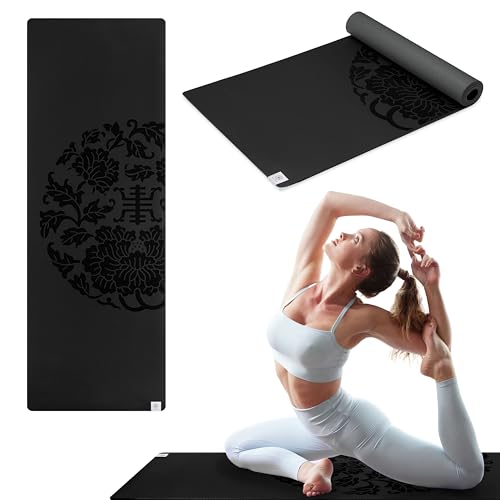
Gaiam Exercise & Fitness Mat – Premium Dry-Grip Thick Non Slip for Hot Yoga, Pilates & Floor Workouts (68"L x 24"W x 5mm) – Black
Thick Yoga Mat – The Gaiam 5 mm thick dry-grip yoga mats are durable everyday exercise mats that…
As an affiliate, we earn on qualifying purchases.
As an affiliate, we earn on qualifying purchases.
Frequently Asked Questions
Can Power Yoga Help With Anxiety or Depression?
Yes, power yoga can help reduce anxiety and depression by encouraging mindfulness practices and breath control. As you move through poses, you focus on your breath and stay present, which calms your mind. This active engagement helps break negative thought patterns and boosts your mood. Regular practice enhances your mental resilience, making it easier to cope with stress, anxiety, and depression over time.
What Specific Mental Benefits Does Power Yoga Offer?
You might find that power yoga markedly boosts your mental health by enhancing mindfulness and emotional regulation. The practice encourages you to stay present, reducing stress and fostering clarity. As you flow through challenging poses, you develop resilience and better manage your emotions. Scientific studies suggest these mental benefits help improve focus, decrease anxiety, and promote overall emotional stability, making power yoga a powerful tool for mental resilience.
How Often Should I Practice for Mental Resilience?
You should practice power yoga at least 3 to 4 times a week for ideal mental resilience. Daily consistency helps you build mental strength and reduce stress effectively. If you can’t do it every day, aim for at least 3 sessions weekly. Regular practice boosts your focus, emotional stability, and resilience over time. Find a schedule that fits your life, and stick with it to see lasting mental health benefits.
Are There Any Contraindications for Mental Health in Power Yoga?
You might worry about mental health risks or physical limitations, but generally, power yoga is safe if you listen to your body. Avoid it if you have severe injuries or mental health conditions that require medical supervision. Always consult a healthcare professional if you’re unsure. Power yoga can boost resilience, but it’s essential to modify poses to match your physical and mental needs to prevent risks.
How Does Power Yoga Compare to Other Stress-Relief Techniques?
Power yoga often surpasses other stress-relief techniques by emphasizing mindfulness integration and breath control, which help you stay present and reduce anxiety. Unlike passive methods, it actively engages your body and mind, boosting endorphin levels. You’ll find it more effective for releasing tension and improving mental resilience, especially when combined with focused breathing. Its dynamic nature keeps you motivated while fostering mental clarity, making it a powerful tool for stress management.

HealthAndYoga™ Yoga Danda – Wooden Staff – for Improved Breath Flow in Nostrils and for Yoga Practices
Useful for effective japa meditation
As an affiliate, we earn on qualifying purchases.
As an affiliate, we earn on qualifying purchases.
Conclusion
You might think power yoga is just about physical strength, but it’s so much more. It boosts your mental resilience, helping you stay calm and focused through life’s challenges. Even if you’re worried it’s too intense or time-consuming, remember that just a few sessions can make a big difference. So, give it a try—you’ll be surprised how building your body also strengthens your mind, making everyday stress easier to handle.

Retrospec Sedona Zafu Meditation Cushion with Buckwheat Hull Fill – Adjustable Yoga & Pilates Equipment Support – 17in Crescent Cotton Cover
NATURAL COMFORT & SUPPORT: Filled with sustainable buckwheat hulls, this meditation cushion elevates your practice by aligning your…
As an affiliate, we earn on qualifying purchases.
As an affiliate, we earn on qualifying purchases.

Gaiam Essentials Thick Yoga Mat Fitness & Exercise Mat With Easy-Cinch Carrier Strap, Teal, 72"L X 24"W X 2/5 Inch Thick
Extra-Thick Cushioning for Joint Comfort : Made with 10mm (2/5") high-density NBR foam, this mat delivers plush cushioning…
As an affiliate, we earn on qualifying purchases.
As an affiliate, we earn on qualifying purchases.