
TL;DR

Turn your wind-down time into listening time
- Thousands of audiobooks, podcasts and originals
- Listen on your phone, tablet or Echo — also offline
- Cancel anytime
UC Davis Health researchers are testing whether a home medication dispenser made by HiDO Health helps older adults with mild cognitive impairment or dementia take prescriptions as directed. The one-year trial will enroll 50 people and compare device use plus training and support with participants’ usual medication routines; it has not yet shown whether the device works.
UC Davis Health researchers are testing an AI-assisted medication dispenser to see whether it helps older adults with mild cognitive impairment or dementia take prescription drugs as directed and gives caregivers a reliable record of use. The one-year clinical trial will enroll 50 people, comparing use of the HiDO Health device with training and support against participants’ usual medication routines.
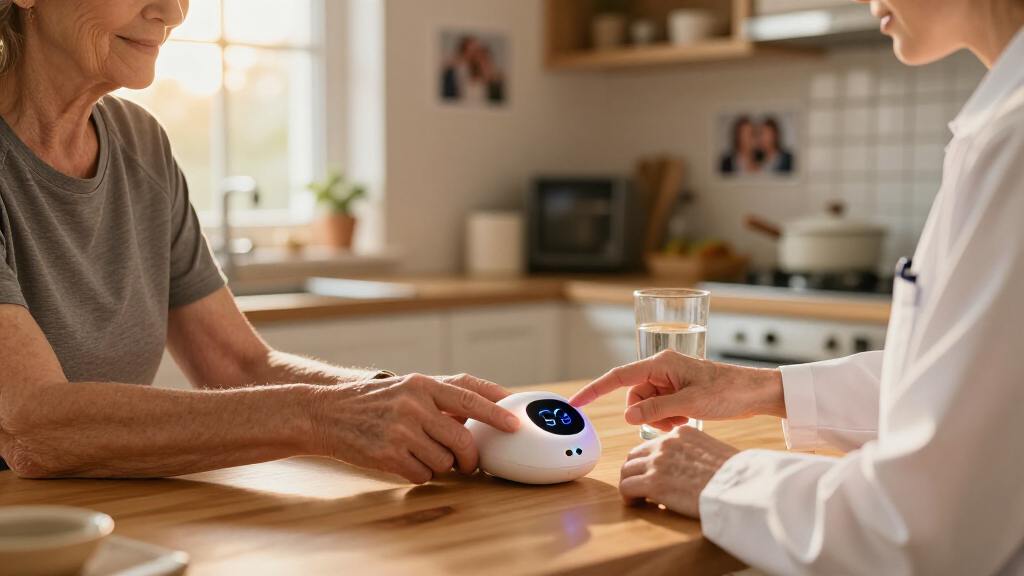
The device, developed by HiDO Health, is about 17 inches tall and designed to sit on a kitchen counter. According to the report, it can hold up to a 90-day supply of as many as seven medications. It is intended to dispense the right medication at a scheduled time, verify who is taking it and record whether a dose was taken, while sharing information with caregivers authorized by the user.
Researchers will divide participants between those using the device with training and support and those continuing their usual medication routine. Over 12 months, the team plans to assess medication adherence, cognition and daily functioning. Researchers will also collect blood samples to track health indicators, including cholesterol and glucose, for conditions treated by participants’ medicines.
A UC Davis Health pharmacy team will review participants’ medications for safety before they enter the study. The trial is supported by a $2.48 million National Institute on Aging grant through its Phase II Small Business Innovation Research program. The report describes prior peer-reviewed research as offering early evidence that the device is practical, accurate and easy to use, but the new trial is intended to test its effects in a larger study group over a year.
Medication Support at Home
For older adults who live alone and have memory difficulties, missing or mistiming medication can pose risks and create uncertainty for family members who cannot check in constantly. A device that records whether a scheduled dose was taken could give caregivers information beyond what an alarm or conventional pill organizer provides. It could also help researchers understand whether technology can support independent living without replacing human care.
The potential benefit remains a question for the trial, not an established outcome. Researchers will examine not only whether adherence changes, but also whether effects differ by a participant’s level of cognitive impairment and what support caregivers need to use the system. Those results could help families and clinicians judge whether this kind of device is useful for particular patients.
AI medication dispenser for seniors
As an affiliate, we earn on qualifying purchases.
As an affiliate, we earn on qualifying purchases.
From Pillboxes to Recorded Doses
Medication-management difficulties are a recognized concern for people with cognitive impairment. The Medical Xpress report cites a national study finding that more than 13% of older adults with dementia had trouble managing medications. It also reports that an estimated 4.3 million older Americans live alone with memory and thinking problems, around a quarter of older adults with dementia or mild cognitive impairment.
Many existing aids organize pills or issue reminders, but they may not establish whether a person swallowed a dose. A standard pillbox can show that a compartment was opened or emptied, but that does not prove the medication was taken. The HiDO system is designed to address that gap by logging dispensing and use information for approved caregivers. Its value and accuracy in daily life are among the issues the UC Davis trial will examine.
The report illustrates the concern through 88-year-old Marianne Blake and her daughter, Patty Soulsby. Soulsby said her mother sometimes delays or misses pills, particularly evening doses. Blake said she remains comfortable living at home despite recognizing changes in her memory. Their experience is an example of the caregiver uncertainty the study is intended to address, not evidence of the device’s effectiveness.
““Mom’s pretty good about taking her morning pills, but sometimes she won’t take them until 2 p.m. or not at all. The evening pills are the harder ones to remember to take.””
— Patty Soulsby, whose 88-year-old mother is Marianne Blake
automatic pill organizer with reminders
As an affiliate, we earn on qualifying purchases.
As an affiliate, we earn on qualifying purchases.
What the Trial Must Establish
The trial has not yet established that the dispenser improves adherence, health, cognition or daily functioning. The source does not provide enrollment dates, a trial registration number, detailed eligibility criteria, the device’s technical method for confirming a dose was taken, or a schedule for publishing results. It also does not specify how adherence will be measured or what outcomes would count as a meaningful improvement.
The study’s size—50 participants—means its findings will need to be interpreted in light of the number of people enrolled and the range of impairment represented. The report says participants will include people with mild cognitive impairment through moderate dementia, but does not give the planned breakdown by diagnosis. Caregiver monitoring also raises practical questions about privacy, access permissions and whether the device remains usable as needs change; the report does not describe how those issues will be handled.
medication adherence device for elderly
As an affiliate, we earn on qualifying purchases.
As an affiliate, we earn on qualifying purchases.
One Year of Participant Follow-Up
Researchers plan to follow participants for one year, tracking medication adherence, cognition and daily functioning, alongside blood indicators related to treated conditions. Before participation begins, the UC Davis Health pharmacy team will review each participant’s medications as a safety measure. The research team will then be able to compare outcomes for those receiving the dispenser, training and support with outcomes for those following their usual routine.
The next major development will be the trial’s findings, including whether the device changes medication-taking behavior, which participants may benefit and what assistance caregivers need. No results or publication date are given in the source report. Until researchers report those findings, claims about the device’s real-world benefits remain unconfirmed.
smart medication management system
As an affiliate, we earn on qualifying purchases.
As an affiliate, we earn on qualifying purchases.
Key Questions
What is the UC Davis Health trial testing?
It is testing whether an AI-assisted HiDO Health medication dispenser helps older adults with mild cognitive impairment or dementia take prescriptions as directed and whether its records help caregivers monitor use.
How many people will take part?
The planned trial will enroll 50 participants. Half will use the dispenser with training and support, while the other half will continue their usual medication routine.
Has the device been shown to work?
The trial has not yet established that it improves medication adherence or health outcomes. The source report says earlier peer-reviewed research offered early evidence about practicality, accuracy and ease of use, while the new study will assess its effects over a year.
What will researchers measure?
Researchers plan to assess medication adherence, cognition and daily functioning. They will also collect blood samples to monitor indicators such as cholesterol and glucose related to conditions participants’ medications treat.
When will results be available?
The source report does not give a results date. Participants are expected to be followed for one year, and the timing of any publication has not been specified.
Source: rss
Fall Picks
fall essentials
As an affiliate, we earn on qualifying purchases.