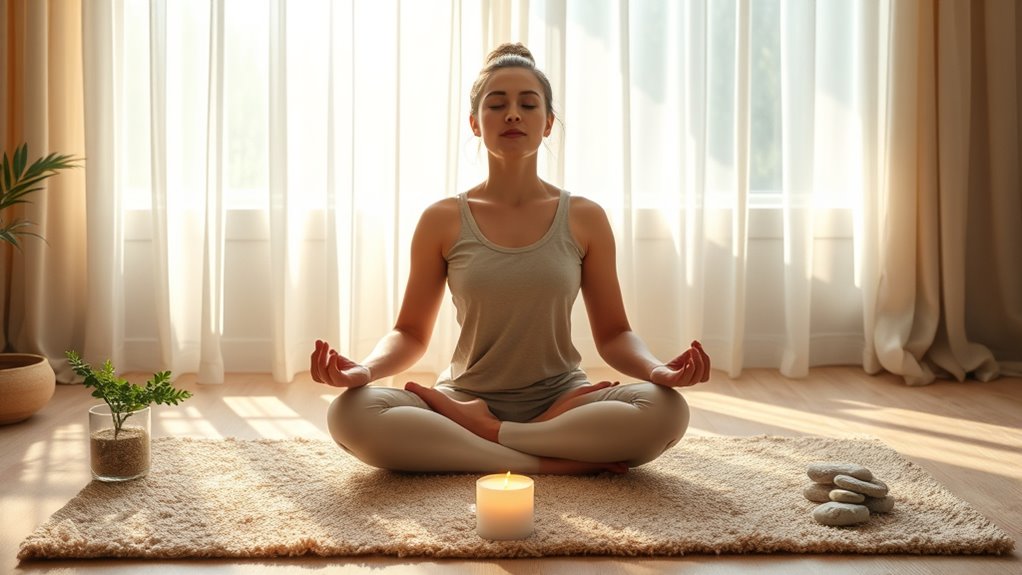

Practicing yoga can be a powerful way to support your emotional healing by calming your mind, releasing tension, and reconnecting with your inner self. Techniques like mindful asanas, breathing exercises, and meditation help reduce anxiety, foster resilience, and create a safe space for healing to unfold naturally. Consistent practice promotes emotional stability and inner peace over time. If you keep exploring, you’ll discover how simple steps can deeply transform your emotional well-being.
Key Takeaways
- Yoga restores emotional balance, fosters healing, and creates a safe space for self-awareness during emotional overwhelm.
- Breathing techniques like diaphragmatic and alternate nostril breathing help reduce anxiety and promote nervous system regulation.
- Meditation practices enable emotional processing, self-acceptance, and mental clarity through mindful observation of thoughts.
- Combining breathing and meditation into daily routines supports resilience, emotional stability, and long-term well-being.
- Incorporating aromatherapy enhances relaxation, deepening the calming effects of yoga for emotional healing.

When life feels overwhelming or emotionally draining, yoga offers a powerful way to restore balance and foster healing. One of the most effective tools you can use is a combination of breathing techniques and meditation practices. These methods help you reconnect with your inner self, calm your mind, and release emotional tension that may have built up over time. By focusing on your breath and cultivating mindfulness, you create a safe space where healing can naturally occur.
Breathing techniques, or pranayama, are foundational to emotional healing through yoga. They teach you to control your breath, which in turn influences your nervous system. When you’re feeling anxious, stressed, or overwhelmed, slow, deliberate breathing can immediately reduce feelings of panic and bring clarity. Techniques like diaphragmatic breathing, where you deeply inhale into your belly, and alternate nostril breathing, which balances the nervous system, are particularly effective. These practices help you stay present, anchor your mind, and decrease the intensity of negative emotions. Over time, consistent use of breathing exercises can foster resilience, reduce anxiety, and promote emotional stability. Incorporating essential oils such as lavender or peppermint during these practices can enhance relaxation and deepen your sense of calm, leveraging their aromatherapy benefits.
Breathing techniques like diaphragmatic and alternate nostril breathing promote emotional stability and nervous system balance.
Meditation practices are equally essential in this process. When you meditate, you intentionally quiet your mind and observe your thoughts without judgment. This helps you gain insight into your emotional patterns and develop a compassionate awareness of your feelings. Guided meditations focused on emotional healing often incorporate visualizations or affirmations that promote self-acceptance and release of emotional pain. As you practice regularly, meditation strengthens your ability to detach from destructive thought cycles, allowing you to respond more calmly to stressors. It’s a gentle yet powerful way to process deep-seated emotions, create mental clarity, and cultivate a sense of inner peace.
Integrating breathing techniques and meditation into your daily routine doesn’t require hours of practice. Even a few minutes a day can make a significant difference. Start by setting aside time each morning or evening for focused breathing exercises, paying attention to how your body responds. Pair this with a short meditation session, perhaps guided by an app or a calming soundtrack. Over time, these practices become natural parts of your self-care, helping you manage emotional upheavals with greater ease. They also enhance your overall mindfulness, making it easier to stay grounded during stressful moments.
Ultimately, by harnessing the power of breathing techniques and meditation practices, you create a foundation for emotional healing. These tools empower you to navigate life’s challenges with greater resilience, compassion, and clarity. As you cultivate a regular practice, you’ll notice a deeper sense of calm and a more balanced emotional state, paving the way for ongoing healing and growth.
Frequently Asked Questions
Can Beginners With No Prior Experience Practice Yoga for Emotional Healing?
Yes, beginners with no prior experience can practice yoga for emotional healing. You should focus on building your confidence gradually and choose classes tailored for beginners. Don’t hesitate to use yoga modifications; they make poses more accessible and comfortable. As you progress, you’ll feel more confident and able to deepen your practice. Remember, consistency and patience are key to experiencing the emotional benefits yoga offers.
How Long Does It Typically Take to See Emotional Improvements Through Yoga?
You might notice emotional improvements from yoga in as little as a few weeks, but it varies based on your consistency and openness. With regular practice, mindfulness integration helps you stay present, facilitating emotional release and healing. Some feel profound changes within a month, while others take longer. The key is patience and dedication—think of it as planting seeds for deep emotional growth that bloom over time.
Are There Specific Yoga Poses Best Suited for Anxiety or Depression?
You can try poses like Child’s Pose, Cat-Cow, and Legs-Up-The Wall, which are great for easing anxiety and depression. Incorporate mindfulness meditation during your practice to stay present, and focus on deep breathing techniques to calm your nervous system. These poses, combined with breath awareness, help reduce stress and promote emotional stability, making them effective tools for managing anxiety and depression through yoga.
Can Yoga Replace Traditional Therapy for Emotional Issues?
Yoga can’t fully replace traditional therapy for emotional issues, but it can considerably support your healing process. By strengthening your mind-body connection, yoga helps you gain emotional balance and manage stress better. Regular practice can complement therapy, improve mood, and build resilience. Remember, combining yoga with professional treatment offers a holistic approach, giving you the tools to navigate your emotional health more effectively and fostering long-term emotional well-being.
How Often Should I Practice Yoga to Support Emotional Well-Being?
You should practice yoga daily to boost emotional well-being—because who doesn’t want to turn their emotional rollercoaster into a smooth ride? Consistency is key, so stick to personalized routines that fit your schedule and needs. Even 20-30 minutes a day can make a difference. Remember, it’s not about perfecting poses, but creating a habit that nurtures your mind and soul.
Conclusion
Remember, healing starts from within. As you practice yoga to nurture your emotions, trust that each gentle stretch and breath brings you closer to peace. Sometimes, you need to let go of what’s weighing you down to move forward. Keep in mind the saying, “Healing is a journey, not a destination.” Embrace your path with patience and compassion, knowing that every step you take is a step toward emotional well-being.