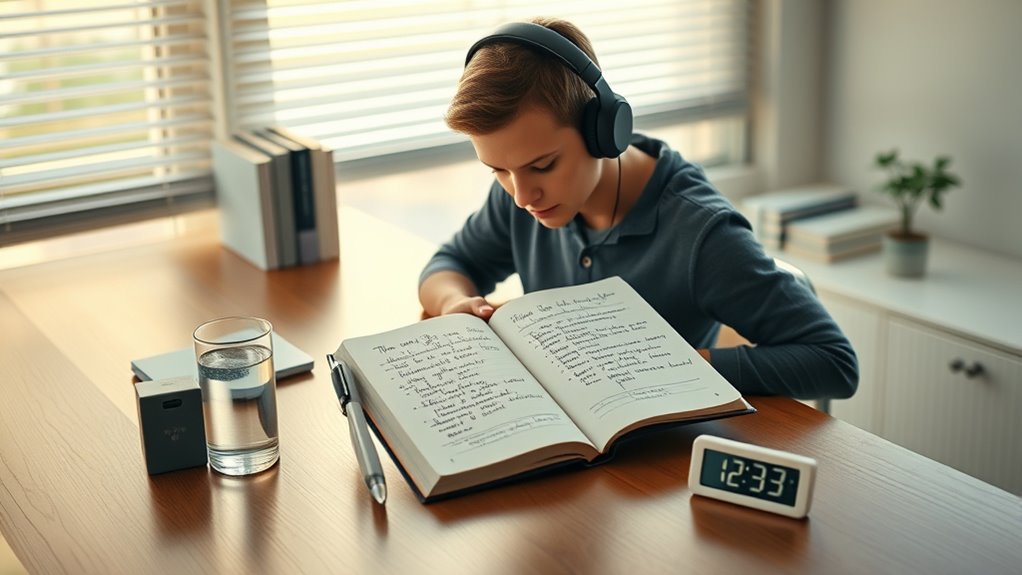

Practicing self-discipline involves creating consistent routines and turning small actions into habits that become automatic over time. Focus on habit stacking and starting with simple commitments to build momentum without relying solely on motivation. Keep your goals clear and visualize success to stay motivated. As you develop habits, you’ll find discipline naturally strengthens, making progress easier and more sustainable. Stick with it, and you’ll discover more tips to strengthen your self-control.
Key Takeaways
- Establish specific routines and habits to automate disciplined behaviors, reducing reliance on willpower.
- Use habit stacking by linking new practices to existing routines to enhance consistency.
- Clarify your reasons for goals and visualize success to boost motivation during challenging times.
- Start small with manageable commitments, gradually building up to reinforce habits and discipline.
- Incorporate accountability and rewards to maintain motivation and reinforce long-term self-discipline.
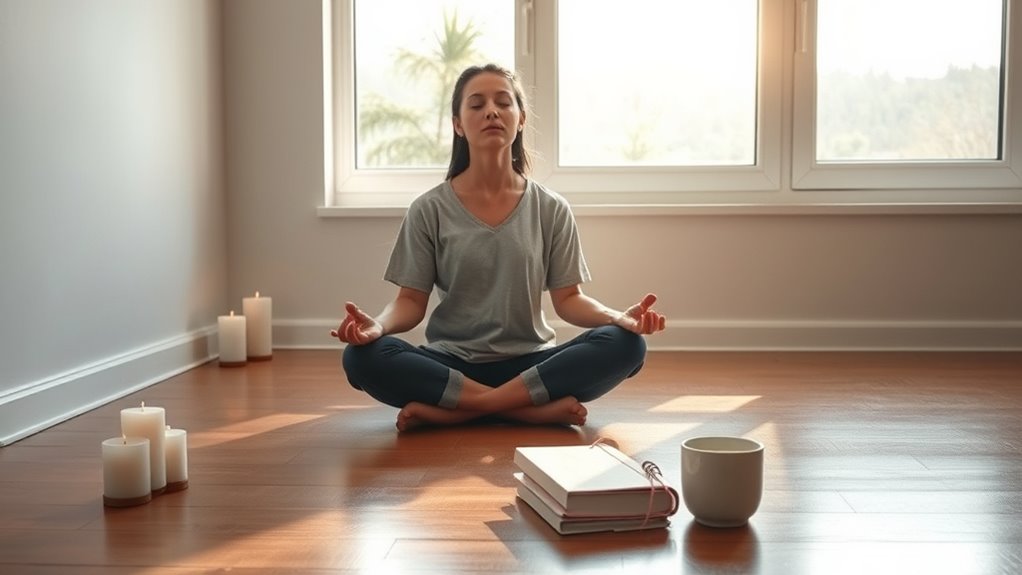
Have you ever wondered why some people achieve their goals while others struggle to stay on track? The secret often lies in their ability to practice self-discipline consistently. Developing this skill hinges on understanding habit formation and utilizing effective motivation strategies. When you focus on creating habits, you turn small actions into automatic behaviors that require less mental effort over time. Instead of relying solely on willpower, which can be fleeting, you embed positive routines into your daily life. For instance, if your goal is to exercise regularly, start with just five minutes a day. Over time, that small commitment becomes a habit, and the effort needed to maintain it decreases. This process of habit formation makes it easier to stay disciplined because your actions become ingrained and less dependent on motivation. Incorporating mindful habit stacking can further reinforce consistency by linking new behaviors to existing routines.
Creating habits turns small actions into automatic routines that make discipline easier over time.
Motivation strategies play a vital role in sustaining self-discipline, especially during challenging moments. You might find that your initial enthusiasm wanes, but by having clear, compelling reasons for your goals, you can rekindle your drive. Visualizing success, setting specific milestones, and rewarding yourself for progress are powerful techniques to boost motivation. When you associate habits with positive outcomes, it becomes easier to persevere through setbacks. Additionally, you can leverage external accountability, like sharing your goals with friends or joining a group, to keep your motivation high. Remember, motivation isn’t always constant, but when combined with well-established habits, it creates a reliable framework for discipline.

Undated Weekly Planner With Habit Tracker & To Do List 5.7 x 8.0 inch
- Undated Weekly Planner: 52-week flexible scheduling
- Compact Size: 5.7 x 8 inches, portable
- Elegant Design: Morandi Blue cover with rose gold coil
As an affiliate, we earn on qualifying purchases.
As an affiliate, we earn on qualifying purchases.
Frequently Asked Questions
How Long Does It Take to Develop Strong Self-Discipline?
It typically takes around 21 to 66 days to develop strong self-discipline, depending on your habits and consistency building. You’ll notice progress faster if you stay committed daily, forming routines that reinforce discipline. Remember, habit formation is key, so focus on small, achievable goals. With persistent effort, your self-discipline will strengthen over time, making it easier to stay on track and reach your goals.
Can Self-Discipline Be Maintained During Stressful Times?
Yes, you can keep your self-discipline during stressful times. When stress strikes, stay steady by practicing stress management and relying on coping strategies like deep breathing, mindfulness, or taking short breaks. These tactics help you retain your resolve, reduce reactive responses, and reinforce your routines. By consciously choosing calm over chaos, you maintain your self-discipline, even when stress tries to sabotage your focus and goals.
What Are Common Mistakes That Weaken Self-Discipline?
You often weaken your self-discipline by falling into procrastination pitfalls and developing inconsistent routines. When you delay tasks or abandon your habits, it becomes harder to stay focused and motivated. These mistakes create a cycle of loss of momentum, making discipline harder to maintain. To strengthen it, you need to recognize these pitfalls early, stick to consistent routines, and stay committed even when motivation wanes.
How Do Rewards Influence Self-Discipline Effectiveness?
Rewards can boost your self-discipline by strengthening your reward systems, making it easier to stay motivated. However, relying too much on external rewards may weaken your intrinsic motivation, which is vital for long-term discipline. To be effective, use rewards thoughtfully—celebrate small wins without becoming dependent on them. This balance helps you develop stronger self-control and makes your discipline more sustainable and genuine over time.
Is Self-Discipline More Important Than Motivation?
Sure, motivation sounds great until you realize it’s fleeting, like a meme. Self-discipline, driven by consistency and willpower, wins the race. Without intrinsic motivation, your effort’s like trying to dance in a tornado—messy and short-lived. So, you’d better focus on building habits and relying on willpower, because discipline’s the steady ship, even when motivation’s gone sailing. Prioritize consistency over fleeting feelings for real success.
As an affiliate, we earn on qualifying purchases.
Conclusion
Remember, cultivating self-discipline isn’t about perfection but gentle progress. By consistently guiding yourself with patience and kindness, you create a path that feels more like a steady dance than a steep climb. Every small step you take helps you grow stronger and more centered, even when the journey seems quiet or uncertain. Keep nudging yourself forward, and over time, you’ll find that what once felt distant becomes comfortably familiar. Your best self is just around the corner.
self-discipline motivational book
As an affiliate, we earn on qualifying purchases.
As an affiliate, we earn on qualifying purchases.
As an affiliate, we earn on qualifying purchases.