
TL;DR

Turn your wind-down time into listening time
- Thousands of audiobooks, podcasts and originals
- Listen on your phone, tablet or Echo — also offline
- Cancel anytime
LumiMind’s LumiSleep D1 is a consumer EEG headband designed to pair brain-signal monitoring with adaptive audio during bedtime wind-downs, overnight wake-ups and naps. The supplied report describes the product’s features, but does not provide clinical evidence that it improves sleep outcomes; the company says it is not a medical device and results are not guaranteed.
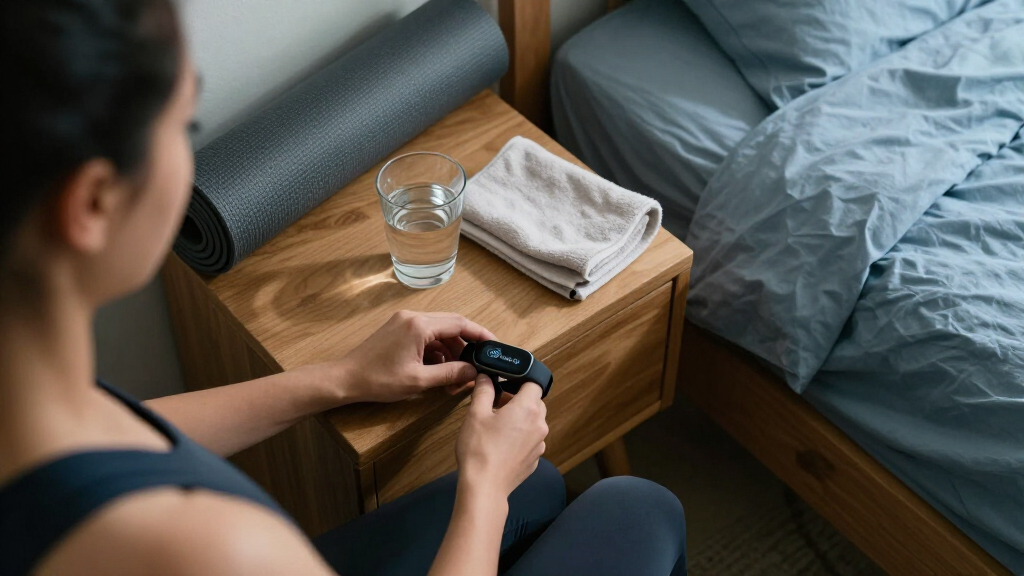
LumiMind’s LumiSleep D1 pairs a non-invasive EEG headband with adaptive sound intended to support bedtime wind-downs, overnight returns to sleep and daytime naps, according to an Athletech News report. The product is presented as an option for people who have trouble settling after an evening workout, but the report provides no clinical results showing that it improves sleep.
The device’s SleepGuide feature combines a soundscape selected in the LumiMind App with a low-frequency rhythmic pulse, called AuthenticBeats, that the company says is generated in response to brain activity during the session. The ambient layer may be rain or tonal music; the pulse is intended to adapt as EEG signals change. Users start a session and can listen without continually checking readings or adjusting the audio themselves.
A seven-point soft dry-electrode array records signals at the forehead without conductive gel or disposable materials. LumiMind says its system identifies a brain-activity pattern it calls the Sleep Onset Pattern, then uses a monitor, decode and generate process to adjust the acoustic guidance. The report describes this processing as taking place on the device and says the company claims millisecond-level responsiveness. Independent testing of that speed is not included in the supplied material.
The report says users may remove the headband when they feel drowsy or after about 30 minutes, or leave it on to monitor the transition into sleep. The cushioned over-ear structure and elastic headband are designed for use in different sleeping positions. If worn overnight, the device can also provide ReSleep audio after a wake-up, using monitoring data from that night. The feature is available only after overnight wear. The product can also be used during a daytime rest period.
A Post-Workout Routine Beyond Tracking
Most sleep wearables are presented as tools for recording or summarizing sleep. LumiSleep D1 is described instead as a device that uses signals during a session to alter audio in real time. For people exercising late, that distinction is the product’s central proposition: it aims to take part in the wind-down rather than only report on sleep afterward.
That proposition is relevant to athletes and others fitting exercise around work, travel or family schedules, but it should not be mistaken for evidence of a sleep benefit. The supplied report explains how the system is intended to work and lists use cases; it does not give results from a clinical trial, comparison with usual bedtime routines or independent evaluation. The stated limits matter: LumiMind describes the device as non-pharmaceutical support, not a diagnostic or therapeutic medical device, and says improved sleep outcomes are not guaranteed.
As an affiliate, we earn on qualifying purchases.
How SleepGuide Uses EEG Signals
The report frames the product around a common gap between feeling physically tired and feeling ready to sleep, particularly after an evening workout or during travel. LumiSleep D1’s proposed response is to combine a user-selected background sound with an EEG-responsive rhythm, rather than asking the user to interpret brain readings. In the company’s terminology, the underlying process is Real-Time Neural Coupling Modulation.
The app is used to select a soundscape and manage the experience, while the report says EEG acquisition, processing and audio generation happen on the headband without an ongoing phone or cloud connection. The device has received design recognition from Red Dot, the Bronze A’ Design Award and the DNA Paris Design Awards, according to the report. Those awards concern design and do not establish whether the product changes sleep outcomes.
“The system operates with millisecond-level responsiveness.”
— LumiMind, as described in the Athletech News report
As an affiliate, we earn on qualifying purchases.
Evidence and Availability Still Unclear
The supplied report does not state whether LumiSleep D1 has been evaluated in peer-reviewed research or provide trial data, sample sizes, measured sleep outcomes or comparisons with other approaches. Claims about personalized guidance and responsiveness are attributed to the company; the material does not establish that the feature helps users fall asleep faster or sleep longer.
It is also not clear from the supplied material when the device will be broadly available, what it will cost, or what specific evidence supports its Sleep Onset Pattern approach. The report points readers to LumiMind’s website and a Kickstarter campaign, but gives no campaign status, funding figures or delivery schedule. Those details should not be inferred from the product description.
As an affiliate, we earn on qualifying purchases.
Availability and Evidence to Watch
Readers considering the device can check LumiMind’s website or the Kickstarter campaign for current pricing, campaign status, shipping estimates and product terms. The supplied report does not give those details, so availability and delivery timing remain unconfirmed here.
Further evidence would be needed to assess whether adaptive EEG-guided audio produces measurable sleep benefits, for whom it may be useful, and how those results compare with other wind-down methods. Until such information is available, LumiSleep D1 is best described as a consumer product designed to guide relaxation with responsive sound, not as a proven treatment for sleep problems.
As an affiliate, we earn on qualifying purchases.
Key Questions
What is LumiSleep D1?
LumiSleep D1 is a LumiMind consumer headband that records EEG signals and pairs them with audio intended to support bedtime wind-downs, overnight returns to sleep and naps.
How does its adaptive audio work?
The report says users choose a background sound in the app, while a low-frequency rhythm is generated in response to brain activity detected during the session. LumiMind says the system continues monitoring and adjusting the sound.
Can it be used after a workout?
Yes. The report describes it as an option for a bedtime routine after an evening workout. It does not provide evidence that it reliably improves sleep after exercise.
Does LumiSleep D1 diagnose or treat sleep disorders?
No. LumiMind says the device is not intended as a diagnostic or therapeutic medical device, and that improved sleep outcomes are not guaranteed. People with medical concerns should consult a qualified health professional.
What is not yet known about the product?
The supplied report does not provide clinical trial results, independent validation of the company’s performance claims, pricing or a confirmed general availability date.
Source: rss
Evergreen bestsellers Picks
bestsellers
As an affiliate, we earn on qualifying purchases.