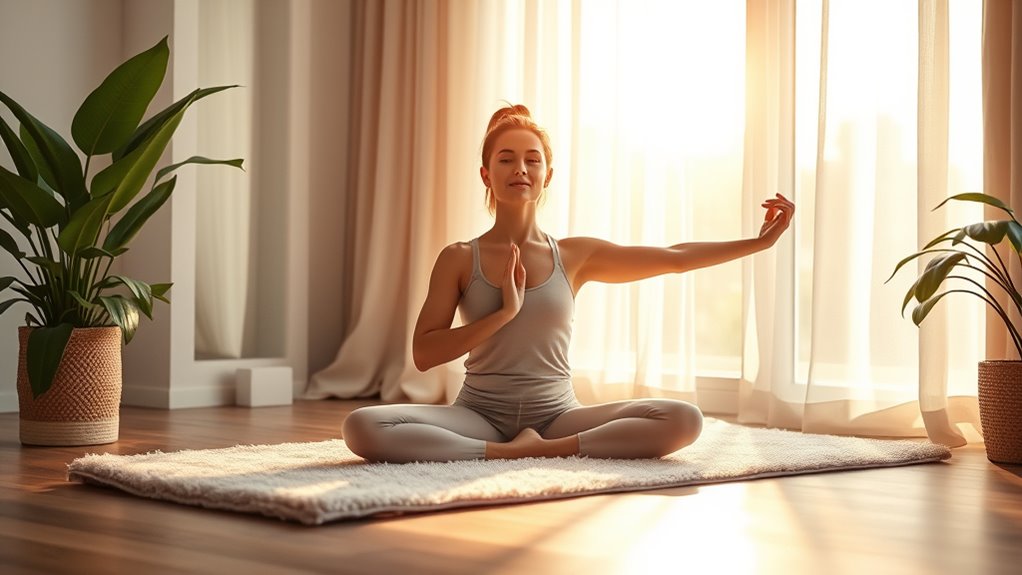

Practicing gentle yoga and deep breathing exercises in the evening can help you relax and improve your sleep quality. Incorporate calming poses like forward bends and restorative stretches, combined with slow, mindful breathing to activate your relaxation response. Establishing a consistent routine—dimming the lights and avoiding screens—signals your body it’s time to unwind. Keep practicing regularly, and you’ll discover more simple techniques that make falling asleep easier.

Turn your wind-down time into listening time
- Thousands of audiobooks, podcasts and originals
- Listen on your phone, tablet or Echo — also offline
- Cancel anytime
Key Takeaways
- Incorporate gentle yoga poses like forward bends and restorative stretches into your evening routine to promote physical relaxation.
- Practice deep diaphragmatic and mindful breathing exercises during yoga to activate relaxation responses and calm racing thoughts.
- Establish a consistent nightly practice combining yoga and breathing techniques to signal your body it’s time to wind down.
- Avoid screens and bright lights 30 minutes before bed to enhance melatonin production, supporting better sleep.
- Regularly engaging in calming yoga routines reduces stress, relaxes the mind and body, and improves overall sleep quality over time.

Are you tired of tossing and turning every night? If so, you’re not alone. Many people struggle to fall asleep or stay asleep through the night, often feeling exhausted by morning. One effective way to improve your sleep quality is to develop a calming evening routine that prepares your body and mind for rest. Incorporating yoga into this routine can make a significant difference. Yoga isn’t just about physical postures; it also emphasizes breathing techniques that relax your nervous system and help you unwind. When you make yoga part of your evening routines, you create a signal to your body that it’s time to slow down and prepare for sleep.
Breathing techniques are central to yoga’s ability to promote better sleep. Practices like deep diaphragmatic breathing, alternate nostril breathing, or even simple mindful breathing exercises can calm racing thoughts and reduce stress. As you settle into your evening routine, take a few minutes to focus on your breath. Inhale slowly through your nose, filling your lungs completely, then exhale gently, releasing tension with each breath. This slow, intentional breathing encourages your parasympathetic nervous system—the part that promotes rest and digestion—to activate. Over time, these breathing exercises can help lower your heart rate and blood pressure, making it easier for you to drift into sleep. Engaging in relaxation techniques regularly can further enhance this calming effect.
Creating a consistent evening routine that incorporates yoga can establish a predictable cue for your body that it’s time to wind down. Start about 30 minutes before bed by dimming the lights and turning off screens, which emit blue light that can interfere with melatonin production. Then, engage in gentle yoga poses like forward bends, gentle twists, or restorative stretches. These poses release physical tension accumulated during the day and signal your nervous system to relax. Combine this with your breathing exercises, focusing on slow, deep inhales and exhales to deepen the relaxation response. By making this a nightly ritual, your body begins to associate these activities with sleep, making it easier to transition from wakefulness to rest over time.
The key is consistency. The more regularly you practice these breathing techniques and yoga poses as part of your evening routines, the more effective they become. Over days and weeks, you’ll notice that your mind feels calmer, your body more relaxed, and falling asleep becomes less of a struggle. This holistic approach not only improves your sleep but also enhances your overall well-being. So, start tonight—set aside a few minutes, focus on your breath, and gently stretch your body into a calming yoga sequence. Your better sleep awaits.
As an affiliate, we earn on qualifying purchases.
Frequently Asked Questions
Can Yoga Replace Medication for Sleep Issues?
Yoga can complement meditation techniques and herbal remedies but shouldn’t replace medication without consulting your doctor. While yoga helps reduce stress and improve sleep quality, some sleep issues may require medical treatment. Incorporate gentle yoga poses, breathing exercises, and relaxation techniques to support your sleep routine. However, always talk to a healthcare professional to determine the best approach for your specific needs and avoid stopping medication abruptly.
What Yoga Poses Are Best for Insomnia?
You can try gentle stretches like Child’s Pose and Legs-Up-The-Wall to relax your body. Incorporate breathing techniques such as deep diaphragmatic breathing or alternate nostril breathing to calm your mind. These poses and breathing exercises help reduce stress and promote relaxation, making it easier to fall asleep. Practice them 30 minutes before bed for best results, and gradually develop a calming bedtime routine.
How Long Should I Practice Yoga Before Bed?
You should practice yoga for about 20 to 30 minutes before bed. Incorporate breathing techniques like deep diaphragmatic breathing and calming meditation practices to enhance relaxation. Focus on gentle poses that promote stretching and release tension. Consistently dedicating this time helps signal your body it’s time to unwind, making it easier to fall asleep and improve sleep quality. Remember, consistency is key for the best results.
Are There Any Yoga Contraindications for Sleep Problems?
You should be aware that certain yoga poses may be contraindicated if you have sleep problems, especially if they cause physical strain or discomfort. Always prioritize yoga safety by avoiding poses that aggravate your condition or cause pain. Consult with a healthcare professional or experienced instructor to identify poses that are safe for you. Focus on gentle, restorative poses, and steer clear of vigorous or inversive poses that could interfere with restful sleep.
Can Yoga Improve Sleep Quality for Shift Workers?
Ever wonder if yoga can help shift workers catch better Z’s? Absolutely. Yoga, especially mindfulness meditation and breathing techniques, can help regulate your circadian rhythm and reduce stress caused by irregular hours. Practicing gentle poses and deep breathing before sleep can ease your progression to rest and improve sleep quality. So, yes, incorporating yoga into your routine can make a significant difference in managing sleep disruptions caused by shift work.
restorative yoga poses for relaxation
As an affiliate, we earn on qualifying purchases.
As an affiliate, we earn on qualifying purchases.
Conclusion
By practicing yoga regularly, you’ll discover the secret to falling asleep faster than a shooting star streaking across the night sky. Your mind will feel lighter than a feather, your body more relaxed than a hammock swaying in a gentle breeze. Sleep will become so deep and peaceful, you’ll wake up feeling more refreshed than a sunrise after a storm. Embrace yoga tonight, and watch your sleep transform into a spectacular, unstoppable wave of serenity!
deep breathing exercises for sleep
As an affiliate, we earn on qualifying purchases.
As an affiliate, we earn on qualifying purchases.
calming yoga routine for bedtime
As an affiliate, we earn on qualifying purchases.
As an affiliate, we earn on qualifying purchases.
Columbus Day / Indigenous Peoples' Day Picks
long weekend sales
As an affiliate, we earn on qualifying purchases.