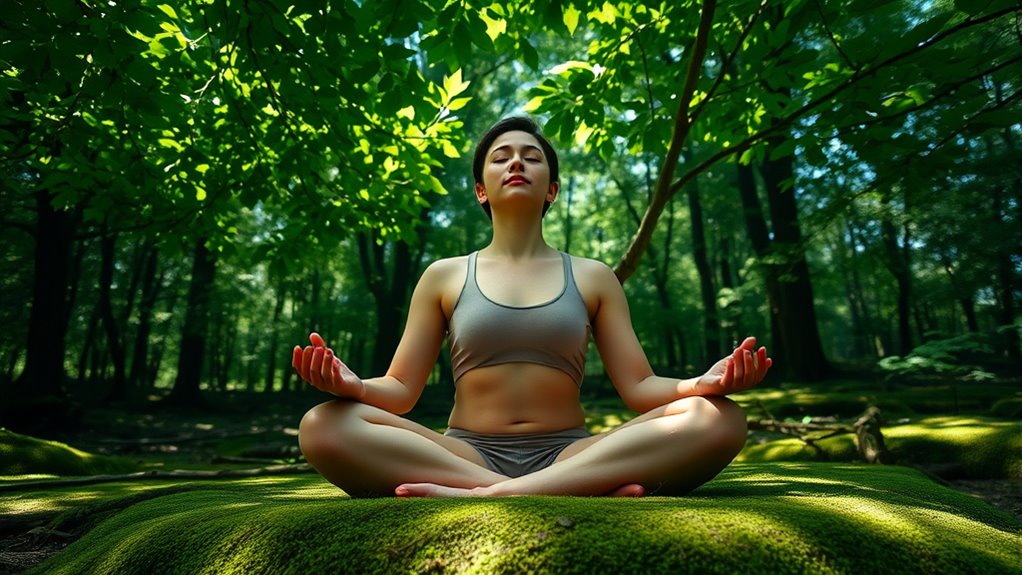

To reset your nervous system, focus on diaphragmatic breathing, where you breathe deeply into your belly rather than shallowly in your chest. This pattern activates your parasympathetic nervous system, helping you relax and regain calm quickly. Practice slow, deliberate inhales and exhales regularly to promote balance and reduce stress. By mastering this simple technique, you’ll discover how easy it is to restore your inner peace anytime—continue to explore how these breathing patterns work best for you.
Key Takeaways
- Diaphragmatic breathing stimulates the parasympathetic nervous system, promoting relaxation and resetting stress responses.
- Slow, deep breaths help lower heart rate and blood pressure, calming the nervous system.
- Mindful breathing increases awareness and shifts focus away from stressors, restoring balance.
- Regular practice of belly breathing enhances resilience to daily stress and improves emotional regulation.
- Breath patterns emphasizing slow exhalations activate relaxation pathways, effectively resetting nervous system tension.

Have you ever noticed how your breathing changes throughout the day? Sometimes, it’s shallow and rapid when you’re stressed or distracted, and other times, it’s deep and relaxed when you’re calm. Recognizing these shifts is the first step toward mastering your nervous system. One effective way to do this is through mindfulness exercises that focus on your breath. These exercises help you become aware of your breathing patterns and gently guide you back to a more balanced state. By practicing mindfulness, you learn to observe your breath without judgment, which enhances your ability to control it consciously. This awareness can reduce feelings of anxiety and promote mental clarity.
A powerful technique within these exercises is diaphragmatic breathing, also called belly breathing. Unlike chest breathing, which involves shallow breaths that activate your sympathetic nervous system (the fight-or-flight response), diaphragmatic breathing engages your diaphragm, allowing you to take longer, fuller breaths. When you focus on diaphragmatic breathing, you stimulate your parasympathetic nervous system—the part responsible for rest and relaxation. This shift helps reset your nervous system, calming your mind and body. To practice, sit or lie down comfortably, place one hand on your chest and the other on your belly. Take a slow, deep breath through your nose, aiming to expand your belly rather than your chest. You should feel your abdomen rise as you fill your lungs with air. Exhale slowly through your mouth or nose, feeling your belly fall. Repeat this process, making each breath slow and deliberate.
Incorporating diaphragmatic breathing into your daily routine can be surprisingly simple yet profoundly effective. You don’t need special equipment or hours of practice—just a few minutes each day. As you become more familiar with this technique, you’ll notice how it influences your overall breathing pattern, encouraging deeper, more relaxed breaths even during stressful moments. Over time, mindfulness exercises that emphasize diaphragmatic breathing can become a go-to tool for managing anxiety, improving focus, and restoring your nervous system’s balance. The key is consistent practice, the more regularly you practice, the more instinctive this calming response becomes. Whether you’re facing a busy day or unwinding after work, returning to mindful breathing helps you regain control, grounding you in the present moment and fostering resilience against daily stressors.
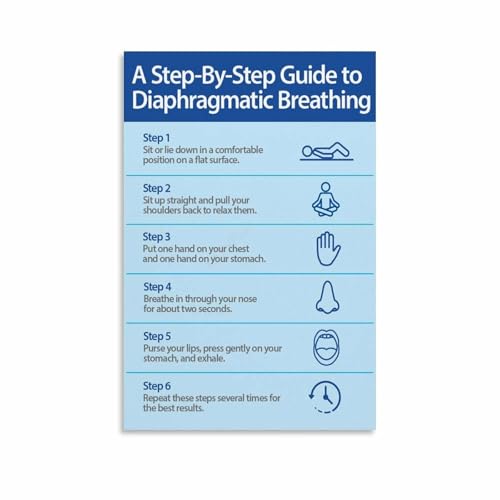
Diaphragmatic Breathing Guide Poster Stress Relief (3) Canvas for Living Room Bedroom Decor 08x12inch(20x30cm) Unframe-style
Size : 5 size for choice(1 inch=2.54cm)
As an affiliate, we earn on qualifying purchases.
As an affiliate, we earn on qualifying purchases.
Frequently Asked Questions
Can Breathing Patterns Replace Medication for Stress Relief?
Breathing patterns can considerably help with stress relief, but they might not fully replace medication for everyone. You can experience meditation benefits by practicing controlled breathing, focusing on breathing duration to calm your nervous system. Incorporating deep, slow breaths regularly can reduce anxiety and improve mental clarity. However, consult your healthcare provider to determine if combining breathing exercises with medication is best for your specific needs.
Are There Specific Breathing Techniques for Anxiety Attacks?
When you face anxiety attacks, try mindful breathing or diaphragmatic breathing to calm down quickly. These techniques help slow your heart rate and relax your nervous system. You might think they’re not enough, but consistent practice makes them powerful tools for managing anxiety. Focus on deep, slow breaths, filling your belly, and stay present in the moment. This simple approach can offer immediate relief and build resilience over time.
How Long Should I Practice These Breathing Patterns Daily?
You should practice these breathing patterns daily for about 10 to 15 minutes, which is the ideal session length for calming your nervous system. Consistency is key, so aim to incorporate them into your routine at the same time each day. If you find this duration challenging, start with 5 minutes and gradually increase as you become more comfortable. Regular practice helps reinforce the calming effects on your nervous system.
Can Breathing Exercises Improve Sleep Quality?
Yes, breathing exercises like diaphragmatic breathing and mindfulness meditation can improve your sleep quality. These techniques calm your nervous system, reduce stress, and promote relaxation. By practicing them regularly—ideally before bed—you help signal to your body that it’s time to rest. Over time, you’ll notice falling asleep faster and experiencing deeper, more restorative sleep, making these exercises a valuable part of your nightly routine.
Are There Any Risks or Contraindications for Certain Breathing Methods?
You might wonder if certain breathing methods pose health risks. Some techniques, like breath-holding or rapid breathing, can be contraindicated for people with heart or respiratory conditions, increasing health risks. Always listen to your body and consult a healthcare professional before trying new methods. Avoid techniques that cause dizziness, chest pain, or discomfort, as they could worsen your condition and lead to adverse effects.

ajdvart Mindfulness Breathing Exercise Poster, Calm Down Corner & Classroom Decor, Breathing Exercise Poster for Therapy Office & Mental Health Wall Art Educational Tool Unframed Canvas 8.5"x11"
8.5"x11" Unframed 3 Canvas Poster: High-quality canvas with a soft matte finish, this poster is built to last….
As an affiliate, we earn on qualifying purchases.
As an affiliate, we earn on qualifying purchases.
Conclusion
By adopting these breathing patterns, you can effectively reset your nervous system and regain calm amidst chaos. Imagine feeling more centered and in control with just a few mindful breaths—doesn’t that sound worth trying? Incorporating these techniques into your daily routine might just be the reset you need to face life’s challenges with clarity and resilience. So, why not take a deep breath now and start recharging your nervous system today?

Breathing Lamp Guided Visual Meditation Tool for Mindfulness,Anxiety Relief&Calm Your Mind for Stress&Visual Relaxation and Restful Sleep,478 Seconds Breathing Rate Change 3 Colors,Gift for Kids
Breathing Lamp Function: A mindful breathing lamp is a powerful and effective tool that can help you reduce…
As an affiliate, we earn on qualifying purchases.
As an affiliate, we earn on qualifying purchases.
YeeBeny Breathing lamp Guided,3 Color 478s,Visual Meditation Light for Stress Relief
Breathing Lamp Function: A mindful breathing lamp is a powerful and effective tool that can help you reduce…
As an affiliate, we earn on qualifying purchases.
As an affiliate, we earn on qualifying purchases.