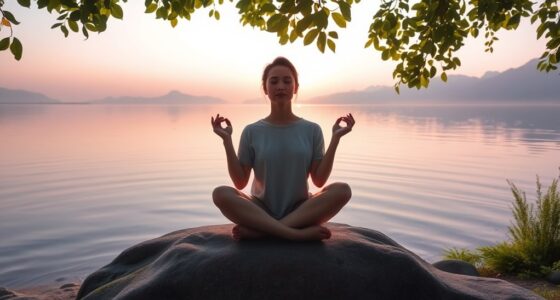
Walking meditation turns a simple walk into a mindful experience that helps you find calm in motion. By paying close attention to your steps, breath, and surroundings, you can cultivate awareness and presence in each moment. Focus on deliberate movements, gentle breath coordination, and a soft gaze to deepen your practice. With regular effort, you’ll notice increased clarity and peace throughout your day. Continue exploring to discover how this mindful movement can become a powerful tool for your well-being.
Key Takeaways
- Walking meditation transforms everyday walks into mindful, calming experiences by focusing on breath, movement, and sensations.
- Prepare by grounding yourself, observing posture, and taking deep breaths before beginning to enhance presence.
- Maintain awareness of each step, weight shift, and muscle engagement, coordinating breath with movement.
- Practice regularly in various settings to deepen mindfulness and carry calm into daily life.
- Benefits include stress reduction, mental clarity, increased awareness, and a peaceful state amid daily chaos.

Walking meditation is a simple yet powerful practice that helps you cultivate mindfulness through purposeful movement. It’s a way to bring awareness into your everyday routine, turning a simple walk into a meaningful experience. By engaging in this mindfulness practice, you learn to stay present with each step, cultivating a deep sense of calm and clarity. Instead of rushing through your day or being lost in thoughts, you focus on the act of walking itself. This shift in attention allows you to observe your surroundings, your breath, and your sensations, creating a peaceful space amid daily chaos. Incorporating mindfulness techniques such as breath awareness can further deepen your practice and enhance your mental well-being.
Walking meditation transforms everyday walks into mindful, calming moments of presence and clarity.
To get started, you’ll want to pay attention to your walking techniques. The goal isn’t speed or efficiency but awareness. Begin by standing still for a moment, grounding yourself in the present. Feel the contact of your feet with the ground, notice your posture, and take a few deep breaths. When you’re ready to move, take slow, deliberate steps. Place your full attention on the movement of each foot—lifting, moving forward, and setting down. Notice how your weight shifts, how your muscles engage, and how your balance feels. With each step, stay connected to the sensation of movement, avoiding distractions or rushing to your destination.
While practicing walking meditation, it’s helpful to coordinate your breath with your steps. For example, inhale as you lift your foot and exhale as you step forward. This rhythmic breathing anchors you further into the present moment. Keep your gaze soft and steady, focusing on a point a few feet ahead, but avoid staring or fixating. Instead, let your awareness be open, observing the environment around you without judgment or attachment. This helps you develop a gentle, non-reactive mindfulness that’s accessible anytime, anywhere.
As you become more familiar with walking techniques, you’ll notice that this practice can be incorporated into any setting—whether in a park, along a corridor, or even indoors. The key is consistency. With each walk, you deepen your ability to remain mindful, transforming a simple act into a powerful tool for stress relief and mental clarity. Over time, this mindful walking becomes second nature, allowing you to carry that sense of calm and presence into other areas of your life. Walking meditation isn’t just about movement; it’s about reconnecting with yourself in each step, fostering a sense of peace that follows you wherever you go.
Frequently Asked Questions
Can Walking Meditation Be Practiced Outdoors Safely?
Yes, you can practice walking meditation outdoors safely by choosing quiet, familiar areas where you can connect with nature without distractions. Keep safety precautions in mind, such as staying aware of your surroundings, avoiding busy streets, and walking at a comfortable pace. This helps deepen your nature connection while ensuring your safety. Always listen to your body and be mindful of any hazards to enjoy a peaceful, mindful walk.
How Long Should a Typical Walking Meditation Session Last?
A typical walking meditation session lasts about 15 to 30 minutes, but it really depends on your personal preference. You can start with shorter periods, like 10 minutes, and gradually extend your session as you become more comfortable. Focus on maintaining mindfulness and steady breathing throughout, and listen to your body. The key is consistency, so choose a duration that feels manageable and enjoyable for you.
Is Walking Meditation Suitable for Beginners or Only Advanced Practitioners?
Walking meditation is incredibly beginner-friendly and an accessible practice for everyone, even if you’ve never tried meditation before. You won’t find a more straightforward way to start calming your mind and connecting with your body. It’s like a gentle breeze guiding you to mindfulness—simple, soothing, and effective. So, don’t hesitate; this practice is perfect for beginners and will gradually deepen your meditation experience.
What Should I Do if My Mind Keeps Wandering During Practice?
If your mind keeps wandering during practice, don’t worry. Use mindfulness techniques to gently bring your focus back to your breath or steps. Acknowledge distractions without judgment, then redirect your attention calmly. Practice distraction management by noting the distraction and softly guiding yourself back to walking meditation. Consistent effort will improve your focus over time, helping you stay present and find calm even when your mind drifts.
Can Walking Meditation Help With Specific Health Issues?
Yes, walking meditation can help with specific health issues like chronic pain management and stress reduction techniques. As you walk mindfully, you activate your body’s relaxation response, easing pain and lowering stress levels. Regular practice can improve your overall well-being, making it easier to manage discomfort and reduce anxiety. By focusing on your steps and breath, you create a calming routine that benefits both your mind and body.
Conclusion
As you embrace walking meditation, remember that nearly 60% of practitioners report reduced stress and improved focus. Moving mindfully helps you reconnect with the present moment, cultivating calm amid daily chaos. So, next time life feels overwhelming, take a few mindful steps—your mind and body will thank you. By incorporating this simple practice, you’re not just walking; you’re creating a peaceful haven wherever you go. Start today and experience the calming benefits firsthand.