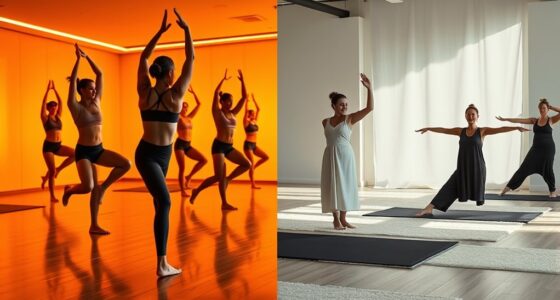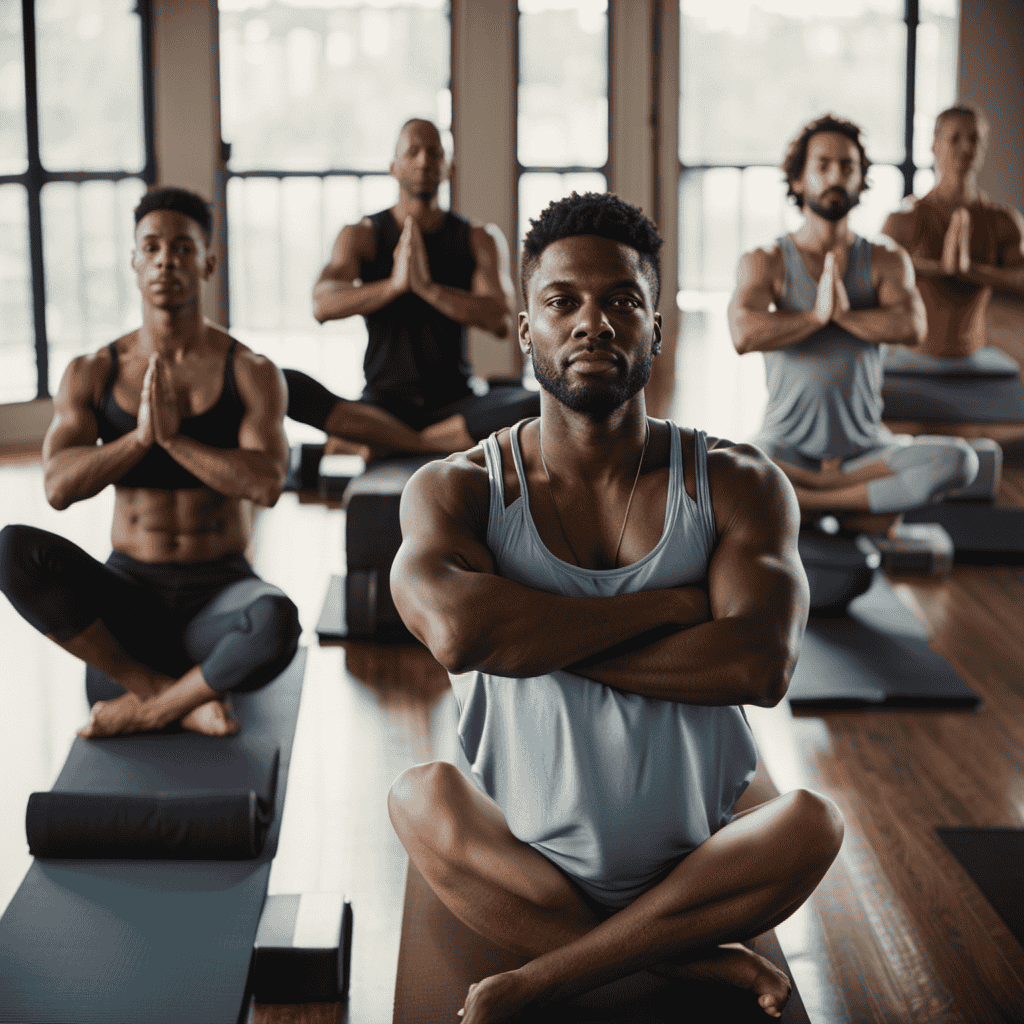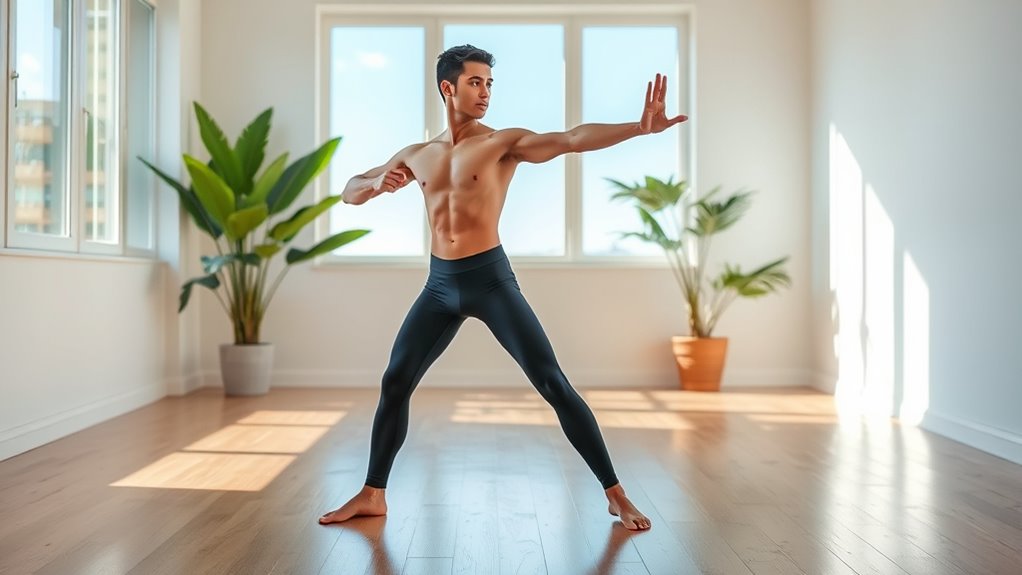
To improve strength and stability through yoga, focus on engaging your core muscles in each pose to create a solid foundation. Consistent practice helps you develop better control, balance, and mental focus, making challenging poses easier over time. Incorporate balance poses like Tree or Warrior III to train muscle coordination and stability. Approaching each pose mindfully, paying attention to alignment and core activation, will deepen your practice and boost your confidence, opening even greater progress as you continue.
Key Takeaways
- Incorporate core-engaging poses like Plank and Boat to build strength and stability.
- Practice balance poses such as Tree and Warrior III regularly to enhance body control.
- Maintain mindful alignment and activate the core during all poses to prevent wobbling.
- Consistent practice improves endurance, control, and overall stability over time.
- Use mental focus and mindfulness techniques to deepen stability and reinforce strength development.
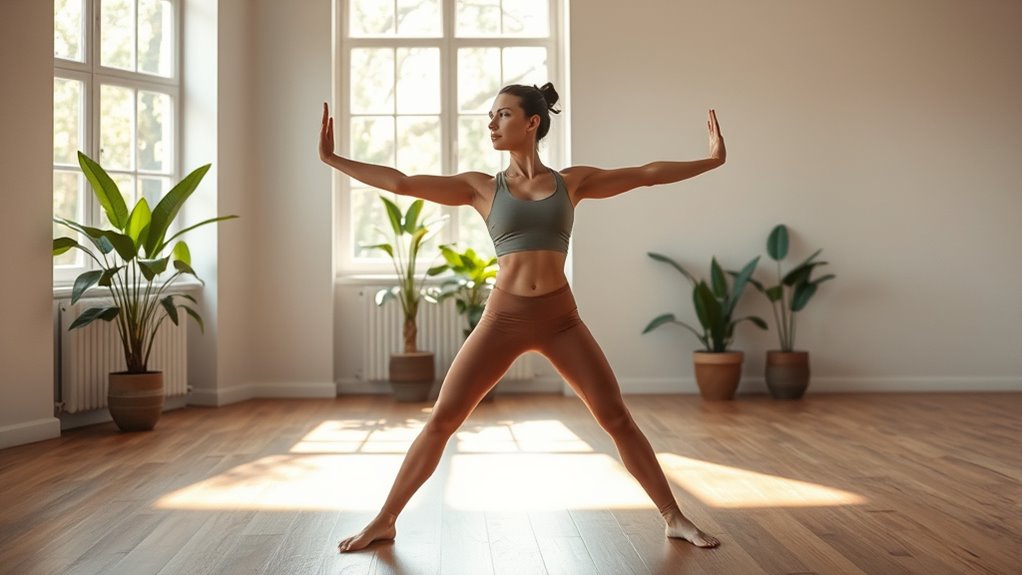
Yoga is an effective way to build strength and improve stability, helping you develop a balanced body and mind. When you practice regularly, you’ll notice how your core engagement becomes stronger, providing a solid foundation for all movements. Engaging your core is essential because it stabilizes your entire body, enabling you to perform balance poses with greater control and confidence. As you move through various poses, focus on activating your abdominal muscles—this not only boosts your strength but also enhances your ability to maintain stability in challenging postures. With consistent effort, you’ll find yourself holding balance poses longer and with less wobbling, as your core becomes a reliable anchor. Incorporating celebrity lifestyle insights into your routine can motivate you to stay committed to your practice. Balance poses are a cornerstone of yoga for strengthening and stability. These poses challenge your body to stay steady on one leg or in unconventional positions, demanding both physical strength and mental focus. When you practice poses like Tree Pose, Warrior III, or Half Moon, you’re training your muscles to work together harmoniously, which improves overall stability. It’s important to approach these poses mindfully, engaging your core to prevent wobbling and to keep your body aligned. As you progress, you’ll notice your ability to hold these poses increases, and your sense of balance deepens. The key is to remain present and attentive to your body’s cues, adjusting your stance and engagement as needed.
Frequently Asked Questions
Can Yoga Replace Traditional Strength Training Methods?
Yoga benefits can enhance your strength, but it typically can’t replace traditional strength training methods entirely. Yoga improves flexibility, balance, and muscle endurance, offering a different strength comparison. While it’s excellent for overall health and stability, combining yoga with weightlifting or resistance exercises provides the best results for building significant muscle mass and strength. You should consider integrating both for a well-rounded fitness routine that meets your goals.
How Often Should I Practice Yoga for Noticeable Stability Improvements?
You’ll see noticeable stability improvements with daily consistency, but the ideal frequency depends on your goals and schedule. Practicing yoga at least 3 to 5 times a week keeps your muscles engaged and your balance sharp. Skipping days can slow progress, so commit to a regular routine. Keep at it, and within weeks, you’ll feel stronger and more stable—an unstoppable force in your daily life.
Are There Specific Yoga Poses Best for Core Strength?
You should focus on poses that promote core activation and challenge your balance. Try plank variations, boat pose, and side planks to target your core muscles directly. Balance poses like tree pose and warrior III also engage your core for stability. Incorporating these into your routine regularly will help build core strength and improve overall stability. Consistent practice is key to seeing noticeable results.
Is Yoga Suitable for Injury Recovery and Prevention?
Imagine your body as a delicate porcelain vase — yoga can be the gentle hand guiding it back to health. It’s great for injury healing and preventive exercises, helping you build resilience without pounding your joints. You’ll find yoga promotes flexibility and strength, reducing future risks. Just remember to listen to your body and modify poses as needed, ensuring a safe journey toward recovery and long-term wellness.
What Equipment Enhances Yoga for Strength and Stability?
Using yoga props like blocks, straps, and bolsters can substantially enhance your practice by providing support and improving alignment. Resistance bands add extra challenge, helping you build strength and stability in targeted muscles. Incorporate these tools into your routine to deepen stretches, maintain proper form, and gradually increase intensity. They make your yoga sessions more effective, safe, and adaptable, especially when focusing on strengthening and stabilizing your body.
Conclusion
As you build strength through yoga, you also cultivate stability within. Just like a tree stands tall despite the wind, your body becomes resilient through practice. Remember, gains in power come not only from effort but from patience and balance. Embrace the journey, knowing that each pose challenges and supports you simultaneously. Strength without stability is fragile; stability without strength is stagnant. Together, they create a foundation that empowers you both on and off the mat.