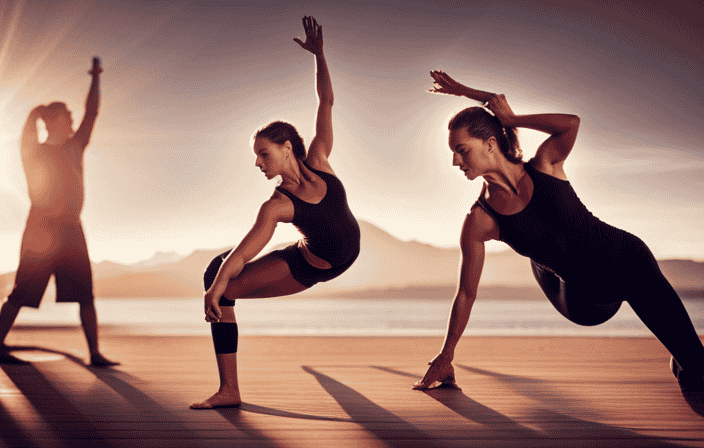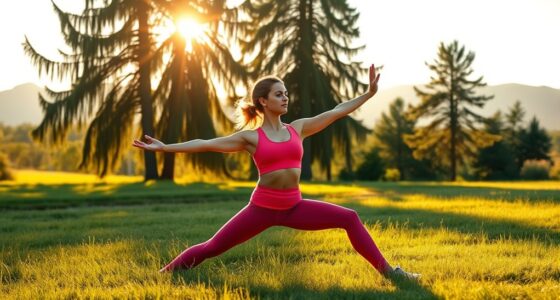
Practicing yoga as a runner helps you stretch tight muscles, improve flexibility, and recover faster after runs. Focused breathing techniques increase oxygen flow, reduce stress, and promote muscle relaxation, preventing injuries. Mindful poses boost mental clarity and concentration, enhancing your overall performance. Incorporating simple yoga routines into your routine can make a big difference in both recovery and resilience. Keep exploring ways to integrate these practices to elevate your running experience even further.
Key Takeaways
- Incorporate yoga poses that target tight muscles like hamstrings, calves, and hip flexors to improve flexibility and prevent injuries.
- Use mindful breathing techniques during yoga to enhance oxygen flow and accelerate muscle recovery after runs.
- Practice balance and core-focused poses to strengthen stabilizer muscles, reducing strain and supporting better running posture.
- Include relaxation and gentle stretching to release muscle tension, reduce soreness, and promote mental clarity for subsequent training.
- Integrate short breathing and mindfulness exercises to lower stress levels, improve sleep, and support overall recovery and well-being.

If you’re a runner looking to improve flexibility, prevent injuries, and boost recovery, incorporating yoga into your routine can be a game-changer. One of the core benefits of yoga for runners lies in its emphasis on breathing techniques and mental focus. When you practice mindful breathing, you learn to control your breath, which helps reduce stress and enhances oxygen flow to your muscles. This increased oxygenation can lead to better endurance and quicker recovery after long runs. As you become more conscious of your breath, you develop a steady, rhythmic pattern that keeps you calm and centered during your runs, especially when fatigue sets in. Breathing techniques like diaphragmatic breathing or ujjayi breath not only improve your lung capacity but also foster a state of mental clarity, allowing you to stay present and focused during your workouts. Additionally, understanding the benefits of yoga for injury prevention can motivate you to maintain a consistent practice that supports your running goals. Mental focus is a crucial aspect of yoga that directly benefits runners. By engaging in poses that require concentration and balance, you train your mind to stay alert and calm under pressure. This mental discipline translates well to running, especially in challenging conditions or during race day. When your mind is focused, you’re less likely to be distracted by discomfort or negative thoughts, which can derail your performance. Yoga encourages you to be in the moment, noticing how your body feels and adjusting your posture or breath accordingly. This heightened awareness helps you recognize early signs of fatigue or injury, allowing you to address issues before they worsen. Over time, your improved mental focus from yoga can make your runs feel more controlled and enjoyable. Furthermore, integrating breathing techniques and mental focus into your yoga practice enhances your overall recovery process. Deep, mindful breathing aids in reducing muscle tension and flushing out lactic acid, speeding up healing. Simultaneously, the mental clarity gained from yoga encourages a positive mindset, making it easier to stick to your training schedule and stay motivated. The combination of controlled breathing and focused attention helps you relax the nervous system, lowering cortisol levels and promoting better sleep—both critical for recovery. Incorporating these elements into your routine doesn’t require hours on the mat. Just a few minutes of mindful breathing and focused poses can make a significant difference in your running performance and recovery. By consistently practicing yoga with an emphasis on breathing techniques and mental focus, you’ll find yourself running more efficiently, recovering faster, and feeling more resilient in your training.

NAGLIFOR Massage Chair Full Body, Zero Gravity Massage Chair 2026 for Back Fatigue with 10 Fixed Rollers, Heating, Airbags, Phone Controller, Bluetooth Speaker, Nightlights for Living Room, Bedroom
[Upgraded Massage Chair] Experience a higher level of wellness with our massage chair full body. Combining 10 fixed...
As an affiliate, we earn on qualifying purchases.
Frequently Asked Questions
Can Yoga Improve My Running Speed?
Yes, yoga can improve your running speed by boosting your running endurance and mental focus. Regular yoga practice enhances flexibility and strength, helping you run more efficiently. It also sharpens your mental focus, allowing you to maintain better form and pace during runs. As you increase your endurance and stay mentally focused, you’ll notice improvements in your speed over time. Incorporate yoga into your training for overall better running performance.
How Often Should Runners Practice Yoga?
You should practice yoga for flexibility and breathing techniques 2-3 times a week. As the saying goes, “Consistency is key,” and regular sessions help prevent injuries and improve recovery. Incorporate poses that target tight muscles and focus on breath control to enhance your running. This balanced approach guarantees you stay agile, breathe better, and keep your body in peak condition. Remember, progress comes from steady effort.
Is Yoga Suitable for Injury-Prone Runners?
Yes, yoga is suitable for injury-prone runners. It helps improve flexibility and strengthens muscles, reducing strain and injury risk. Incorporate yoga for flexibility into your routine regularly, focusing on hamstrings, hips, and calves. Follow injury prevention strategies like proper warm-up, listening to your body, and avoiding overstretching. Consistent yoga practice supports recovery and keeps your muscles balanced, making you less prone to common running injuries.
What Yoga Poses Help Prevent Common Running Injuries?
Did you know that tight hip flexors and IT band issues cause over 60% of runner injuries? Yoga poses like Pigeon, Warrior II, and Low Lunge target these areas, helping prevent common injuries. By regularly practicing these stretches, you improve flexibility, reduce tension, and strengthen supporting muscles. Incorporate these poses into your routine to stay injury-free and enjoy smoother, pain-free runs.
Can Yoga Replace Traditional Stretching Routines?
Yoga can’t fully replace traditional stretching routines, but it enhances dynamic flexibility and mental focus, making your warm-up and cool-down more effective. By incorporating yoga, you engage muscles differently and improve body awareness, which helps prevent injuries. Use yoga as a complement to your stretching, not a substitute, to optimize recovery, boost performance, and stay mentally focused during your runs.

Sweetcrispy Massage Recliner Chair for Adults, Adjustable Home Theater Seating with Lumbar Support for Living Room, Modern Fabric Reclining, Black
【Adjustable Reclining Comfort】Effortlessly switch between 90° and 160° reclining positions to suit your needs, whether it’s sitting upright,...
As an affiliate, we earn on qualifying purchases.
Conclusion
As you roll out your mat, remember that yoga is more than just a stretch—it’s a bridge to resilience. Like a tree rooted in strength yet flexible enough to sway, your body finds balance through mindful movement. Embrace each pose as a symbol of renewal, allowing your muscles to breathe and your mind to steady. With every session, you’re cultivating the roots of endurance, ensuring you run stronger and recover wiser—ready to face whatever lies ahead.
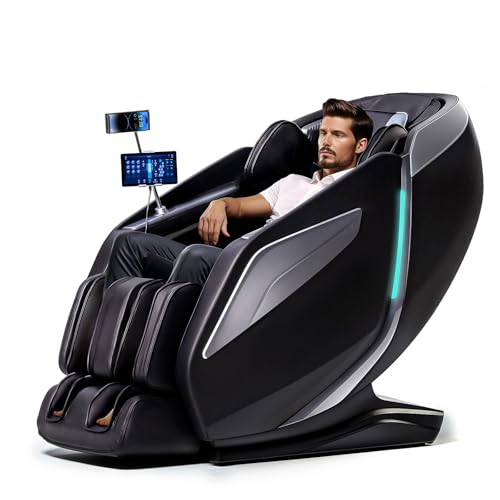
HealthRelife 4D Massage Chair Full Body Zero Gravity Recliner - 55“ SL-Track,15 Auto Modes,11 Massage Technique,40 Airbags Massage,with Yoga Stretch,APP Control,Shiatsu Foot Massage(Black)
【Full Body Airbags Massage】 40 Airbags are strategically positioned from the shoulder to the foot. They apply rhythmic...
As an affiliate, we earn on qualifying purchases.

Rhevoy Power Lift Recliner Chair for Elderly with Massage and Heat, Dual Motor Electric Lift Chair with Arm Storage, Lay Flat Recliner for Big and Tall, Infinite Position, Gray
26" extra-wide seat & Flip Arm Storage: Our oversized recliner chair has a roomy, comfortable 26" seat that...
As an affiliate, we earn on qualifying purchases.