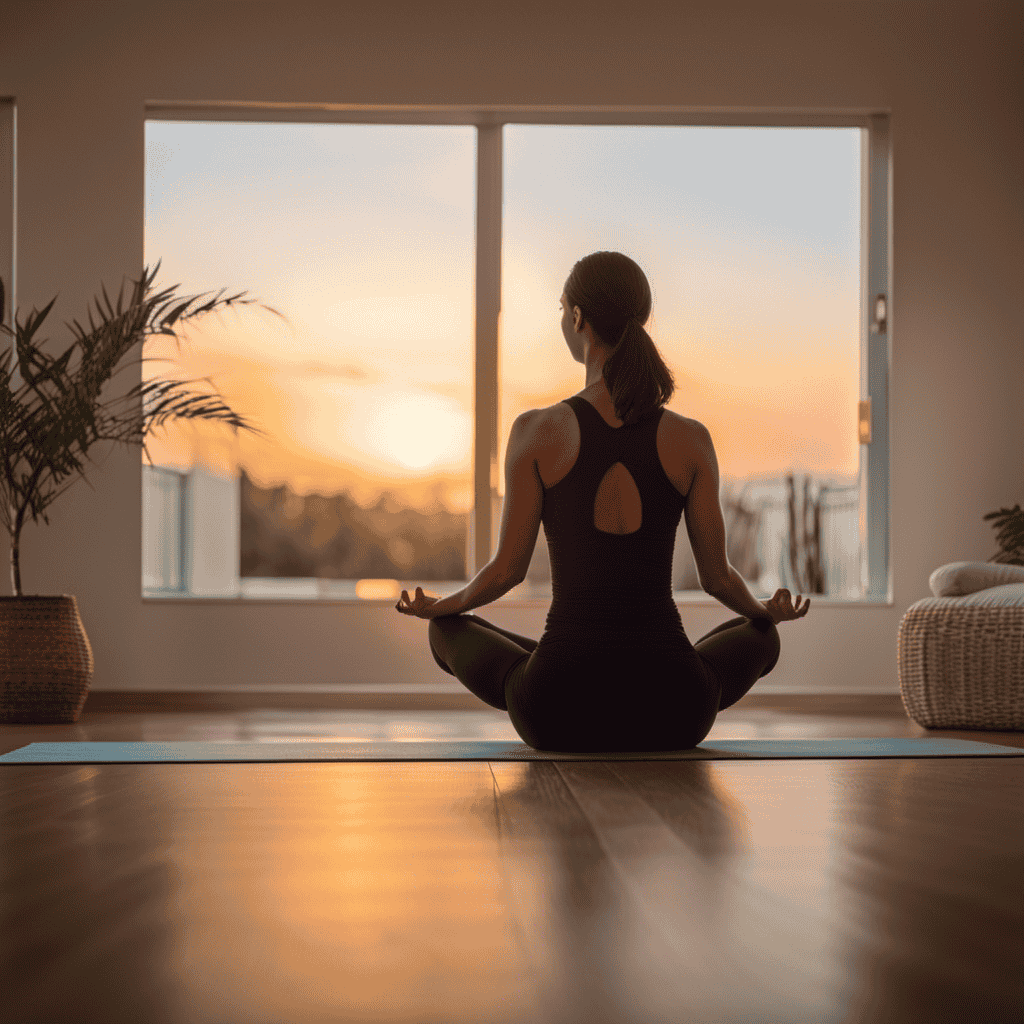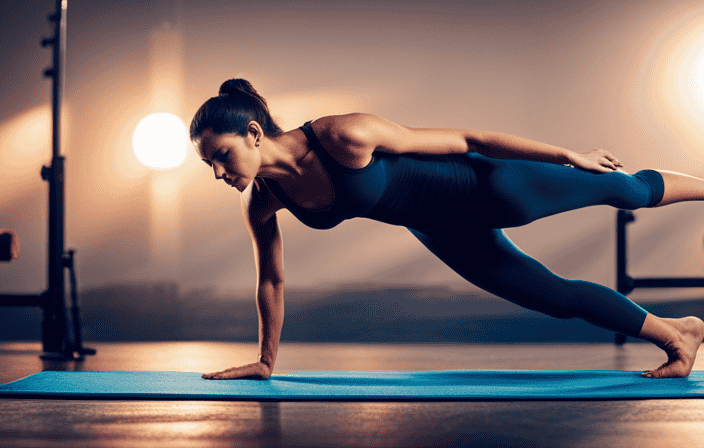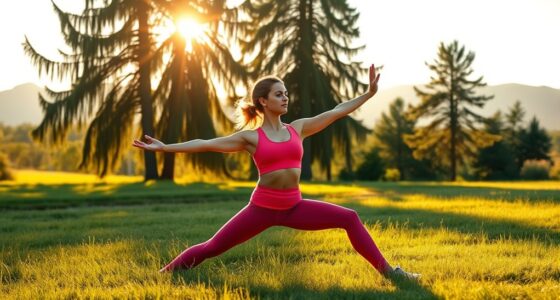
Practicing yoga regularly can help improve your posture by strengthening your core muscles, which support proper alignment, and promoting better breath control. Poses like plank, boat, and bridge activate muscles that stabilize your spine, reducing fatigue and discomfort. Breathing techniques like diaphragmatic breathing enhance relaxation and shoulders’ position. Over time, consistent yoga practice develops muscle memory, making good posture feel natural. Keep exploring ways yoga can transform your body and alignment over the long term.
Key Takeaways
- Yoga strengthens core muscles like the abdomen, back, and hips to support proper spinal alignment.
- Breathing techniques such as diaphragmatic breathing enhance posture by promoting relaxation and shoulder awareness.
- Postural exercises like plank, boat pose, and bridge activate muscles that maintain natural, upright alignment.
- Consistent yoga practice improves muscle memory, leading to long-term posture correction and reduced fatigue.
- Integrating mindful movement and breathing helps prevent habits that cause rounded shoulders and neck strain.
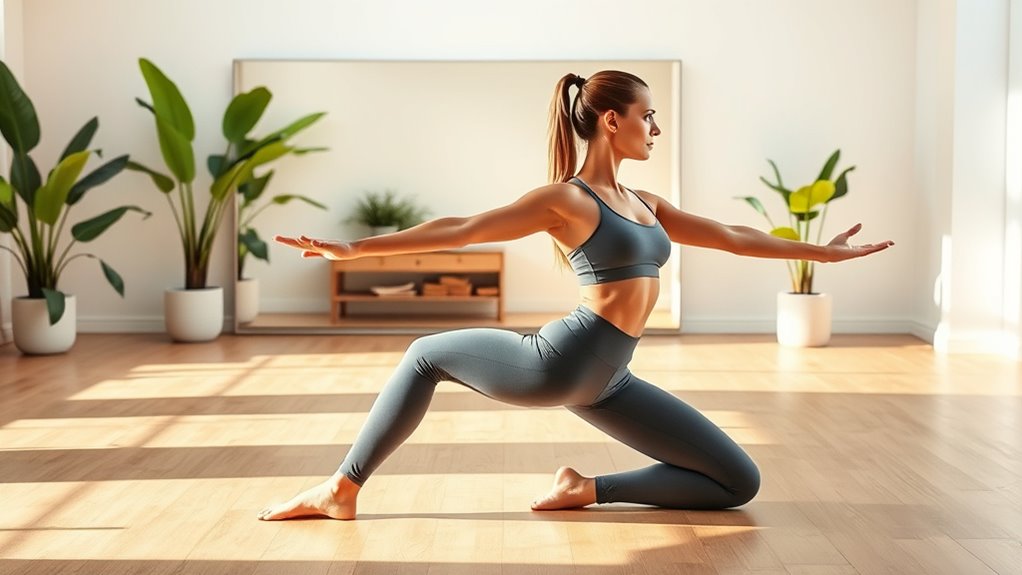
Have you ever noticed how poor posture can leave you feeling tired or uncomfortable? It’s a common problem, often caused by weak muscles and poor habits. Luckily, yoga offers effective ways to improve your posture by focusing on core strengthening and breathing techniques. When your core muscles are stronger, they support your spine better, helping you stand taller and reduce strain on your neck and shoulders. Yoga poses that target the abdomen, back, and hips activate these muscles, making them more resilient over time. As you hold poses like plank, boat pose, or bridge, you engage your core actively, which trains your muscles to support proper alignment in daily life.
Breathing techniques are another essential part of yoga that can markedly impact your posture. When you breathe deeply and consciously, you engage your diaphragm and expand your chest, which encourages proper alignment of the shoulders and spine. Many people tend to breathe shallowly from their chest, leading to rounded shoulders and a collapsed chest, further worsening poor posture. By practicing breathing exercises such as diaphragmatic breathing or pranayama, you learn to control your breath and increase lung capacity. This not only relaxes your nervous system but also promotes a more upright posture because your shoulders naturally fall back when you breathe correctly. Additionally, muscle activation during yoga strengthens the postural muscles that support long-term alignment.
Incorporating these elements into your yoga practice helps you develop a stronger, more balanced body. As you progress through poses that emphasize core activation and mindful breathing, you’ll notice that your posture improves naturally. You might find yourself standing taller and feeling less fatigue after a day of sitting or standing. Consistent practice encourages muscle memory, so maintaining good posture becomes second nature. Over time, you’ll also reduce the risk of aches and pains caused by misalignment, especially in the neck, shoulders, and lower back.
Top picks for "yoga posture improvement"
Open Amazon search results for this keyword.
As an affiliate, we earn on qualifying purchases.
Frequently Asked Questions
Can Yoga Replace Physical Therapy for Posture Issues?
Yoga therapy can help with posture correction, but it shouldn’t substitute physical therapy for posture issues. Physical therapists identify specific muscle imbalances and develop tailored treatment plans, while yoga promotes flexibility and strength. You can complement your physical therapy with yoga, focusing on exercises that target problem areas. However, for serious or chronic posture problems, it’s best to consult a healthcare professional to ensure thorough care.
How Often Should I Practice Yoga for Best Results?
You should practice yoga at least three to five times a week for the best results. Studies show consistent practice can improve posture and flexibility faster. Keep your session durations around 30 to 60 minutes, focusing on quality over quantity. Practicing regularly helps build muscle memory and reinforces good habits, making posture correction more effective. Remember, consistency and dedicated sessions are key to seeing noticeable improvements over time.
Are There Specific Yoga Poses for Scoliosis?
Yes, there are scoliosis-specific poses and spinal alignment exercises you can try. Focus on gentle stretches like the triangle pose and cat-cow to improve flexibility. Incorporate poses such as the side plank to strengthen your core and support your spine. Always listen to your body, and consider consulting a healthcare professional or yoga therapist familiar with scoliosis to tailor exercises safely and effectively.
Is Yoga Safe for Seniors With Poor Posture?
They say, “A stitch in time saves nine,” and that’s true for seniors with poor posture considering yoga. Yoga can be safe if you focus on gentle stretches that enhance senior flexibility and boost posture awareness. Always consult your doctor before starting. Practice under a qualified instructor to guarantee proper form, listen to your body, and avoid overexertion. With careful guidance, yoga becomes a safe, effective way to improve posture and maintain mobility.
How Long Does It Take to See Posture Improvements?
You can start noticing posture improvements in about 4 to 6 weeks with consistent yoga practice. Timing expectations vary depending on your dedication and the severity of your posture issues. Progress indicators include increased flexibility, reduced discomfort, and better alignment. Keep practicing regularly, listen to your body, and stay patient — visible changes will come as your strength and awareness improve over time.
Conclusion
Think of your spine as a sturdy tree trunk, grounded and tall. With consistent yoga practice, you’re nurturing its roots, strengthening its branches, and allowing it to stand proud against life’s storms. Each pose is like watering and pruning, guiding your posture toward balance and resilience. Keep tending to your tree, and soon you’ll notice how your confidence and comfort reach new heights—standing tall like a majestic oak in a peaceful forest.