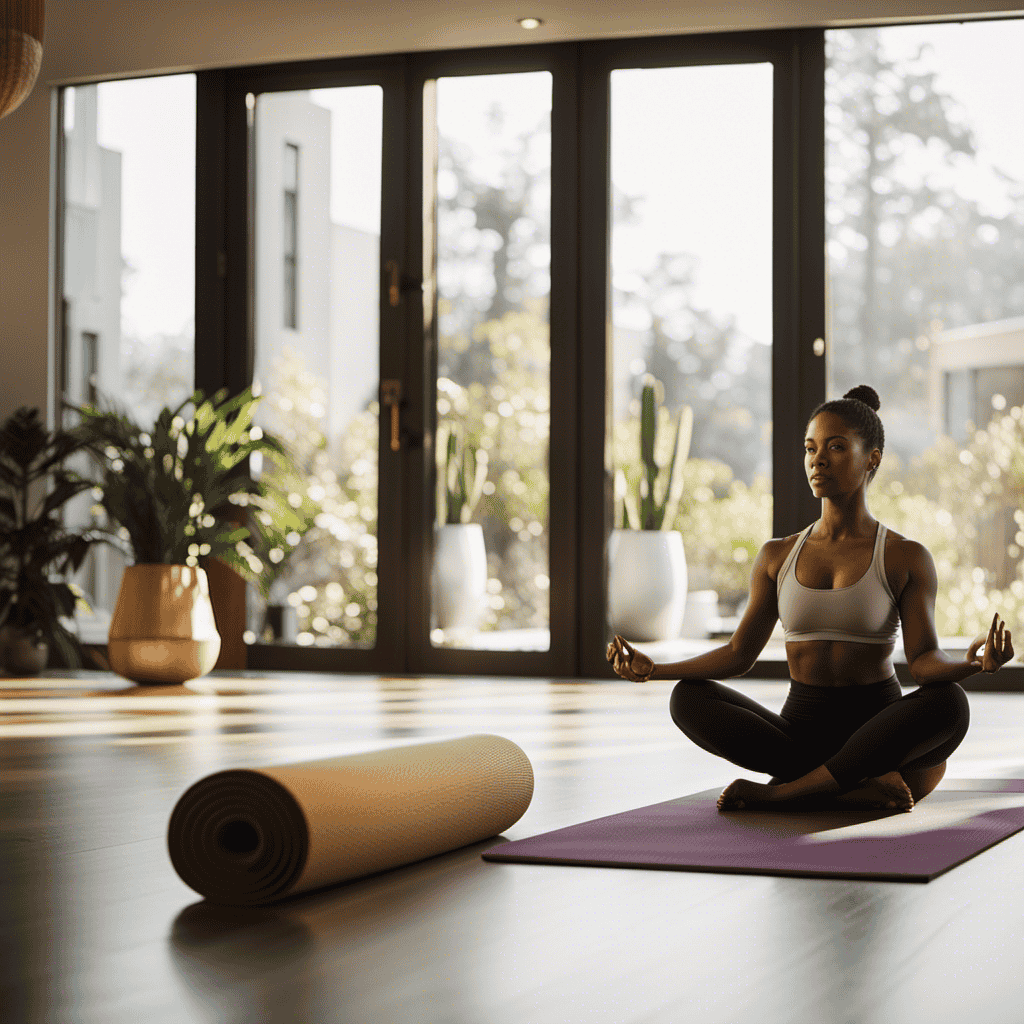

Practicing core alignment poses in yoga can help ease back pain by strengthening and stabilizing your spine, improving posture, and reducing muscle tension. Poses like bridge, plank, and bird dog engage your core muscles and promote better spinal support. Remember to focus on controlled breathing and mindful engagement during each pose. Incorporating these techniques regularly can make a significant difference in your back health—learn more about effective pose sequences for lasting relief.
Key Takeaways
- Core alignment poses like plank and bird dog stabilize the spine and improve posture, reducing back pain.
- Combining gentle bridge and plank poses enhances core strength and supports lower back health.
- Steady breathing techniques during poses oxygenate muscles and promote relaxation, maximizing back pain relief.
- Holding poses with awareness and controlled breath deepens stretch and strengthens back muscles effectively.
- Regular practice of these poses and relaxation exercises fosters spinal stability and alleviates chronic back discomfort.

Back pain affects millions of people worldwide, often caused by poor posture, muscle tension, or injury. When you’re dealing with persistent discomfort, focusing on core alignment poses in yoga can make a real difference. These poses help stabilize your spine, improve posture, and reduce strain on your back muscles. To get the most benefits, pair these poses with proper breathing techniques and relaxation exercises, which can help ease tension and promote a sense of calm.
Start by lying on your back in a gentle bridge pose. As you lift your hips, engage your core muscles to support your lower back. Breathe deeply through your nose, filling your lungs fully and then exhaling slowly. This breathing technique helps oxygenate your muscles, relax tight areas, and deepen your stretch. Once in position, focus on maintaining a steady, even breath, which encourages relaxation and enhances the effectiveness of the pose. Holding this position for a few breaths allows your core to strengthen and your back muscles to lengthen, reducing pain caused by muscle tightness.
Engage your core and breathe deeply during bridge pose to strengthen your back and reduce pain.
Next, move into a plank pose to activate your core and create stability in your spine. Keep your shoulders over your wrists and your body in a straight line from head to heels. As you hold the pose, concentrate on deep, diaphragmatic breathing — inhaling through your nose and exhaling fully. This not only improves oxygen flow but also helps calm your nervous system, lowering stress levels that can contribute to muscle tension and back pain. To deepen your relaxation, incorporate gentle relaxation exercises after the plank, such as progressive muscle relaxation, where you systematically tense and release muscle groups to relieve residual tension.
Another effective pose is the bird dog, performed on hands and knees. Extend one arm forward and the opposite leg back, keeping your hips level and your core engaged. Focus on slow, controlled movements and maintain a steady breathing rhythm. Inhale as you extend, exhale as you hold, and continue to breathe deeply throughout. Incorporating breathing techniques during this pose helps synchronize movement with breath, promoting relaxation and stability. After completing several repetitions, finish with a few minutes of relaxed breathing or gentle stretching to release any remaining tension in your back and hips.
Throughout these core alignment poses, relaxation exercises and mindful breathing are your allies. They deepen your stretch, reduce muscle tightness, and calm your nervous system. When you approach each pose with awareness and controlled breathing, you not only strengthen your core but also nurture your mental and emotional well-being. Remember, consistency is key; regularly practicing these poses with proper breathing can considerably diminish back pain and improve your overall posture and comfort. Additionally, understanding the importance of mind-body connection can enhance your practice and promote overall spinal health.
Frequently Asked Questions
Can Beginners Safely Perform Core Alignment Yoga Poses for Back Pain?
Yes, beginners can safely perform core alignment yoga poses for back pain by focusing on beginner safety. Start with gentle modifications of poses to suit your level, and avoid pushing into pain. Listen to your body, and use props or support when needed. Consulting a qualified instructor can help guarantee proper alignment and prevent injury, making your practice effective and safe as you build strength and improve back health.
How Often Should I Practice Yoga to See Back Pain Relief?
You should practice yoga at least three to four times a week to see back pain relief. Following consistent practice guidelines helps your body adapt and strengthen over time. Keep in mind, regular practice is key—skipping days can slow progress. Listen to your body, and gradually increase your session duration as you become more comfortable. With consistent effort, you’ll notice improvements in back pain and overall flexibility.
Are There Specific Poses to Avoid With Severe Back Injuries?
Oh, definitely skip high-impact poses and twisting postures if your back’s already crying for help. These moves can aggravate severe injuries, turning a simple stretch into a theatrical drama. Instead, focus on gentle, supported poses recommended by your healthcare provider. Remember, your back isn’t auditioning for a stunt show—treat it with care, patience, and a dash of skepticism toward overly ambitious poses.
How Can I Modify Poses if I Have Limited Flexibility?
If you have limited flexibility, you can modify poses using props like blocks, straps, or cushions to support your body. Focus on gentle, gradual stretches to improve flexibility benefits over time. Keep your movements slow and avoid forcing yourself into deep poses. Listen to your body, and adapt poses as needed to stay comfortable and safe. These modification techniques help you progress safely while enhancing your flexibility.
What Are the Common Mistakes to Prevent During Core Alignment Poses?
Don’t bite off more than you can chew when practicing core alignment poses. To avoid common mistakes, focus on proper core engagement and breath control. Keep your shoulders relaxed and avoid overarching your lower back. Always listen to your body and don’t rush into deeper poses. If you lose control of your breath or core, back off and reset. Remember, consistency beats intensity in yoga practice.
Conclusion
Remember, while these core alignment poses can ease your back pain, they also remind you of your strength and resilience. Just as gentle stretches soften tension, your commitment builds confidence. It’s a delicate balance—finding relief doesn’t mean pushing through pain, but embracing patience. So, as you nurture your back, you also nurture your wellness. In this harmony, you discover that healing isn’t just about pain relief; it’s about reconnecting with your whole self.