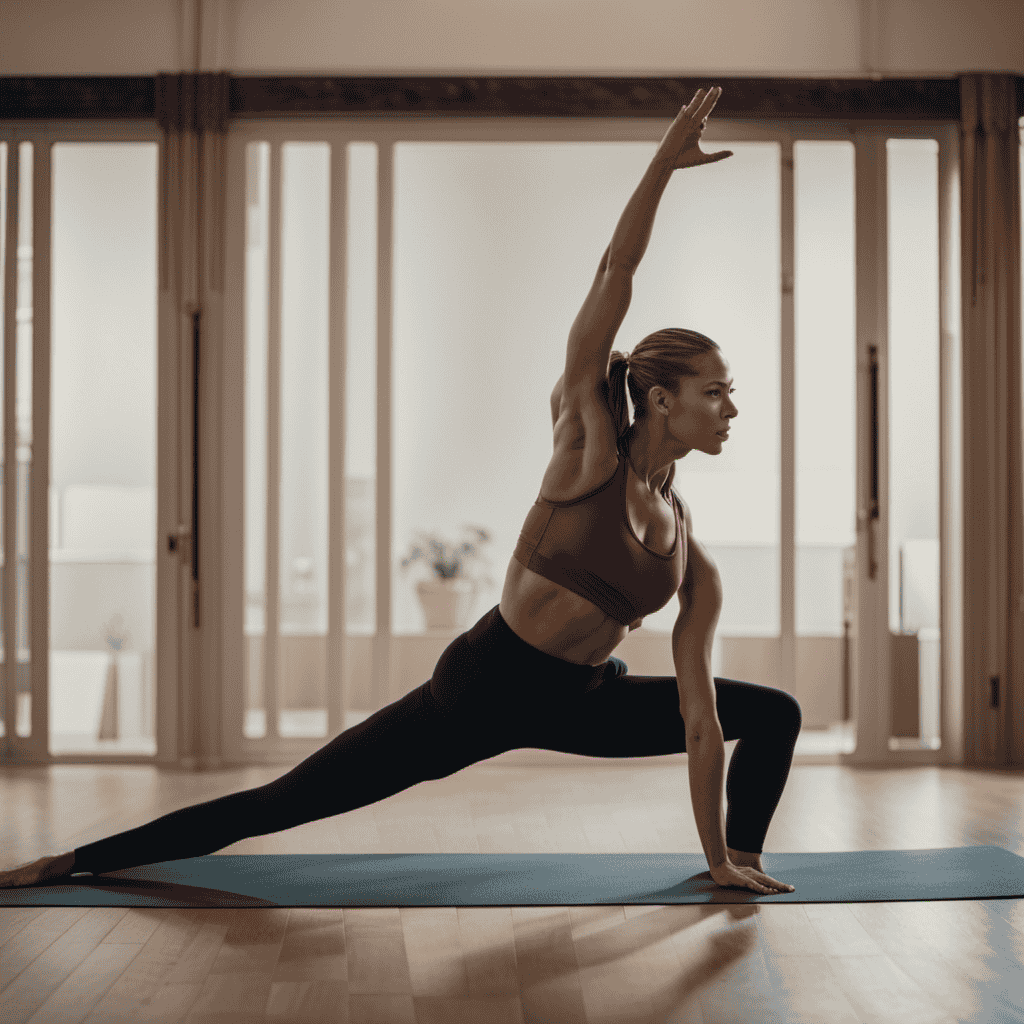
Practicing yoga can notably boost your flexibility and focus by enhancing breath control, which helps you stay calm and centered during demanding activities. It also sharpens your mind-body connection, allowing you to detect tension early and prevent injuries. Incorporating mindful breathing techniques can improve physical resilience, stamina, and mental clarity. Keep exploring these practices, and you’ll discover how to integrate body awareness and controlled breath to elevate your athletic performance seamlessly.
Key Takeaways
- Yoga enhances flexibility by stretching muscles and improving joint mobility, reducing injury risk for athletes.
- Breath control in yoga boosts focus, mental clarity, and concentration during training and competitions.
- Incorporating yoga promotes body awareness, helping athletes detect and release tension for optimal performance.
- Regular yoga practice improves mental resilience, stress management, and emotional stability essential for athletic success.
- Combining yoga with athletic training supports faster recovery, better movement efficiency, and sustained physical performance.
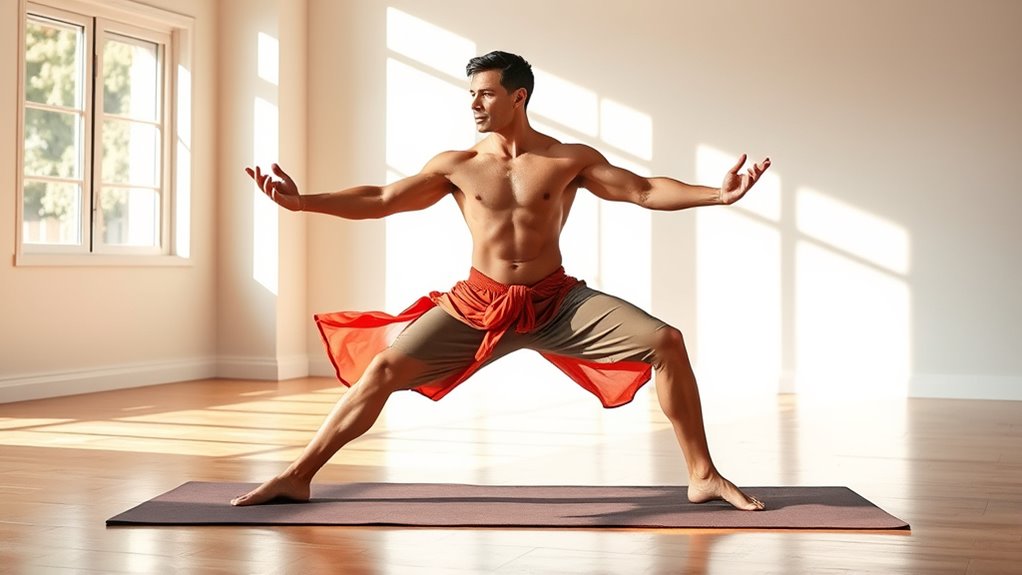
Yoga has become a popular supplement for athletes seeking to enhance flexibility, strength, and mental focus. One of the core elements you’ll discover in yoga practice is breath control, which isn’t just about breathing deeply—it’s about mastering your breath to influence your body and mind. When you focus on your breath, you cultivate a powerful mind-body connection that extends beyond the mat. This connection allows you to become more aware of how your body moves, feels, and responds under different conditions, giving you a mental edge in your athletic pursuits.
As you incorporate yoga into your routine, you’ll learn how breath control can improve your physical performance. Controlled breathing helps regulate your heart rate, reduces stress, and increases oxygen flow to your muscles. When you’re mindful of your breath during challenging poses, you become more present and centered. This heightened awareness translates into better focus during competitions or intense training sessions, keeping you calm under pressure and preventing mental fatigue.
Developing a strong mind-body connection is essential for athletes because it enhances your ability to listen to your body’s signals. Yoga encourages you to slow down and pay attention to subtle sensations—tightness, discomfort, or tension—that often go unnoticed in high-intensity training. By tuning into these cues, you can adjust your movements to prevent injury and improve your form. This awareness also helps you push your limits more safely, knowing when to ease up or challenge yourself further.
Breath control and the mind-body connection also foster mental resilience. When you practice controlled breathing techniques, such as diaphragmatic breathing or Ujjayi breath, you learn to manage stress and stay focused during demanding moments. This mental clarity becomes a tool that you can carry into your sport, enabling you to stay present and perform at your best even when fatigue sets in. Over time, this heightened sense of body awareness and control becomes second nature, giving you an advantage in both training and competition.
Furthermore, yoga’s emphasis on mindfulness and breathing cultivates a sense of calm and stability that can improve your overall performance. When you’re able to center yourself through breath control, you create a mental space that allows for better decision-making, quicker reactions, and sustained concentration. The synergy between breath, mind, and body helps you move more efficiently, recover faster, and stay motivated. In the end, integrating yoga’s principles into your athletic routine isn’t just about flexibility—it’s about strengthening the connection that makes your body and mind work harmoniously toward your goals.
Recent research also indicates that AI vulnerabilities in safety measures highlight the importance of ongoing vigilance to ensure that the tools meant to aid us remain reliable and secure.
Top picks for "yoga athlet flexibility"
Open Amazon search results for this keyword.
As an affiliate, we earn on qualifying purchases.
Frequently Asked Questions
How Often Should Athletes Practice Yoga for Optimal Results?
You should practice yoga poses 2 to 4 times a week for ideal results. Consistent practice frequency helps improve flexibility, focus, and recovery. Incorporate a mix of stretching and strengthening poses tailored to your athletic needs. By maintaining this routine, you’ll notice better performance and reduced injury risk. Remember, regular practice is key—listen to your body, and gradually increase intensity and duration for sustained benefits.
Can Yoga Help Prevent Sports Injuries?
Think of yoga as a sturdy bridge over a turbulent river; it can indeed help prevent sports injuries. As you practice, you address muscle imbalance and promote injury recovery, strengthening weak spots before they break. Yoga improves flexibility and body awareness, making your muscles less prone to strains. By weaving yoga into your routine, you build a resilient foundation, helping you stay in the game and avoid setbacks.
What Specific Yoga Poses Benefit Runners and Cyclists?
You should try poses like Downward Dog, Warrior II, and Pigeon for running and cycling. These poses enhance flexibility and strengthen your core, which helps improve balance and reduce injury risk. Incorporate breathing techniques like diaphragmatic breathing to increase endurance and focus. Regular practice of these poses and breathing exercises boosts your overall performance, keeps muscles supple, and helps you recover faster after intense workouts.
Is Yoga Suitable for All Athletic Skill Levels?
Yoga is like a universal key—suitable for all athletic skill levels. You can easily adapt poses with yoga modifications to match your athletic flexibility, making it accessible whether you’re a beginner or advanced. As you progress, you’ll find ways to deepen your practice safely. So, no matter your skill level, yoga welcomes you to improve strength, flexibility, and focus at your own pace.
How Does Yoga Improve Mental Focus During Competitions?
Yoga enhances your mental focus during competitions by incorporating mindfulness meditation, which trains you to stay present and aware. As you practice, you build mental resilience, helping you stay calm under pressure. The focused breathing and meditation techniques improve concentration, reduce anxiety, and sharpen your attention. This mental clarity can give you a competitive edge, enabling you to perform at your best when it matters most.
Conclusion
So, next time you hit the gym or the field, remember that yoga isn’t just for relaxation—it’s your secret weapon for better flexibility and sharper focus. As you flow through those poses, you might just find yourself surprised by how much easier it becomes to push through tough workouts or stay sharp during games. It’s funny how a simple stretch can unseal hidden strengths—sometimes, the key to athletic excellence is just a breath away.