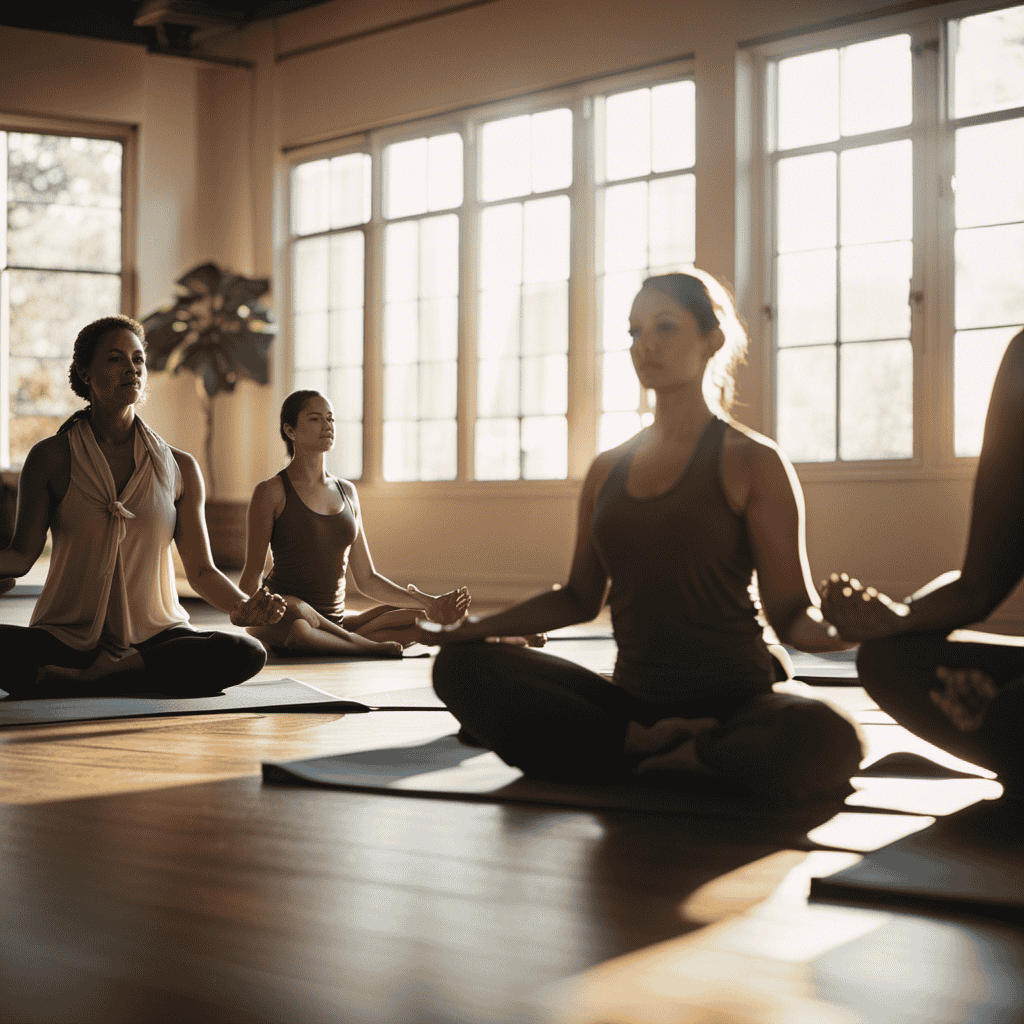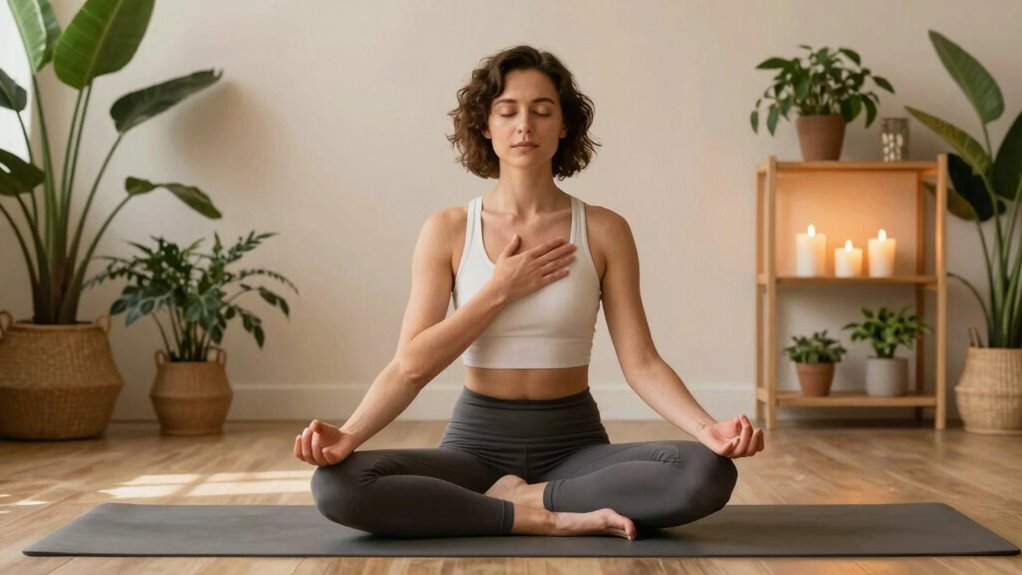

Yoga helps you reconnect with your breath and body by encouraging mindful awareness of physical sensations and breathing patterns during practice. As you focus on each pose and steady your breath, you become more attuned to how your body feels and moves. This deepens your mind-body connection, reduces tension, and promotes emotional calm. By paying attention to evolving sensations, you develop safer, more intuitive movements. Keep exploring, and you’ll discover even more ways to strengthen this essential connection.

Turn your wind-down time into listening time
- Thousands of audiobooks, podcasts and originals
- Listen on your phone, tablet or Echo — also offline
- Cancel anytime
Key Takeaways
- Yoga emphasizes mindful awareness of physical sensations and breathing, fostering a deeper mind-body connection.
- Focused breathing during practice helps regulate emotions and reduces stress.
- Movement and stretching improve flexibility, encouraging attunement to bodily signals.
- Techniques like mindful breathing and digital resources deepen awareness and sustain practice.
- Monitoring physical sensations promotes safe, intuitive movement and gradual development of strength.
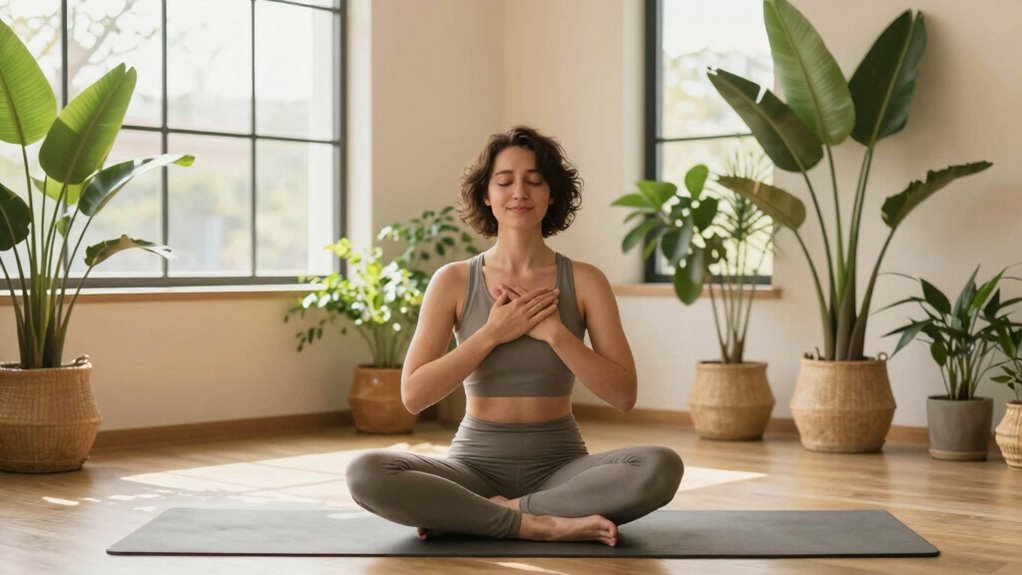
Yoga offers a powerful way to reconnect with your breath and body amid the busyness of daily life. When you step onto your mat, you’re invited to slow down and pay close attention to your physical sensations and breathing patterns. This practice of mindful awareness helps you become more attuned to how your body feels in each pose, encouraging a deeper connection between your mind and physical presence. As you focus on your breath, you’ll notice it becomes steadier and more intentional, guiding you into a state of calm and centeredness. This process allows you to escape the constant rush of thoughts and external distractions, fostering a sense of grounding and clarity.
Yoga helps you slow down, breathe intentionally, and find calm amid life’s busy moments.
With regular practice, yoga can profoundly improve your physical flexibility. As you move through different poses, you stretch and lengthen muscles that may have become tight or neglected. Over time, this increased flexibility not only enhances your range of motion but also reduces stiffness and discomfort. You begin to notice subtle shifts in your body—perhaps your shoulders loosen, your hamstrings release, or your spine elongates. These physical changes boost your confidence and motivation to explore new movements, making everyday activities easier and more comfortable. Through mindful awareness during practice, you learn to listen to your body’s signals, respecting its limits while gently pushing boundaries. This balance between effort and ease helps you develop patience and compassion for yourself.
As your body becomes more flexible, you also cultivate a greater sense of mindfulness in your daily life. The focus required during yoga encourages you to stay present, observing your breath and sensations without judgment. This heightened awareness spills over into other areas, helping you manage stress more effectively and respond more thoughtfully to challenges. You start to recognize patterns of tension or habitual breathing that may be contributing to anxiety or fatigue. By intentionally slowing your breath during yoga, you create a ripple effect that influences your overall emotional well-being. You learn to anchor yourself in the present moment, which can be especially valuable in high-pressure situations or during times of uncertainty. Additionally, understanding the importance of emerging trends in digital publishing can help you access diverse resources and techniques to deepen your practice. Incorporating mindful breathing exercises into your routine further enhances your ability to stay centered and calm in daily life. Developing awareness of body-mind connection can amplify the benefits of your practice and support your journey toward greater health and balance. Recognizing the importance of natural movement patterns can also guide you in creating a more harmonious and sustainable practice, reducing the risk of injury and promoting overall well-being.
Furthermore, understanding how physical sensations evolve during practice can lead to more intuitive and safe movement, making your yoga journey even more beneficial.
As an affiliate, we earn on qualifying purchases.
Frequently Asked Questions
Can Yoga Improve Breathing Issues Like Asthma?
Yes, yoga can improve breathing issues like asthma. By practicing breathing exercises, you strengthen your lung capacity and learn better control over your breath. Yoga poses open your chest and improve airflow, reducing shortness of breath. Regular practice helps you become more aware of your breathing patterns, which can ease asthma symptoms and enhance overall respiratory health. Just make certain you consult your healthcare provider before starting a new yoga routine.
How Often Should Beginners Practice Yoga for Best Results?
Think of your yoga journey as planting a seed; practice consistently to nurture growth. As a beginner, aim for 3 to 4 sessions weekly, allowing time for breath control and flexibility exercises to deepen. Regular practice is like sunlight, strengthening your connection to your body and breath. Stick with this routine, and you’ll see progress, harmony, and a more mindful, balanced you blossoming over time.
What Types of Yoga Are Best for Deepening Breath Awareness?
To deepen your breath awareness, try practicing Hatha or Yin yoga, which emphasize breath control and mindful movement. These styles encourage slow, deliberate poses that help you focus on your breathing, enhancing your connection to your body. As you breathe intentionally during each pose, you’ll develop greater awareness of your breath, improving overall mindfulness and helping you stay present in the moment.
Are There Specific Poses to Enhance Body Awareness?
You can enhance body awareness with specific poses that focus on mindful stretching and posture alignment. Poses like Mountain Pose improve posture, helping you feel your body’s alignment. Warrior Poses increase strength and awareness of your stance. Child’s Pose encourages gentle mindful stretching, fostering body connection. Focusing on precise movements in these poses sharpens your awareness of how your body feels and moves, deepening your overall mindfulness during practice.
How Does Yoga Impact Mental Health and Stress Levels?
Yoga can considerably improve your mental health and reduce stress. It teaches you mindfulness practices that help quiet a busy mind, making it easier to manage emotions. As you focus on breath and movement, you build emotional regulation skills that calm your nerves. Like hitting two birds with one stone, yoga helps you boost mood and relax, creating a clearer, more balanced mind even in tough times.
As an affiliate, we earn on qualifying purchases.
Conclusion
As you flow through each pose, remember it’s like tending to a sacred garden—your breath and body are the seeds and roots, anchoring you in the present. With every mindful inhale and gentle exhale, you nurture this inner sanctuary, cultivating resilience and peace. Yoga isn’t just movement; it’s a journey back home to yourself. Embrace this sacred dance, and watch how your connection to your breath and body blossoms into lasting harmony.
As an affiliate, we earn on qualifying purchases.
As an affiliate, we earn on qualifying purchases.
Fall Picks
fall essentials
As an affiliate, we earn on qualifying purchases.