In modern times, faith still plays a vital role by guiding moral choices, building community, and inspiring hope. It adapts through dialogue, technology, and shared practices, helping you find purpose amid change. Faith bridges differences, fosters understanding, and offers solace in a busy world. Whether through interfaith exchanges or digital worship, it remains relevant and powerful. To discover how faith continues to shape lives today, explore further insights below.
Key Takeaways
- Faith fosters understanding and respect across diverse religious traditions, promoting cooperation and social cohesion.
- Spiritual practices like prayer and meditation provide personal resilience and inner peace amidst modern distractions.
- Faith guides moral and ethical decision-making, helping individuals find purpose and navigate complex life situations.
- Digital platforms enable global interfaith dialogue, virtual worship, and access to diverse spiritual teachings.
- Faith remains relevant by evolving through dialogue and technology, offering hope, community, and moral guidance in a changing world.
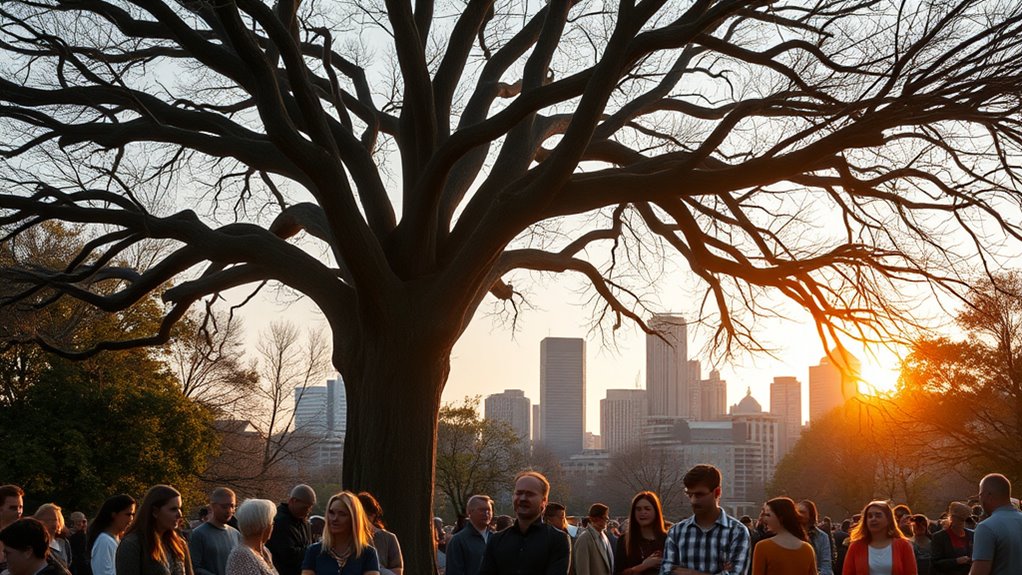
Have you ever wondered how faith continues to influence our lives in today’s fast-paced, technology-driven world? Despite the constant buzz of social media, instant communication, and rapid change, faith remains a crucial thread that connects us to deeper meaning and purpose. One way it exerts its influence is through interfaith dialogue, which fosters understanding and respect among different religious traditions. Instead of viewing faith as a barrier, many now see it as a bridge that promotes empathy and shared values. These conversations help dissolve misconceptions, encourage cooperation, and create a sense of community amid diversity. They remind us that, regardless of our beliefs, we all seek connection, hope, and moral guidance. This openness to dialogue shows how faith adapts to modern times, emphasizing listening and learning rather than conflict.
Alongside interfaith conversations, spiritual practices continue to shape how people find solace and strength in everyday life. Many turn to prayer, meditation, or mindfulness to navigate stress, uncertainty, and the chaos of modern living. These practices help ground individuals, offering moments of calm and clarity amid constant distractions. You might find yourself lighting a candle, reciting a mantra, or simply taking a few deep breaths to reconnect with your inner self. Such acts are timeless, yet they have gained new relevance in a world overwhelmed by information and technology. They serve as personal anchors, reminding you that faith isn’t just about organized religion but also about cultivating inner peace and resilience. These spiritual practices often transcend religious boundaries, appealing to a broad spectrum of people seeking meaning beyond material success. Additionally, understanding existential themes can deepen your appreciation of how faith guides moral and ethical choices in complex situations.
In today’s digital age, faith also takes on new forms through online communities and virtual worship. You can now participate in global interfaith events or access spiritual teachings anytime, anywhere. This accessibility broadens your horizons and enables you to explore diverse beliefs without leaving your home. It also allows for meaningful exchanges that might not happen face-to-face, fostering understanding across cultures and religions. Whether through podcasts, social media groups, or live-streamed services, faith remains dynamic and adaptable. It encourages you to stay connected not only to your tradition but also to others, reinforcing the idea that spirituality is a universal pursuit. In essence, faith in modern times isn’t static; it evolves through dialogue, practice, and digital innovation, proving its enduring relevance in helping you find purpose, community, and hope in an ever-changing world.
Frequently Asked Questions
How Has Technology Influenced Faith Practices Today?
You find that technology has transformed faith practices through digital worship and virtual communities. You can attend services online, participate in live-streamed prayers, and connect with others worldwide. This accessibility helps you deepen your faith, stay involved despite physical distances, and share your beliefs with a broader audience. Digital platforms make faith more flexible and inclusive, allowing you to explore spirituality in new, interactive ways that fit your busy life.
Can Faith Coexist With Scientific Advancements?
Yes, faith can coexist with scientific advancements. You can engage in interfaith dialogue that promotes understanding between different beliefs, fostering respect amidst scientific progress. Faith and morality often complement each other by guiding ethical decisions in a world shaped by technology and discovery. Embracing both allows you to appreciate the value of science while maintaining your spiritual beliefs, creating a balanced perspective that enriches your understanding of life and morality.
What Are the Challenges Faced by Faith Communities Globally?
Imagine a vibrant tapestry woven with diverse threads. You face challenges like religious intolerance and declining participation, which threaten this unity. Globally, faith communities struggle with interfaith dialogue and embracing religious diversity amid secular pressures. You must foster understanding and respect, bridging gaps between beliefs. Overcoming these hurdles requires openness, empathy, and collaboration, ensuring your faith community remains resilient and relevant in an increasingly interconnected world.
How Does Faith Impact Mental Health in Modern Society?
Your faith can profoundly impact your mental health by fostering spiritual resilience and providing a sense of purpose. Strong belief systems help you cope with stress, anxiety, and grief, offering comfort during tough times. When you nurture your spiritual life, you build inner strength that supports mental well-being. Embracing faith allows you to find hope and connection, making it an essential resource in steering through the challenges of modern society.
What Role Does Faith Play in Social Justice Movements?
You see faith play a crucial role in social justice movements through faith activism and moral leadership. It inspires you to stand against injustice, motivate others, and advocate for change rooted in ethical beliefs. Faith provides a sense of purpose and unity, empowering you and your community to pursue equality and human rights. By embodying moral leadership, faith helps sustain long-term commitment and fosters compassion in social activism efforts.
Conclusion
In today’s world, your faith can be the lighthouse guiding you through the darkest storms. It fuels your hope, keeps your spirit alive, and reminds you that even in chaos, there’s a purpose worth holding onto. Never underestimate the power of belief—it’s more essential than ever, capable of transforming lives and shaping a better tomorrow. Embrace your faith, for it’s the unstoppable force that can move mountains and change the course of history.