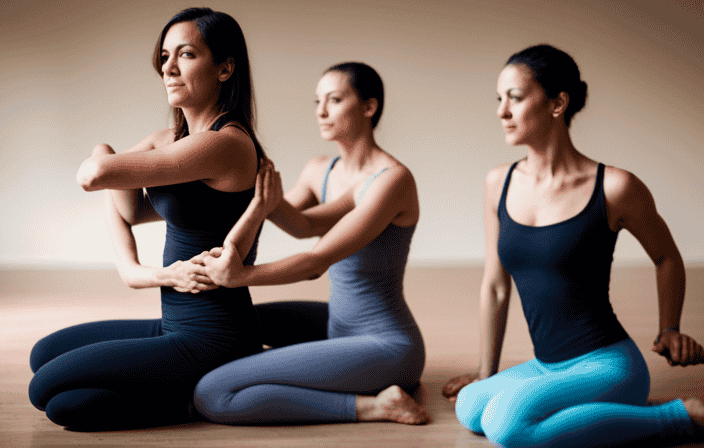
Practicing meditation before bed can help improve your sleep by calming your mind and relaxing your body. Techniques like breathing exercises and visualization create a peaceful mental space, easing racing thoughts and reducing stress. Focused breathing, such as the 4-7-8 method, slows your heart rate and signals relaxation, while vivid imagery helps foster calmness. Incorporating these simple practices into your nightly routine can lead to better sleep—continue exploring to discover how these methods can transform your nights.
Key Takeaways
- Practice breathing exercises like 4-7-8 to slow the nervous system and promote relaxation before bed.
- Use visualization techniques, imagining calming scenes to reduce stress and quiet racing thoughts.
- Incorporate short, nightly meditation routines to reinforce relaxation and improve sleep quality over time.
- Focus inward during meditation to calm the mind, helping ease insomnia and promote restful sleep.
- Consistent meditation signals the body to relax, enhancing overall well-being and supporting better sleep patterns.
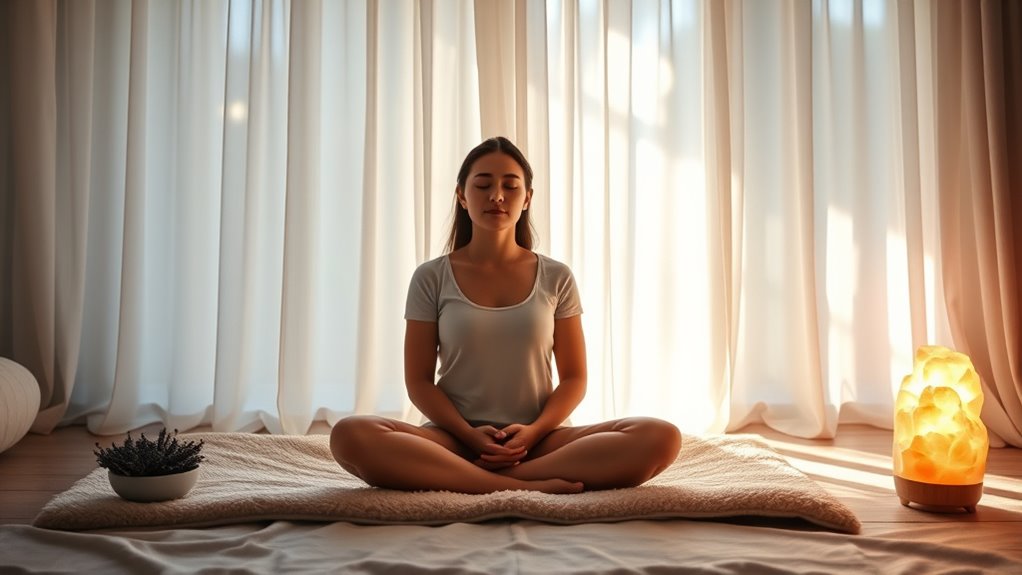
Struggling to fall asleep or stay asleep can be frustrating, but meditation offers a simple and effective way to improve your sleep quality. When you take the time to focus inward, you can calm your mind and body, making it easier to drift into restful sleep. Two popular techniques to help you unwind are breathing exercises and visualization techniques. These methods are straightforward to learn and can be incorporated into your nightly routine to promote relaxation and reduce insomnia.
Breathing exercises are a cornerstone of meditation for better sleep. They help slow your heart rate, lower blood pressure, and quiet racing thoughts that often keep you awake. One effective breathing exercise is the 4-7-8 technique: breathe in through your nose for four seconds, hold your breath for seven seconds, then exhale slowly through your mouth for eight seconds. Repeating this cycle several times signals to your nervous system that it’s time to relax, easing the shift into sleep. As you focus on your breath, you redirect your attention away from stressful thoughts or worries, creating a peaceful mental space. Over time, practicing these exercises nightly can become a signal to your body that it’s time to wind down, making falling asleep more natural. Additionally, understanding the importance of contrast ratio in visual displays can help you optimize your sleeping environment for better rest.
Practicing the 4-7-8 breathing technique nightly signals your body to relax and promotes natural sleep.
Visualization techniques are equally powerful in calming your mind. They involve creating vivid mental images that promote relaxation and distraction from intrusive thoughts. For example, you might imagine yourself in a peaceful place, like a quiet beach or a serene forest. Picture yourself walking along the sand or sitting under a tree, feeling the textures, hearing the sounds, and experiencing the tranquility. Engaging all your senses in this visualization enhances its calming effect. You can also visualize a calming scene, such as a gentle stream or a softly glowing light, filling your mind with positive sensations and reducing stress. As you focus on these calming images, your mind becomes less preoccupied with worries, making it easier to drift into sleep.
Both breathing exercises and visualization techniques require only a few minutes but can greatly influence your sleep quality. Consistency is key—practice these methods nightly to reinforce your body’s association of relaxation with bedtime. Over time, they can become powerful tools that quiet your mind, ease tension, and promote a smoother shift into deep, restorative sleep. By integrating these simple meditation practices into your evening routine, you’re taking proactive steps toward better sleep and overall well-being.
Frequently Asked Questions
Can Meditation Replace Sleep Entirely?
No, meditation can’t replace sleep entirely. While meditation can improve relaxation and help reduce sleep deprivation symptoms, it doesn’t provide the restorative benefits of actual sleep. Meditation effectiveness is limited for fulfilling the body’s need for deep, restorative sleep. You still need regular, quality sleep to restore energy and maintain health. Relying solely on meditation isn’t enough; aim for a balanced sleep routine alongside meditation practices.
Is Meditation Suitable for Children With Sleep Issues?
Sure, meditation’s perfect for children with sleep issues—if you think calming child relaxation techniques and bedtime routines are too simple. You’ll find that teaching kids to breathe deeply or visualize peaceful scenes can genuinely help them unwind. It’s a gentle way to replace frantic bedtime battles. Just remember, meditation isn’t a magic fix, but it’s a helpful tool to ease kids into restful sleep naturally and calmly.
How Long Before Bed Should I Meditate?
You should aim to meditate about 15 to 30 minutes before bed, fitting into your bedtime routines. Timing considerations are key; meditating too early may lose its calming effects, while doing it right before sleep might not give you enough time to relax fully. Incorporate meditation regularly into your evening routine, making it a calming progression that prepares your mind and body for restful sleep.
Are There Specific Meditation Techniques Best for Sleep?
Focusing on focused, fluid, and freeing techniques helps you find sleep serenity. Breathing exercises calm your core, slow your mind, and soften your stress. A body scan systematically signals relaxation as you scan from head to toe, releasing tension and restoring calm. These specific meditation methods are best for sleep, helping you drift into restful relaxation. Practice regularly, and you’ll likely notice a smoother, more satisfying sleep cycle.
Can Meditation Help With Chronic Insomnia?
Yes, meditation can help with chronic insomnia. By practicing mindfulness and relaxation exercises regularly, you train your mind to reduce racing thoughts and stress that interfere with sleep. Incorporate techniques like deep breathing, body scans, or guided meditation before bed. Over time, these methods can improve your sleep quality and help you fall asleep faster, making it easier to manage chronic insomnia naturally.
Conclusion
Now that you know the benefits of meditation for better sleep, it’s time to take action. Commit to consistent calming routines, create a cozy, quiet space, and cultivate your calm. With patience and persistence, you’ll progressively improve your peace and prepare for peaceful, restorative nights. Remember, small steps lead to significant sleep, so start settling into your serenity today. Embrace the ease of evening meditation and enjoy the endless benefits of a good night’s rest.