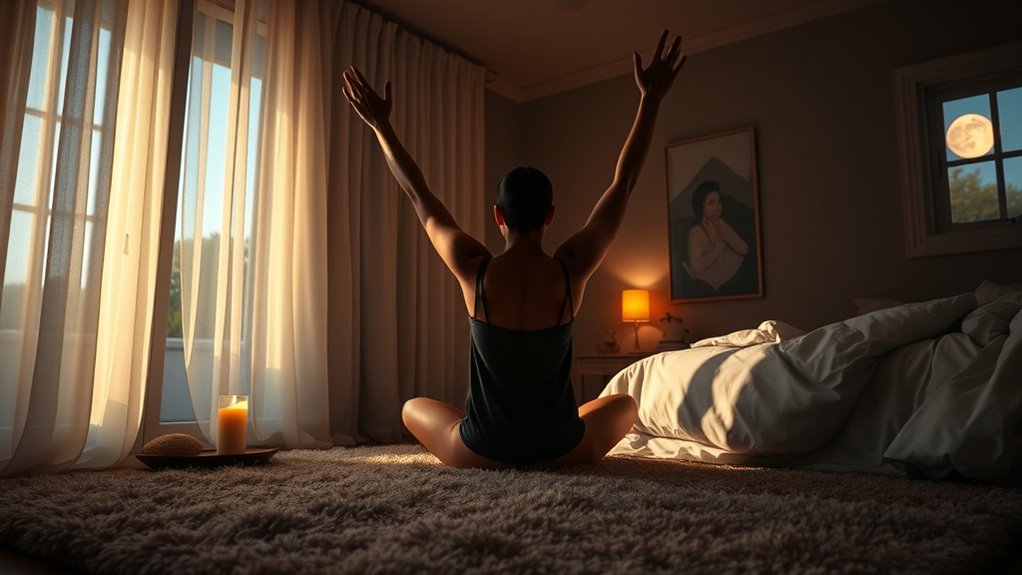

Create a calming nighttime routine by gently stretching each tension point, like your neck, shoulders, and back, holding each for about 20 seconds. Combine slow, deep diaphragmatic breaths with these stretches to signal your body to relax. Adding soothing sounds or calming music enhances mood and helps ease your progression into sleep. With consistent practice, this ritual can improve your sleep quality and reduce stress. Keep going for more tips to perfect your calming routine.

Turn your wind-down time into listening time
- Thousands of audiobooks, podcasts and originals
- Listen on your phone, tablet or Echo — also offline
- Cancel anytime
Key Takeaways
- Focus on gentle, slow stretches targeting tension areas like neck, shoulders, and back to promote relaxation.
- Incorporate deep, diaphragmatic breathing synchronized with each stretch to deepen calmness.
- Maintain mindfulness throughout the routine, observing sensations without judgment to enhance present-moment awareness.
- Use calming sounds or music during the ritual to amplify relaxation and signal bedtime.
- Consistently practice a 10-15 minute routine to establish a soothing pre-sleep habit that improves sleep quality.

After a busy day, winding down with gentle stretching can help signal to your body that it’s time to relax and prepare for sleep. Incorporating mindfulness practices into your stretching routine allows you to focus on the present moment, helping to clear your mind of daily worries. As you move through each stretch, pay close attention to how your muscles feel, noticing any tension or tightness without judgment. This mindful awareness not only enhances the calming effect of your routine but also encourages a deeper connection between your body and mind, easing the *changeover* into rest.
Breathing exercises play a *vital* role in creating a sense of calm during your nighttime stretching ritual. Before you start stretching, take a few slow, deep breaths, inhaling through your nose and exhaling through your mouth. Focus on your breath as it flows in and out, aiming to lengthen each inhale and exhale. This intentional breathing helps lower your heart rate and relaxes your nervous system, making it easier to unwind. As you stretch, continue to synchronize your movements with your breath—inhale as you extend or deepen a stretch, and exhale as you release or relax into it. This rhythmic breathing promotes a meditative state, calming racing thoughts and reducing stress.
Deep breathing during stretching calms your mind and body, easing your transition into restful sleep.
Choose gentle, slow stretches that target areas where tension tends to accumulate, like your neck, shoulders, back, and legs. Hold each stretch for at least 20 seconds, maintaining your mindful focus and steady breathing. For example, a seated forward fold can stretch your hamstrings while encouraging a sense of surrender and calm. Incorporate simple techniques like diaphragmatic breathing—placing one hand on your chest and the other on your belly—to deepen your breath and enhance relaxation. As you breathe deeply, imagine inhaling tranquility and exhaling any residual tension or worries.
Adding sound therapy elements, such as listening to calming music or soundscapes, can further enhance this relaxation process, making your routine even more effective.
Consistency is *essential* to making these nighttime rituals effective. Establish a routine where you dedicate around 10 to 15 minutes to gentle stretching, mindful awareness, and breathing exercises. This regular practice signals to your body that it’s time to wind down, reinforcing your sleep routine. Over time, you’ll notice that your ability to relax and fall asleep improves, and stress levels decrease. By combining mindful practices with intentional breathing during your stretching ritual, you create a peaceful pre-sleep ritual that nurtures both your body and mind, setting the stage for restful sleep and a more balanced life.
Frequently Asked Questions
Can Stretching Improve My Sleep Quality Long-Term?
Yes, stretching can improve your sleep quality long-term. The benefits of stretching include reducing muscle tension, calming your nervous system, and enhancing flexibility. Incorporate gentle types of stretches like hamstring or shoulder rolls into your nightly routine. Regularly practicing these stretches helps signal your body it’s time to relax, making it easier to fall asleep and enjoy deeper, more restorative sleep over time.
Are Certain Stretches Better for Relaxation Than Others?
Yes, some stretches are better for relaxation than others. Focus on gentle yoga poses like child’s pose, forward bends, and gentle twists, which help relax your muscles. Incorporate breathing techniques such as deep, slow breaths to calm your nervous system. These practices combined can ease tension, lower stress levels, and prepare your mind and body for restful sleep, making your nighttime routine more effective.
How Long Should I Hold Each Stretch?
For relaxation, hold each stretch for about 20 to 30 seconds, as this duration allows your muscles to relax without overstretching. Duration tips suggest focusing on gentle, slow stretches rather than rushing through different stretch types. If a stretch feels good, keep it for a bit longer, aiming for 30 seconds. Remember, consistency and listening to your body are key for effective nighttime calming routines.
Can Stretching Before Bed Cause Any Discomfort?
Like a gentle lullaby for your muscles, stretching before bed usually doesn’t cause discomfort if you keep your stretching duration reasonable. However, overstretching can lead to muscle soreness or strain, making it harder to relax. To avoid this, focus on slow, gentle stretches and listen to your body. If something feels uncomfortable, ease up or stop. This way, you enjoy a calming routine without risking discomfort.
Is It Safe to Stretch if I Have Joint Issues?
Yes, it’s safe to stretch if you have joint issues, but you should prioritize stretching safety and listen to your body. Focus on gentle, low-impact stretches that improve joint health without causing pain. Avoid overstretching or bouncing movements, and consider consulting a healthcare professional for personalized advice. Proper technique helps prevent discomfort and supports joint mobility, making your stretching routine both safe and beneficial.
Conclusion
As you finish your stretching ritual, imagine yourself as a serene river winding gently through the night, guided by the moon’s calming glow. These mindful movements help you release the day’s tension, inviting tranquility to settle in like a quiet lake at dusk. Embrace this nightly routine as your personal lullaby, gently easing you into restful sleep. With each stretch, you craft a peaceful haven within, ready to embrace the serenity of a well-earned night’s rest.
Halloween Picks
halloween
As an affiliate, we earn on qualifying purchases.