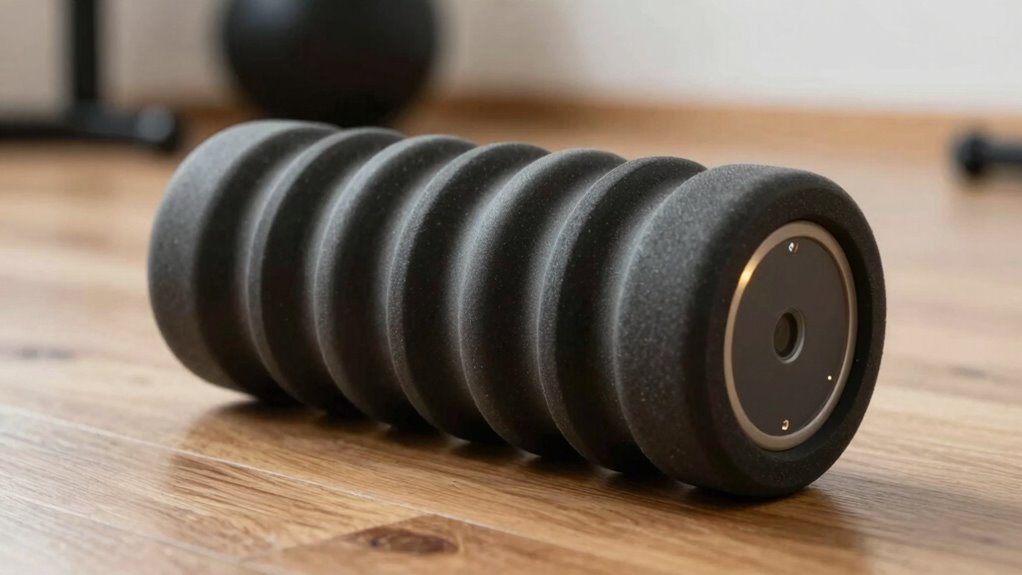

Vibrating foam rollers feel like a serious recovery tool because they combine deep tissue massage with vibration therapy to relax muscles quickly and effectively. The vibrations penetrate deep, loosening tight muscles and knots while increasing blood flow for faster recovery. They’re easy to use, portable, and help reduce soreness more than traditional foam rollers. If you keep exploring, you’ll discover how these tools can transform your recovery and boost your overall performance.
Key Takeaways
- Vibrating foam rollers provide deep tissue penetration, effectively loosening tight muscles and knots for faster recovery.
- The vibrations stimulate nerve endings, reducing pain and discomfort more efficiently than traditional foam rolling.
- Adjustable intensity and speed allow personalized, targeted treatment for optimal muscle relaxation.
- They increase blood flow, enhancing nutrient delivery and waste removal to accelerate muscle recovery.
- Their ease of use and portability make them ideal for consistent post-workout recovery anywhere.
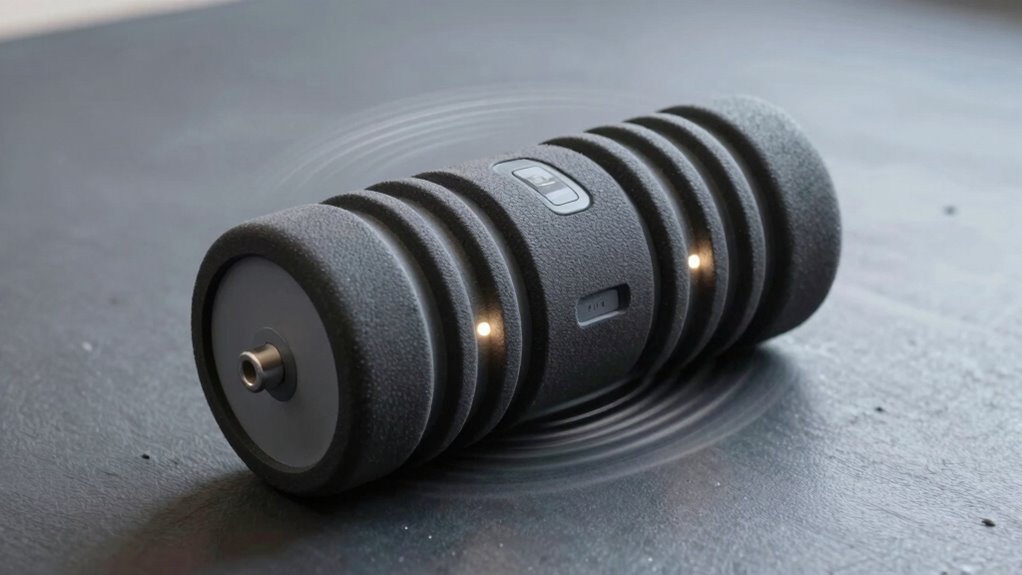
Have you ever wondered if there’s a more effective way to speed up muscle recovery after workouts? If so, vibrating foam rollers might just be what you need. These devices combine the familiar benefits of traditional foam rolling with the added power of vibration, turning a routine recovery activity into something more impactful. When you use a vibrating foam roller, you immediately notice how it enhances muscle relaxation, helping your muscles unwind faster and more thoroughly. The vibrations penetrate deep into your tissue, loosening tight muscles and breaking up knots that can cause discomfort. This process not only relaxes your muscles but also increases blood flow, which is essential for delivering nutrients and removing waste products from your muscles.
With increased circulation, you’ll find that your recovery time decreases, and soreness diminishes quicker than with traditional foam rolling alone. The vibrations also stimulate nerve endings, which can contribute to pain relief—especially after intense workouts. When you’re experiencing soreness or muscle tightness, that dull ache can linger, making it hard to feel fully recovered. The vibration therapy delivered by these foam rollers helps to reduce that pain by interrupting pain signals and promoting a sense of relief. The result is a more comfortable and faster recovery process, allowing you to get back to training sooner.
Using a vibrating foam roller is straightforward. You simply position it on the target muscle group and let the device do the work. The vibrations act like a massage, working on your muscles even in hard-to-reach areas. You can adjust the intensity and speed based on your comfort level or specific needs, making it a versatile recovery tool. The more you incorporate it into your post-workout routine, the more noticeable the benefits become. You’ll feel your muscles loosen up, soreness fade, and your overall sense of recovery improve.
In addition to pain relief and muscle relaxation, vibrating foam rollers encourage better flexibility and range of motion. When muscles are less tense, you move more freely, which can help prevent injuries down the line. They’re portable and easy to use, so whether you’re at home, in the gym, or traveling, you can always have your recovery boost nearby. Overall, vibrating foam rollers feel like a serious recovery tool because they target muscle tightness, pain, and fatigue more effectively than traditional methods. They turn recovery into a quicker, more comfortable process, helping you stay consistent and ready for your next workout. Additionally, they incorporate emerging vibration therapy techniques that are gaining popularity in sports recovery.
vibrating foam roller for muscle recovery
As an affiliate, we earn on qualifying purchases.
As an affiliate, we earn on qualifying purchases.
Frequently Asked Questions
How Do Vibrating Foam Rollers Compare to Traditional Foam Rollers?
Vibrating foam rollers offer a more effective experience compared to traditional ones because they enhance circulation and promote muscle relaxation more quickly. The vibrations help break up muscle knots and increase blood flow, which accelerates recovery. You’ll find that vibrating rollers target deep tissue more efficiently, making your recovery sessions shorter and more beneficial. Overall, they give you a more dynamic, effective way to soothe sore muscles and improve flexibility.
Are Vibrating Foam Rollers Suitable for All Fitness Levels?
You’ll find vibrating foam rollers suitable for most fitness levels, but they’re especially helpful for muscle relaxation and injury prevention. It’s like having a personal massage therapist at your side. Beginners should start slowly and adjust intensity to avoid overstimulation. Whether you’re just starting out or an experienced athlete, these rollers can help ease muscle tension, improve flexibility, and support recovery efforts across the board.
Can Vibrating Foam Rollers Help With Chronic Pain?
Yes, vibrating foam rollers can help with chronic pain by providing effective pain relief and muscle relaxation. The vibrations target deep tissues, easing tension and improving blood flow, which can reduce discomfort over time. Regular use may help manage chronic pain conditions, making daily activities easier. Just remember to start gently and consult a healthcare professional if your pain persists or worsens.
How Long Should I Use a Vibrating Foam Roller per Session?
You should use a vibrating foam roller for about 1 to 2 minutes per muscle group. Keep your sessions focused on muscle relaxation and pain relief, and avoid overdoing it to prevent discomfort. Spend about 30 seconds to a minute on each area, moving slowly to target tight muscles effectively. Consistency matters, so incorporate regular sessions into your routine for the best recovery results.
Do Vibrating Foam Rollers Require Batteries or Charging?
Vibrating foam rollers typically require batteries or a charging method to power the vibration feature. Most models use rechargeable batteries, so you’ll need to recharge them periodically using the included charging cable or dock. Battery life varies depending on the device, but many offer several hours of use before needing a recharge. Always check the manufacturer’s instructions to understand the specific charging methods and battery life of your roller.
deep tissue massage foam roller with vibration
As an affiliate, we earn on qualifying purchases.
As an affiliate, we earn on qualifying purchases.
Conclusion
Think of vibrating foam rollers as a secret weapon in your recovery arsenal—like a gentle, persistent massage that works deep into your muscles. They help increase blood flow, reduce soreness, and improve flexibility, making your workouts feel less like a grind and more like progress. When you incorporate them into your routine, you’re giving your body the boost it needs to bounce back faster and perform better. Don’t wait—your muscles will thank you!
adjustable vibration foam roller
As an affiliate, we earn on qualifying purchases.
As an affiliate, we earn on qualifying purchases.
As an affiliate, we earn on qualifying purchases.