TL;DR

Turn your wind-down time into listening time
- Thousands of audiobooks, podcasts and originals
- Listen on your phone, tablet or Echo — also offline
- Cancel anytime
Sixty and Me published a guide recommending five daily habits for pelvic health after 60: flexible flat footwear, more floor sitting and squatting, checking rib and pelvic alignment, stretching the backs of the legs, and walking. The article presents these as ways to strengthen the pelvic floor, but the supplied source does not provide research or clinical evidence verifying its specific claims or walking target.
Sixty and Me has published a guide outlining five everyday habits it says can support pelvic health after 60, including walking, stretching, and changing how people sit and squat. The recommendations address urinary leakage and pelvic-floor strength, but the article’s specific claims are not accompanied in the supplied material by cited studies or clinical guidance.
The guide’s five suggestions are to wear flat, flexible footwear; sit on the floor and squat more often; check the position of the ribcage and pelvis; stretch the hamstrings and calves; and walk regularly. It argues that these changes can encourage a neutral pelvic position and help the pelvic floor and core work together. These explanations represent the article’s account, not independently established findings in the source material.
For walking, the article proposes a target of three to five miles a day, preferably divided across the day, and suggests stretching before a walk. It also recommends supported squatting and more floor sitting, but offers no individualized modification for people with pain, mobility limitations, balance concerns, or other health conditions.
The report describes urinary leakage as a possible sign of pelvic-floor weakness and says untreated problems can progress to pelvic organ prolapse. Those are health claims made by the source; it does not provide supporting research, clarify how frequently progression occurs, or show that its five habits prevent or reverse either condition. It advises readers to consult a doctor for medical advice.
Practical Habits, With Limits
The guide puts pelvic health in everyday terms, offering actions that may be easy to discuss with a clinician or adapt into a routine. Its focus also draws attention to urinary leakage, a symptom some people may hesitate to raise. But readers should distinguish a general lifestyle article from medical assessment: the source does not establish that its recommendations treat incontinence or prevent prolapse.
That distinction matters because the suggestions are not equally suitable for everyone. Walking several miles, squatting, sitting on the floor, or changing footwear could be difficult or unsafe for some older adults, depending on balance, joint health, mobility, and other factors. The article does not set out screening criteria or alternatives. Anyone with new or worsening leakage, pelvic pressure, pain, or difficulty with movement should seek advice from a qualified health professional rather than relying on the list alone.
women's flexible flat walking shoes wide toe box
As an affiliate, we earn on qualifying purchases.
As an affiliate, we earn on qualifying purchases.
The Five Habits in the Guide
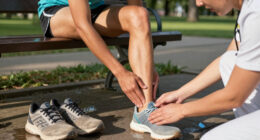
The article links footwear, posture, leg flexibility, and movement to how the pelvic floor functions. It says shoes with a heel or rigid construction can affect pelvic alignment, and that tight hamstrings or calves may pull the pelvis into a tucked position. It recommends checking whether the lower ribs project forward and relaxing them downward. These biomechanical explanations are presented by Sixty and Me, without supporting references in the supplied report.
The advice also departs from a conventional exercise-only approach: instead of focusing solely on deliberate pelvic-floor contractions, it emphasizes daily movement and positioning. The source describes walking as an opportunity for the pelvic floor to work with each step. It does not compare this approach with other forms of pelvic-floor training or cite evidence for its proposed distance target.
““Here are 5 simple steps you can do every day to strengthen your pelvis.””
— Sixty and Me article
non-slip yoga mat for stretching and floor exercises
As an affiliate, we earn on qualifying purchases.
As an affiliate, we earn on qualifying purchases.
Evidence and Individual Suitability
The supplied source does not identify its author’s clinical qualifications, cite studies, or explain the evidence behind the proposed three-to-five-mile daily walking target. It also does not establish that incontinence inevitably progresses to prolapse, or that the listed habits reverse either condition. Those claims should not be treated as confirmed outcomes based on this report alone.
It is also unclear how readers with limited mobility, balance problems, pain, or existing pelvic conditions should adapt the recommendations. The article gives no individualized assessment, safety thresholds, or alternative routines. The source’s disclaimer recommends consulting a doctor, but does not provide further clinical guidance.
stable chair with arms for supported squats and balance exercises
As an affiliate, we earn on qualifying purchases.
As an affiliate, we earn on qualifying purchases.
Discuss Symptoms With a Clinician
The report does not announce a follow-up study, program, or clinical evaluation of its recommendations. Its next step for readers is practical: consider whether any suggested habit is appropriate for their circumstances and ask a qualified health professional about persistent or new urinary leakage, pelvic symptoms, or concerns about exercise safety.
Any stronger conclusion about whether these five habits improve pelvic-floor function would require evidence beyond the supplied article, such as well-described clinical research. Until then, the recommendations remain general suggestions from a lifestyle report, not a proven treatment plan.
stretching strap for hamstring and calf stretches
As an affiliate, we earn on qualifying purchases.
As an affiliate, we earn on qualifying purchases.
Key Questions
What five habits does the article recommend?
It recommends flat, flexible footwear, more floor sitting and squatting, checking rib and pelvic position, stretching the backs of the legs, and walking regularly.
Does the source prove these steps reverse incontinence?
No. The supplied article makes that claim but provides no cited studies or clinical evidence to verify that the five habits reverse incontinence.
What walking distance does the article suggest?
It suggests three to five miles per day, ideally spread across the day. The source does not establish that this target is appropriate for every reader.
Should someone with urinary leakage seek medical advice?
The article’s disclaimer says to consult a doctor for specific medical advice. Readers with new, persistent, or worsening symptoms can discuss them with a qualified health professional.
Source: rss
Halloween Picks
halloween
As an affiliate, we earn on qualifying purchases.