

The best mindfulness journals for adults make it easier to pause, reflect, and build a practice that fits real life. My best overall pick is The Mindfulness Journal: Daily Practices, Writing Prompts, and Reflections for its direct focus on present-moment awareness. The 5-Minute Mindfulness Journal suits short daily sessions, while A Year of Mindfulness offers a slower weekly rhythm. The main tradeoffs are guided structure versus open-ended writing, brief prompts versus deeper reflection, and a gentle tone versus irreverent humor. Read on for the full breakdown and help matching a journal to your habits and needs.

Turn your wind-down time into listening time
- Thousands of audiobooks, podcasts and originals
- Listen on your phone, tablet or Echo — also offline
- Cancel anytime
Key Takeaways
- The Mindfulness Journal: Daily Practices, Writing Prompts, and Reflections is the clearest match for readers who want mindfulness practices alongside writing, rather than a gratitude-only routine.
- 5-Minute Mindfulness Journal and The Five Minute Journal both suit short sessions, but the former centers mindfulness while the latter focuses on daily gratitude.
- A Year of Mindfulness offers a weekly pace, making it a better fit for readers who want room to reflect than for those seeking a daily prompt.
- Worry for Nothing has a more specific anxiety-journaling focus; it is less suited to readers seeking a broad, general mindfulness workbook.
- Zen as F*ck and Let That Sh*t Go use a blunt, humorous voice, while the other options offer a more conventional tone.
| Zen as F*ck: A Journal for Practicing the Mindful Art of Not Giving a Sh*t |  | Best for Letting Go | ASIN: 1250147700 | Format: Journal | Series: Let That Sh*t Go Books | VIEW LATEST PRICE | See Our Full Breakdown |
| 5-Minute Mindfulness Journal: Daily Prompts to Be Present and Find Calm |  | Best for a Brief Daily Mindfulness Habit | ASIN: B0FS5ZQV12 | Journal type: Mindfulness journal | Prompt schedule: Daily | VIEW LATEST PRICE | See Our Full Breakdown |
| The Five Minute Journal: Undated Daily Gratitude Journal |  | Best for Beginners | ASIN: 0991846206 | Brand: Intelligent Change | Binding: Hardcover | VIEW LATEST PRICE | See Our Full Breakdown |
| Mindfulness Journal |  | Best for Minimalists | ASIN: 1646084853 | Title: Mindfulness Journal | Product category: Journal | VIEW LATEST PRICE | See Our Full Breakdown |
| Worry for Nothing: Guided Anxiety Journal |  | Best for Structured Anxiety Reflection | ASIN: 1792339496 | Brand: Four Progress | Model: IV100 | VIEW LATEST PRICE | See Our Full Breakdown |
| A Year of Mindfulness: A 52-Week Guided Journal to Cultivate Peace and Presence |  | Best for a Year-Long Practice | Format: 52-week guided journal | Topic: Mindfulness and reflection | Coverage: One year | VIEW LATEST PRICE | See Our Full Breakdown |
| The Mindfulness Journal: Daily Practices, Writing Prompts, and Reflections for Living in the Present Moment | 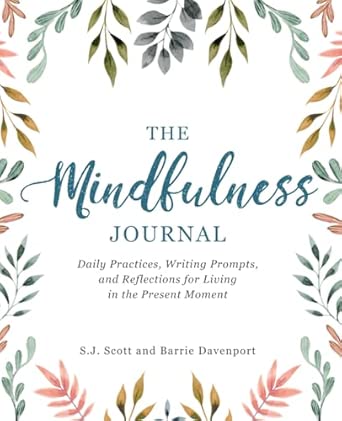 | Best for Daily Mindfulness Practice | Format: Journal | Practice cadence: Daily | Includes: Practices, writing prompts, and reflections | VIEW LATEST PRICE | See Our Full Breakdown |
| Let That Sh*t Go: A Journal for Leaving Your Bullsh*t Behind and Creating a Happy Life |  | Best for Blunt, Letting-Go Reflection | Product type: Journal | Focus: Letting go of negative thoughts and experiences | Stated aim: Creating a happier life | VIEW LATEST PRICE | See Our Full Breakdown |
| GOSSIP FOX Undated Gratitude Journal, Beige Hardcover |  | Best for Morning-and-Evening Gratitude | Brand: GOSSIP FOX | Format: Undated daily journal | Duration: Six months | VIEW LATEST PRICE | See Our Full Breakdown |
| ZICVIBE Gratitude Journal with Daily Prompts and Quotes, Undated Hardcover A5 Notebook |  | Best Compact Guided Gratitude Journal | Brand: ZICVIBE | Format: Undated A5 notebook | Pages and ruling: 199 lined pages | VIEW LATEST PRICE | See Our Full Breakdown |
| The Mindfulness Journal: Creative Prompts to Relax, Release, and Explore the Wisdom of You |  | Best for Creative Self-Reflection | Format: Mindfulness journal | Prompt style: Creative prompts | Primary focus: Relaxation, self-expression, and personal reflection | VIEW LATEST PRICE | See Our Full Breakdown |
| mindfulness journals for adult | ASIN | Format |
|---|---|---|
| Zen as F*ck: A Journal for Pra | 1250147700 | Journal |
| 5-Minute Mindfulness Journal: | B0FS5ZQV12 | — |
| The Five Minute Journal: Undat | 0991846206 | Undated |
| Mindfulness Journal | 1646084853 | — |
| Worry for Nothing: Guided Anxi | 1792339496 | Hardcover journal |
| A Year of Mindfulness: A 52-We | 1641527498 | 52-week guided journal |
| The Mindfulness Journal: Daily | 1973531690 | Journal |
| Let That Sh*t Go: A Journal fo | 1250181909 | — |
| GOSSIP FOX Undated Gratitude J | — | Undated daily journal |
| ZICVIBE Gratitude Journal with | — | Undated A5 notebook |
| The Mindfulness Journal: Creat | 1647399289 | Mindfulness journal |
More Details on Our Top Picks
Zen as F*ck: A Journal for Practicing the Mindful Art of Not Giving a Sh*t
Zen as F*ck makes the most sense for adults who want mindfulness framed as a blunt, irreverent exercise in releasing stress rather than a polished gratitude routine. Its focus on letting go gives it a distinct angle from The Five Minute Journal, which centers on brief daily gratitude and positive reflection. That difference may appeal if conventional affirmations feel too sugary, while the direct title signals a tone some readers will find funny and others may find off-putting. The available details confirm a guided journal, but do not specify its prompt structure, length, or physical format, so I would not choose it for a particular routine or layout. Its strongest tradeoff is the clear stress-release focus paired with limited information about how the practice is organized.
Pros:- Guided journaling is explicitly focused on mindfulness
- Encourages reflection on releasing stress
- Distinctively irreverent tone may feel more approachable than conventional gratitude journals
Cons:- Profanity in the title may not suit every reader or setting
- Available product details do not describe the prompts or journal layout
- The length and physical format are unspecified
Best for: Adults who prefer irreverent language and want guided reflection aimed at letting go of everyday stress.
Not ideal for: Readers who need profanity-free materials, detailed format information, or a clearly specified daily prompt schedule.
- ASIN:1250147700
- Format:Journal
- Series:Let That Sh*t Go Books
- Journal type:Guided
- Focus:Mindfulness and letting go of stress
- Prompt details:Not provided
Our verdict“Choose this for a candid, stress-release-focused journaling tone, but skip it if you want a clearly described format or profanity-free cover.”
5-Minute Mindfulness Journal: Daily Prompts to Be Present and Find Calm
5-Minute Mindfulness Journal is the clearest match here for someone seeking a short, repeatable practice centered on present-moment awareness. Its daily prompts and calm-focused purpose distinguish it from Zen as F*ck, which takes a more irreverent approach to letting go of stress, and from The Five Minute Journal, whose stated emphasis is gratitude and affirmations. That makes this title a plausible pick when mindfulness itself is the priority, rather than positive-thinking exercises. The drawback is how little is specified beyond its premise: the page layout, binding, length, and actual prompt style are not provided. I would rank it for its focused daily concept, not for any confirmed physical feature or guarantee that each entry fits a particular schedule.
Pros:- Daily prompts provide a clear structure for regular practice
- Explicitly centers present-moment awareness
- Designed around finding calm rather than gratitude alone
Cons:- Product data does not specify the physical format or materials
- No page count or sample prompt details are available
- The five-minute framing does not establish how much writing space each entry provides
Best for: Adults who want daily prompts aimed at present-moment awareness and calm, and who prefer a mindfulness-first focus over gratitude prompts.
Not ideal for: Buyers who need confirmed page count, binding, paper, or prompt examples before choosing a journal.
- ASIN:B0FS5ZQV12
- Journal type:Mindfulness journal
- Prompt schedule:Daily
- Stated duration:5 minutes
- Focus:Present-moment awareness and calm
- Binding:Not provided
Our verdict“Pick this for a mindfulness-first daily prompt concept, but choose a better-documented journal if layout and materials matter to you.”
The Five Minute Journal: Undated Daily Gratitude Journal
The Five Minute Journal is the most clearly specified low-friction choice for adults who want a short daily reflection habit without committing to a dated schedule. Its simple prompts, affirmations, and gratitude focus give beginners more structure than the sparsely detailed 5-Minute Mindfulness Journal, while the undated format lets you pause and resume without leaving missed dates behind. The linen hardcover and sustainably sourced paper also make it a more defined physical product than several entries here. Its focus is positive reflection, though, not a broad range of mindfulness exercises or extended free writing. With 264 pages and a guided layout, it favors consistency over long entries; choose another journal if you want substantial room to unpack a difficult day.
Pros:- Simple guided prompts lower the barrier to starting a daily habit
- Undated pages allow flexible use without catching up after missed days
- Short-entry structure suits readers with limited time
- Linen hardcover and sustainably sourced paper are specified
Cons:- Limited writing space may frustrate people who want longer reflections
- Gratitude and affirmations are narrower in scope than the CBT worksheets in Worry for Nothing
- The brief daily format may not suit readers seeking varied mindfulness exercises
Best for: New journalers who want short, guided gratitude and reflection prompts with the flexibility to skip days.
Not ideal for: Adults who want long-form writing space, anxiety-specific worksheets, or mindfulness practices beyond gratitude and affirmations.
- ASIN:0991846206
- Brand:Intelligent Change
- Binding:Hardcover
- Cover:Linen
- Format:Undated
- Pages:264
- Paper size:8.7 x 5.1 inches
- Dimensions:8.7 x 5.1 x 0.8 inches
- Weight:309 g
Our verdict“Choose this for an approachable, flexible gratitude routine, but opt for a worksheet-based journal if you want structured work on anxious thoughts.”
Mindfulness Journal
Mindfulness Journal earns a minimalist spot in this roundup only in the sense that the supplied listing gives almost no detail: the title identifies its subject, but its prompts, format, and intended routine are unknown. That makes it a less evidence-backed choice than The Five Minute Journal, which specifies an undated guided format and short gratitude practice, or Worry for Nothing, which describes its CBT worksheets. The plain title may suit someone who wants a straightforward mindfulness-branded journal and is comfortable checking the full listing before buying. I cannot confirm whether it offers guided exercises, open writing space, or a particular binding. Its main tradeoff is a potentially simple proposition against substantial uncertainty about what the buyer will actually receive.
Pros:- The title clearly identifies mindfulness as its subject
- May appeal to readers seeking a less prescriptive option, though the format is not confirmed
- Does not signal a narrow focus such as gratitude or anxiety worksheets
Cons:- No description of the journal’s exercises or writing structure is provided
- No physical specifications are available
- Its usefulness for a particular mindfulness routine cannot be judged from the supplied data
Best for: Adults drawn to a straightforward mindfulness-journal title who are willing to verify the book’s contents and format before purchasing.
Not ideal for: Buyers who need confirmed prompts, page count, binding, or a specific guided practice to support a routine.
- ASIN:1646084853
- Title:Mindfulness Journal
- Product category:Journal
- Subject indicated by title:Mindfulness
- Prompt structure:Not provided
- Format and binding:Not provided
Our verdict“Consider it only if the full listing confirms the format you want; otherwise, The Five Minute Journal offers a more clearly described starting point.”
Worry for Nothing: Guided Anxiety Journal
Worry for Nothing is the most targeted option for adults who want mindfulness paired with structured examination of anxious thoughts. Its 60 two-page CBT worksheets guide users through identifying triggers and examining worries, a more problem-focused approach than the gratitude prompts in The Five Minute Journal or the general mindfulness premise of 5-Minute Mindfulness Journal. Instructions and mindful tips give the worksheets added context, while the discreet black linen hardcover and portable dimensions suit carrying it for regular use. The tradeoff is repetition: a consistent worksheet format may feel mechanical to someone who prefers open-ended writing or varied daily exercises. It also asks for ongoing participation, so it is better for readers ready to work through prompts than those seeking a casual, occasional reflection book.
Pros:- CBT worksheets offer a structured way to examine worries and thought patterns
- Includes 60 two-page worksheets, instructions, and mindful tips
- Portable dimensions and a discreet black linen hardcover suit carrying
- 100 gsm paper is specified
Cons:- Repeated worksheet structure may feel monotonous over time
- Building a routine requires consistent use
- Its anxiety-focused format is less suitable for buyers seeking a broad gratitude journal
Best for: Adults who want a guided, worksheet-based way to identify triggers and examine anxious thoughts while building stress-management habits.
Not ideal for: Readers who prefer free writing, varied prompt formats, or an informal journal that does not require steady use.
- ASIN:1792339496
- Brand:Four Progress
- Model:IV100
- Format:Hardcover journal
- Cover:Black linen
- Pages:128
- Worksheets:60 two-page CBT worksheets
- Dimensions:8.25 x 5.87 in
- Paper weight:100 gsm
Our verdict“Choose this for structured anxiety reflection and CBT-style worksheets, but pick a shorter gratitude journal if you want a lighter daily practice.”
A Year of Mindfulness: A 52-Week Guided Journal to Cultivate Peace and Presence
The 52-week structure gives this journal a clear role: it suits adults who want a sustained reflection habit rather than a short burst of prompts. Its focus on peace and presence keeps the practice closely tied to mindfulness, while guided reflections can make it easier to return to journaling week after week. Compared with The Mindfulness Journal: Daily Practices, Writing Prompts, and Reflections for Living in the Present Moment, this is organized around a weekly cadence, not daily entries. That can feel more manageable for someone with a busy schedule, but it also means less frequent prompting. The main tradeoff is its year-long commitment: readers who prefer to skip around or start with a brief exercise may find the format demanding. Choose it for steady, structured reflection, not instant or highly flexible journaling.
Pros:- A 52-week plan gives reflection a consistent rhythm.
- Mindfulness, peace, and presence are the central themes.
- Guided reflections can help reduce the effort of deciding what to write.
Cons:- The year-long format asks for ongoing participation to feel complete.
- Weekly pacing may be too sparse for readers seeking daily practice.
- The supplied product details do not specify page count or physical format.
Best for: Adults who want a guided weekly mindfulness routine they can follow over the course of a year.
Not ideal for: Readers who want daily prompts, a short trial period, or a freeform journal without a long-term structure.
- Format:52-week guided journal
- Topic:Mindfulness and reflection
- Coverage:One year
- Prompt cadence:Weekly
- Focus:Peace and presence
- ASIN:1641527498
Our verdict“Choose this journal if you want a guided weekly mindfulness practice with a year-long arc, rather than daily prompts or an open-ended notebook.”
The Mindfulness Journal: Daily Practices, Writing Prompts, and Reflections for Living in the Present Moment
For adults who want mindfulness woven into ordinary days, this journal pairs daily practices with writing prompts and reflection. That combination offers more direction than a blank notebook: readers can pause, notice the present, and then put observations into words. Compared with A Year of Mindfulness, which follows a weekly, year-long plan, this journal is better suited to someone seeking a daily touchpoint rather than a slower cadence. Its broad daily format may also feel more adaptable than the narrowly gratitude-focused GOSSIP FOX journal. The tradeoff is that daily use takes regular time, and the product details do not give page count, binding, or a specific duration. It makes the most sense for readers who want repeated prompts and present-moment reflection, not those looking for a defined weekly program or detailed physical specifications.
Pros:- Daily practices provide a regular cue to pause and pay attention.
- Writing prompts offer structure beyond blank pages.
- Reflection is explicitly tied to present-moment awareness.
Cons:- A daily routine may feel like a burden for readers with limited time.
- The supplied details do not state the page count or journal duration.
- The product information does not specify binding or paper format.
Best for: Adults who want a recurring daily prompt and reflection routine centered on noticing the present moment.
Not ideal for: People who prefer weekly check-ins, gratitude-only prompts, or a journal with a clearly stated duration and physical specifications.
- Format:Journal
- Practice cadence:Daily
- Includes:Practices, writing prompts, and reflections
- Focus:Living in the present moment
- ASIN:1973531690
- Title-stated use:Daily mindfulness journaling
Our verdict“Pick this for daily, prompt-led attention practice; choose A Year of Mindfulness instead if a weekly year-long plan better fits your routine.”
Let That Sh*t Go: A Journal for Leaving Your Bullsh*t Behind and Creating a Happy Life
This journal takes a more irreverent route to reflection than the calm, present-focused framing of The Mindfulness Journal: Daily Practices, Writing Prompts, and Reflections for Living in the Present Moment. Its stated aim is to help readers let go of negative thoughts and experiences, making it a fit for adults who prefer direct language over a soothing tone. That focus can give journaling a clear emotional starting point: identify what is weighing on you, then reflect on how to move forward. Compared with the gratitude-centered GOSSIP FOX journal, it is less about recording daily positives and more about releasing mental clutter. The tradeoff is that the supplied information does not describe prompts, format, or pacing, so buyers cannot tell how structured the exercises are. Its title and approach will also be too sharp for readers who want gentle, neutral language.
Pros:- A distinct focus on letting go gives reflection a clear purpose.
- Encourages readers to examine negative thoughts and experiences.
- The direct, irreverent framing may feel more approachable than formal self-help language.
Cons:- The title and tone may not suit readers who want gentle or neutral wording.
- The supplied details do not explain the prompt structure or journaling frequency.
- No physical specifications are provided in the product information.
Best for: Adults who respond to candid, irreverent framing and want reflection focused on releasing negative thoughts and experiences.
Not ideal for: Readers who prefer a calm tone, gratitude-based daily prompts, or clearly specified exercises and journaling cadence.
- Product type:Journal
- Focus:Letting go of negative thoughts and experiences
- Stated aim:Creating a happier life
- Activity:Reflection
- Tone:Irreverent and direct
- ASIN:1250181909
Our verdict“Choose this if candid language helps you reflect on what you want to release; skip it if you prefer gentle daily mindfulness prompts.”
GOSSIP FOX Undated Gratitude Journal, Beige Hardcover
Two daily check-ins give this journal a more specific routine than the open-ended reflection in Let That Sh*t Go: morning prompts invite intentions and affirmations, while evening prompts turn attention to reflection and positive moments. That makes it a strong fit for adults who want gratitude built into both ends of the day, not just occasional journaling. The undated layout lets you begin whenever you like, and the hardcover, thick pages, ribbon bookmark, and back pocket support a more complete carry-along setup than the lighter-detail formats described for A Year of Mindfulness. Its 120 pages are a meaningful limit, though: the six-month design offers less room for an extended daily habit than a larger journal might. The gratitude focus may also feel repetitive if you want broader mindfulness exercises or freeform writing.
Pros:- Morning and evening prompts create two clear daily moments for reflection.
- Undated pages allow a flexible start and make skipped days less disruptive.
- Hardcover, thick pages, ribbon bookmark, and back pocket add practical structure.
- The 5 x 8-inch size is easy to keep nearby for routine use.
Cons:- The 120-page count limits the journal to its stated six-month span.
- Its gratitude-and-affirmation emphasis may feel narrow for broader mindfulness work.
- Product details list the binding type as unknown despite describing a hardcover.
Best for: Adults who want an undated, twice-daily gratitude routine with a durable hardcover and space for small keepsakes.
Not ideal for: Readers who want a long-term journal beyond the stated six-month format, broad mindfulness exercises, or unrestricted freeform pages.
- Brand:GOSSIP FOX
- Format:Undated daily journal
- Duration:Six months
- Prompts:Morning and evening gratitude, affirmations, reflection, and positive moments
- Paper size:5 x 8 inches
- Binding and cover:Hardcover, beige
- Pages:120
- Special features:Ribbon bookmark and back pocket
- Dimensions and weight:8.38 x 5.27 x 0.67 inches; 0.37 kg
Our verdict“Choose this for a flexible six-month gratitude habit with morning and evening prompts, but look elsewhere for a longer or more open-ended mindfulness journal.”
ZICVIBE Gratitude Journal with Daily Prompts and Quotes, Undated Hardcover A5 Notebook
The ZICVIBE combines daily prompts and uplifting quotes in a compact, undated format, making it a portable choice for adults who want a small reflection routine at home or on the go. Compared with the GOSSIP FOX journal, it lists more pages—199 rather than 120—but does not specify a six-month schedule or morning-and-evening check-ins. That makes its cadence less prescriptive and its use more flexible, though buyers who want a clearly mapped daily routine may prefer GOSSIP FOX. The lined A5 pages suit written responses and keep the notebook manageable to carry; they are less accommodating for sketches, diagrams, or expansive freeform entries. Its linen hardcover adds a sturdy feel, but the compact writing area is a real compromise for anyone who writes at length.
Pros:- Undated pages allow use to begin at any point.
- Daily prompts and quotes provide cues for gratitude and personal reflection.
- Compact A5 hardcover is suited to carrying between home and other settings.
- Lined pages support orderly written responses.
Cons:- A5 pages may feel cramped for long entries or expansive reflection.
- Lined paper is less suited to drawing and visual journaling.
- No fixed duration or specific daily schedule is stated.
Best for: Adults who want a portable, undated gratitude journal with written prompts and quotes for brief daily reflection.
Not ideal for: People who need generous writing space, prefer unlined pages, or want a defined morning-and-evening schedule.
- Brand:ZICVIBE
- Format:Undated A5 notebook
- Pages and ruling:199 lined pages
- Binding:Hardcover
- Cover material:100% natural linen
- Dimensions:8.8 x 5.5 x 0.6 inches
- Weight:309 g
- Color:Beige
- Includes:Daily prompts and uplifting quotes
Our verdict“Pick this for portable, prompt-led gratitude writing; choose GOSSIP FOX if morning-and-evening structure matters more than a compact format.”
The Mindfulness Journal: Creative Prompts to Relax, Release, and Explore the Wisdom of You
This journal is the strongest fit here for adults who want mindfulness to feel like open-ended self-expression rather than a daily checklist. Its creative prompts encourage reflection on personal thoughts and experiences, with relaxation and self-discovery as the focus. Compared with 5-Minute Mindfulness Journal: Daily Prompts to Be Present and Find Calm, this option is better suited to readers willing to spend more time exploring a prompt; the five-minute format is the clearer choice for a quick, repeatable routine. The tradeoff is that the available description does not specify a schedule, prompt count, or writing structure, so readers who need a defined plan may prefer A Year of Mindfulness. Choose this for flexible, expressive reflection, not for a tightly timed practice.
Pros:- Creative prompts give reflection a more expressive focus than a simple gratitude checklist.
- Prompts are intended to support relaxation as well as self-exploration.
- Invites readers to examine personal thoughts and experiences.
- Flexible prompt-led approach may suit varied writing sessions.
Cons:- The provided product details do not specify a daily schedule or session length.
- Prompt count and progression are not provided, making it hard to judge how much guided content it offers.
- Less clearly structured than a time-based journal such as 5-Minute Mindfulness Journal.
Best for: Adults who enjoy expressive writing and want prompts for exploring personal thoughts at their own pace.
Not ideal for: Readers seeking a clearly timed daily habit, a yearlong schedule, or a specifically anxiety-focused workbook.
- Format:Mindfulness journal
- Prompt style:Creative prompts
- Primary focus:Relaxation, self-expression, and personal reflection
- Intended activity:Writing about inner thoughts and experiences
- Audience:Adults
- ASIN:1647399289
Our verdict“Choose this journal if you want creative, open-ended mindfulness prompts, and skip it if you need a clearly scheduled daily program.”

How We Picked
I compared these journals by how directly their prompts support mindfulness, how much time and writing they ask from a reader, and how clearly their formats fit different routines. I also looked at differences in focus—such as present-moment practice, gratitude, anxiety reflection, or creative exploration—and whether the tone and structure are likely to suit a particular kind of user. Because the titles and formats vary, a journal designed for brief gratitude entries should not outrank a more practice-focused choice for a mindfulness-centered roundup just because both are easy to use.
The order favors clear mindfulness focus, usable structure, and flexibility for a broad range of adults. More specialized choices rank lower for general-purpose use, though they may be stronger for a specific need. I treat undated formats as useful for irregular schedules, while acknowledging that guided journals can feel restrictive to people who prefer a blank page. The ranking reflects the intended fit of each format, not claims about therapeutic results or personal testing.
Factors to Consider When Choosing Mindfulness Journals For Adults
Before choosing, think about what you want the writing session to do: settle attention, record small positives, explore a concern, or make space for creative reflection. A journal can be well designed and still go unused if its pace, tone, or prompts do not match your habits.
Choose a practice, not just a cover
Mindfulness can mean observing thoughts, noticing sensations, reflecting on emotions, or simply pausing before the day moves on. A journal built around gratitude may support a reflective routine, but it will not necessarily offer the same kind of present-moment exercises as a mindfulness-focused title. Before buying, decide which activity you want to repeat most often. A broad journal may leave more room to adapt, while a narrow theme can make it easier to start. The common mistake is choosing by title alone without checking whether the prompts match your actual goal. If your needs shift, a flexible format may stay useful longer.
Match the writing load to your schedule
Short daily prompts lower the effort required to begin, but they may not leave space for a complicated reflection. Weekly formats give you more time between entries and can suit people who dislike a daily obligation. Estimate how many minutes you will realistically set aside on an ordinary day, not during an unusually calm week. A demanding journal can turn reflection into another task to catch up on. On the other hand, very brief entries may feel repetitive if you want to explore a topic in depth. Choose a pace you can maintain even when your schedule is crowded.
Decide how much guidance you want
Prompted pages help when a blank page feels hard to approach or you want a consistent starting point. Too much direction can become limiting if you already know what you want to write about or prefer free-form reflection. Look for a balance between questions that get you started and space to follow your own thoughts. A guided journal is not automatically more useful; its value depends on whether the prompts feel relevant rather than obligatory. Readers who have kept journals before may prefer looser structure. Beginners often benefit from guidance, but should still feel free to skip a prompt that does not fit.
Pick a tone you will want to return to
Voice affects how a journal feels in a private, reflective moment. A humorous or profane style can make self-reflection feel less formal, while a calm, conventional tone may better suit readers who want a quieter ritual. Neither style is inherently more mindful; the right choice is the one that feels comfortable rather than distracting. If you plan to use the journal in shared spaces, consider whether its language and appearance suit that setting. A mismatch in tone can make even a convenient format feel awkward. Read the title and prompt samples, when available, before choosing.
Think about missed days and long-term use
Undated journals are forgiving when routines change because a missed week does not leave an obvious gap in a dated sequence. A daily or weekly structure can still help create a rhythm, but it may feel discouraging if you treat every blank entry as a failure. Consider whether you want a journal that welcomes irregular use or one that gives your practice a clear schedule. Also ask whether you would rather repeat a familiar prompt pattern or have more variety across entries. Do not buy a year-long format only because the commitment sounds motivating; choose it if its cadence matches your real habits. A sustainable journal should make returning after a break feel straightforward.
Separate mindfulness from specialized support
Some journals focus on anxiety, gratitude, or emotional release rather than mindfulness as a broad practice. That narrower focus can be helpful when you want to write about a particular concern, but it may not meet a general goal of developing present-moment awareness. A journal can support personal reflection, yet it is not a substitute for professional care when distress is persistent or disruptive. Decide whether you want a daily practice, a theme-specific outlet, or both. If you need a wider range of exercises, choose a more general journal or pair a focused one with another practice. The best fit is the one whose scope matches what you are asking it to do.
Frequently Asked Questions
Should I choose a mindfulness journal or a gratitude journal?
Choose a mindfulness journal if you want prompts or practices that direct attention to the present moment, thoughts, or feelings. A gratitude journal centers on noticing and recording what you appreciate, which can support reflection but is a narrower activity. In this roundup, 5-Minute Mindfulness Journal is the more direct fit for mindfulness, while The Five Minute Journal emphasizes gratitude. If you want both, check whether a journal includes varied exercises rather than assuming the two labels mean the same thing. Your preferred practice should guide the choice.
Is a five-minute journal enough to build a useful routine?
A short entry can be enough to create a repeatable pause, especially if a longer session would be hard to maintain. The tradeoff is less room to unpack a complex emotion or explore an idea at length. Short formats make the most sense when consistency and low effort are your priorities. If you often want to write beyond a few lines, choose a journal with more open space or a less frequent schedule. You can also start with a brief entry and add free writing when you have more time.
Are undated mindfulness journals better for people who miss days?
Undated formats can feel more forgiving because missed days do not disrupt a calendar sequence. They are a good match for routines that vary from week to week, but they do not provide the same external cue as a dated schedule. A dated structure may help readers who like a clear daily ritual, as long as they can return without trying to catch up on every missed entry. Think about whether visible gaps motivate you or make you feel behind. The right format should support returning to the practice, not punish interruptions.
Can a guided journal help if I do not know what to write?
Yes, prompts can reduce the pressure of starting from a blank page by giving your attention a specific direction. Their usefulness depends on whether the questions feel relevant and leave enough room for your own answer. If you find prompts restrictive, look for a format that combines guided questions with open writing space. You do not need to answer every prompt exactly as written; adapting or skipping one is a reasonable way to keep the practice personal. For a first journal, a clear structure is often more approachable than a completely blank notebook.
Can a mindfulness journal replace help for anxiety?
A journal can offer a private way to notice thoughts and record feelings, but it cannot diagnose or treat an anxiety condition. A focused option such as Worry for Nothing may suit someone seeking prompts around worry, while a general mindfulness journal may feel broader and less targeted. If anxiety is persistent, intense, or affecting daily life, consider reaching out to a qualified mental health professional. Journaling can be one part of a personal routine, not a replacement for care. Choose a format that feels supportive rather than one that creates pressure to solve everything on the page.
Conclusion
For most adults seeking a practice centered on present-moment awareness, I recommend The Mindfulness Journal: Daily Practices, Writing Prompts, and Reflections as the best overall fit. For a short daily routine, choose 5-Minute Mindfulness Journal; for beginners who want a simple gratitude structure, The Five Minute Journal is an approachable starting point. A Year of Mindfulness is the best fit for readers who prefer weekly reflection, while Worry for Nothing addresses a more specific journaling need. If a blunt, comic voice makes reflection feel more natural, compare Zen as Fck and Let That Sht Go. I would choose by practice, pace, and tone first; the best journal is the one whose pages you will want to return to.
Fall Picks

Therabody Mini 3rd Generation Massage Gun – Travel Essential (Black)
As an affiliate, we earn on qualifying purchases.