
When practicing mindful meditation with music, you can enhance your focus and relaxation by consciously pairing calming sounds with your breath. The soothing melodies help anchor your attention, making it easier to stay present and gentle in your awareness. Slow, rhythmic breathing becomes more natural as you tune into the sound vibrations, deepening your sense of calm. Keep exploring to discover how selecting the right music can transform your meditation experience even further.

Turn your wind-down time into listening time
- Thousands of audiobooks, podcasts and originals
- Listen on your phone, tablet or Echo — also offline
- Cancel anytime
Key Takeaways
- Combining calming music with meditation enhances focus and deepens mindfulness practices.
- Music facilitates awareness of breath, promoting relaxation and present-moment attention.
- Sound therapy creates a soothing environment that reduces stress and mental chatter.
- Carefully selected melodies serve as an anchor, supporting effortless awareness and patience.
- Incorporating ambient soundscapes or instrumental tunes enriches the meditation experience.
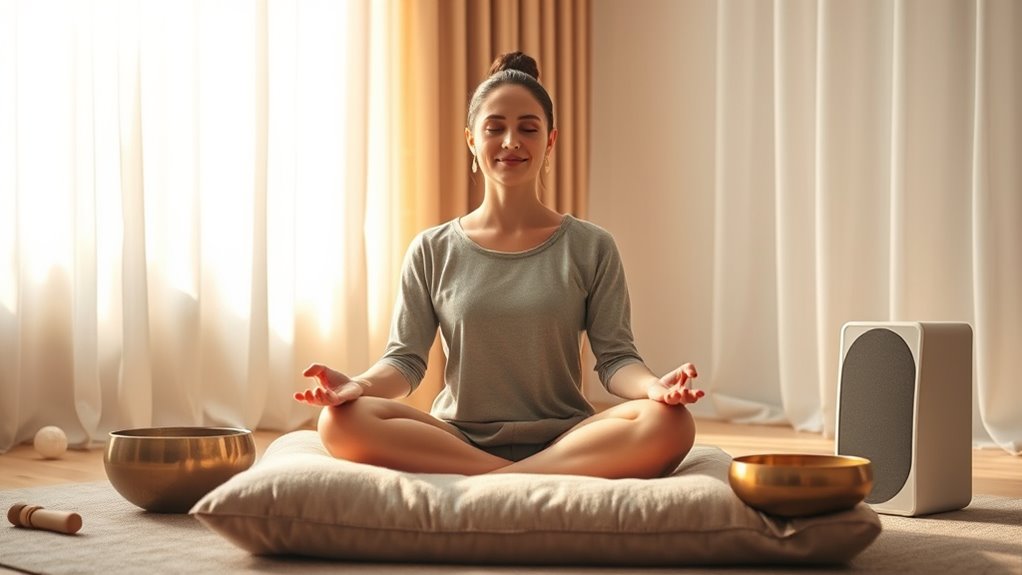
Mindful meditation with music combines the calming power of sound with focused awareness, creating a soothing environment that helps you relax and stay present. As you settle into your practice, you might notice how carefully chosen melodies and gentle rhythms guide your mind away from distractions and into a state of centered calm. Using sound therapy in this context isn’t just about listening; it’s about engaging with the sounds intentionally to deepen your experience. The right music can amplify your meditation, making it easier to connect with your breath and maintain your focus.
Breathing techniques are a fundamental part of this practice. As you listen to the music, you become more aware of your breath, noticing how it flows naturally and rhythmically. You may find yourself naturally slowing your inhale and exhale, syncing your breathing with the tempo of the soundscape. This alignment helps anchor your awareness in the present moment, reducing mental chatter. With each breath, you cultivate a sense of calm that extends beyond your meditation session, influencing your overall sense of well-being.
Sound therapy plays an essential role here by creating an environment conducive to relaxation. The soothing qualities of music—whether it’s soft instrumental, nature sounds, or calming melodies—serve as a backdrop that gently guides your attention inward. When you focus on the sound, you’re less likely to get caught up in stressful thoughts or worries. Instead, you immerse yourself in the present, noticing how the sound vibrations resonate within your body. This sensory engagement deepens your mindfulness and enhances the meditative experience.
Integrating mindful breathing with sound therapy encourages a state of effortless awareness. As you breathe deeply and consciously, the music acts as a gentle anchor, helping you stay grounded. You might find that your mind wanders, but the sound provides an immediate point of return. This dynamic fosters patience and acceptance, key aspects of mindfulness. Over time, your ability to stay present improves, making meditation with music a powerful tool for reducing stress and cultivating emotional resilience.
In this practice, it’s essential to choose music that resonates with you personally. Whether it’s ambient soundscapes or calming instrumental tunes, the goal is to find sounds that support your focus without overwhelming it. As you continue, you’ll discover that incorporating breathing techniques and sound therapy into your meditation creates a more profound, relaxing experience—one that nurtures your mind and body in harmony.
Additionally, selecting a projector type suited for creating a calming visual environment can enhance your meditation space, making the experience even more immersive.
As an affiliate, we earn on qualifying purchases.
Frequently Asked Questions
Can I Meditate With Music if I Have Hearing Impairments?
Yes, you can meditate with music even if you have hearing impairments. Look for music that’s hearing aid compatible and designed for musical accessibility, ensuring clear sound quality. Use your hearing aids to enhance the experience, and choose calming, low-volume tracks. This way, you can enjoy mindful meditation with music, feeling relaxed and centered without any barriers. Find the right tracks and settings to make your practice inclusive and effective.
What Genres of Music Are Best for Mindful Meditation?
You should choose ambient sounds and instrumental genres for mindful meditation, as they foster calmness without distraction. While lively or lyrical music might pull you away, gentle ambient sounds and soft instrumentals create a peaceful atmosphere that helps you focus inward. These genres support your meditation practice by providing soothing backgrounds, allowing you to deepen your relaxation and mindfulness without overwhelming your senses.
How Long Should a Typical Mindful Music Meditation Session Last?
A typical mindful music meditation session should last around 10 to 20 minutes, following duration guidelines for beginners and experienced practitioners alike. This ideal length allows you to relax deeply without feeling overwhelmed or distracted. If you’re new, start with shorter sessions and gradually extend them as you become more comfortable. Consistency is key, so aim to incorporate this practice into your daily routine for maximum benefits.
Is It Necessary to Use Headphones for Effective Meditation With Music?
You don’t need headphones for effective meditation with music, but they can enhance your experience. If you choose headphones, prioritize comfort and superior sound quality to fully immerse yourself. Comfortable headphones prevent distraction, while high-quality sound amplifies the music’s nuances, deepening your focus. Ultimately, it’s your preference—whether you prefer the privacy of headphones or the openness of ambient sound—choose what feels best for your meditation journey.
Can Listening to Music During Meditation Replace Silent Practice?
Listening to music during meditation can complement your practice but shouldn’t replace silent meditation entirely. Your music preferences influence how effectively you focus; calming, instrumental tunes often enhance meditation focus, while lyrics might distract you. If silence helps you reach a deeper state of calm, stick with it. Ultimately, choose what suits your needs best—music can be a helpful tool, but silent meditation remains a powerful option.
As an affiliate, we earn on qualifying purchases.
Conclusion
As you journey through mindful meditation with music, think of yourself as a boat gently drifting on a calm lake. The melodies become the gentle breeze guiding you, while your breath is the steady paddle steering your course. Just as a boat finds peace on still waters, you discover tranquility within. Embrace this harmony, knowing that with each session, you’re steering closer to your inner sanctuary—where peace and awareness flow effortlessly like a serene, endless wave.
ambient soundscapes for meditation
As an affiliate, we earn on qualifying purchases.
As an affiliate, we earn on qualifying purchases.
As an affiliate, we earn on qualifying purchases.
Halloween Picks
halloween
As an affiliate, we earn on qualifying purchases.