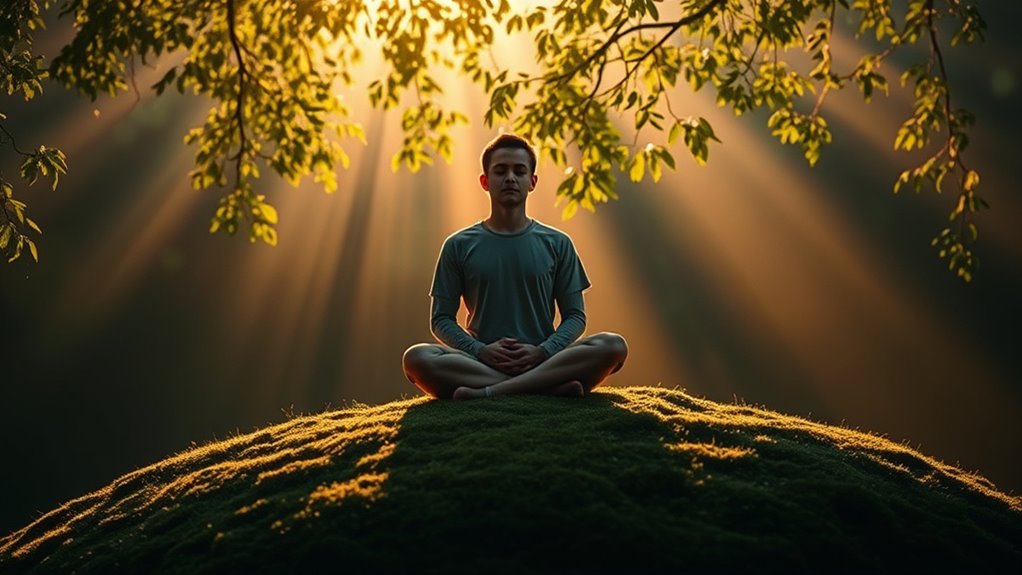

Silent meditation creates a peaceful environment that cultivates deep awareness. By minimizing distractions and focusing on your breath, you enhance your ability to observe thoughts and emotions without judgment. This quiet space allows you to connect inward, promoting clarity and mindfulness. Consistent practice deepens your sense of presence and inner calm. If you continue exploring, you’ll discover how this approach can transform your understanding of yourself and daily life.
Key Takeaways
- Silence minimizes distractions, allowing deeper inward focus and enhanced mindfulness during meditation.
- Focusing on breath awareness anchors attention, deepening presence and sensory perception.
- Silent environments promote non-judgmental observation of thoughts, fostering mental clarity and insight.
- Consistent silent practice cultivates patience, inner calm, and sustained attention for profound self-awareness.
- Silence creates a sacred space that supports inner exploration and the development of deep awareness.
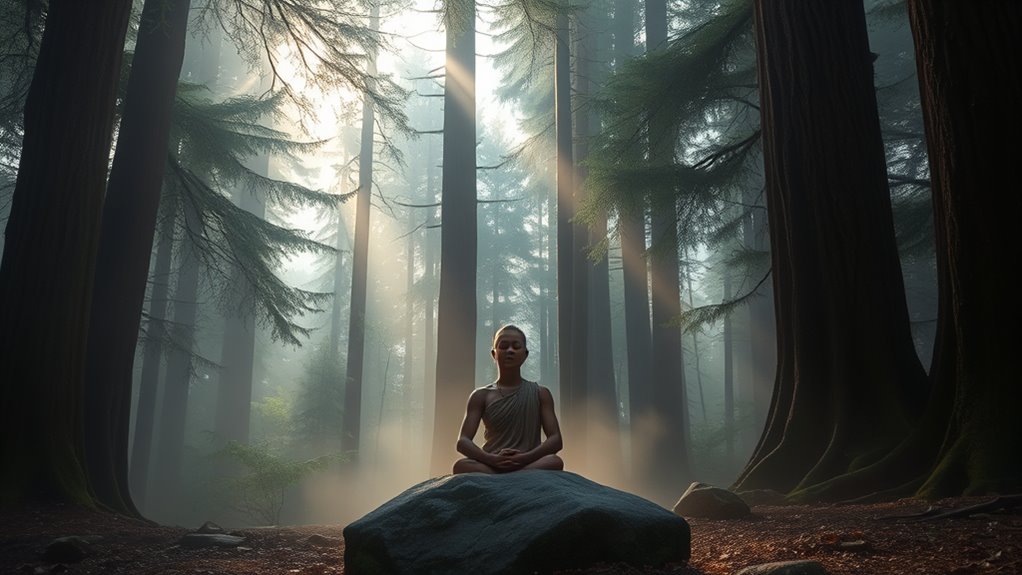
Have you ever wondered how silence can deepen your meditation practice? When you step into a silent space, you’re creating an environment that minimizes distractions, allowing your mind to settle into a state of pure awareness. This quietness isn’t just the absence of sound; it’s a powerful tool that enhances your mindfulness practices by encouraging you to turn inward. In silence, your focus naturally shifts from external stimuli to your internal experience, making it easier to cultivate a sense of presence and clarity.
One of the most effective ways to deepen your silent meditation is by honing your breath awareness. As you sit quietly, pay close attention to the rhythm of your breath—how it flows in and out, the slight pause between inhaling and exhaling. Breath awareness anchors you in the present moment, helping you detach from racing thoughts or worries that often cloud your mind. When your environment is silent, you can notice these subtle sensations more clearly, deepening your connection to each breath. This practice not only calms the nervous system but also fosters a sense of stability and groundedness, essential for exploring deeper states of awareness.
Focusing on breath awareness in silence deepens presence and cultivates calm, anchoring you in the here and now.
In a silent setting, it becomes easier to recognize the patterns of your mind. Without auditory distractions, you notice the subtle fluctuations of your thoughts and emotions as they arise. This heightened awareness allows you to observe your mental landscape without judgment, cultivating a state of openness and curiosity. As your mindfulness practices become more refined through silence, you’ll find it easier to remain present during everyday activities, carrying that sense of calm and focus into your daily life.
Additionally, the use of HEPA filtration in your environment can reduce airborne irritants, creating a cleaner space that supports longer and more comfortable meditation sessions. Silence also encourages patience and perseverance in meditation. When there’s no external noise to distract you, you’re more likely to stay committed to sitting still and observing your breath. Over time, this consistency deepens your capacity for sustained attention and inner calm. Breath awareness, in particular, becomes a powerful anchor—each inhalation and exhalation serving as a reminder to return to the present moment whenever your mind drifts away.
Ultimately, incorporating silence into your meditation creates a sacred space for exploring your inner world. By combining mindfulness practices with focused breath awareness, you open the door to profound clarity, compassion, and self-understanding. Silence isn’t just an absence of sound; it’s an active space for deepening your awareness and cultivating a more mindful, centered life.

Silent Mind Tibetan Singing Bowl Set – Easy to Play & Beginner Friendly Meditation Bowl with Cushion & Mallet | Stress Relief & Mindfulness | Gift-Ready
Calming Resonant Sound: Our Tibetan singing bowl produces rich, soothing tones that support meditation, sound therapy, and mindfulness….
As an affiliate, we earn on qualifying purchases.
As an affiliate, we earn on qualifying purchases.
Frequently Asked Questions
How Long Should I Meditate Each Day for Best Results?
You should aim for a daily practice length of about 10 to 20 minutes for the best results. Meditation duration varies depending on your experience, but consistency matters most. If you’re new, start with shorter sessions and gradually increase your meditation duration as you become more comfortable. Regular practice helps deepen your awareness, so commit to daily meditation to experience the full benefits of silent meditation.
Can Silent Meditation Help With Anxiety and Stress?
Imagine a calm lake where your worries gently settle like ripples fading away. Silent meditation can help with anxiety and stress by enhancing mindfulness benefits, allowing you to observe your thoughts without judgment. It’s a powerful stress reduction technique that clears mental clutter, bringing a sense of peace. Regular practice helps you stay centered, making it easier to handle daily pressures with clarity and calmness.
What Are Common Challenges Faced During Silent Meditation?
During silent meditation, you might face challenges like distraction management and maintaining proper posture alignment. Distractions can pull your focus away, making it hard to stay present. Poor posture may cause discomfort or fatigue, disrupting your practice. To overcome these issues, gently redirect your focus whenever distractions arise and guarantee your posture stays relaxed yet aligned. Consistent practice helps you develop better distraction management skills and improves your posture over time.
Is Prior Meditation Experience Necessary to Start Silent Meditation?
You don’t need prior experience to start silent meditation, and beginner questions are common. Many believe you must be an expert to begin, but that’s not true. Silent meditation is accessible for everyone, regardless of experience. It’s a practice that gradually deepens your awareness, so start with an open mind and patience. Over time, your skills will develop naturally, making the journey more rewarding than the initial doubts.
How Can I Maintain Focus During Silent Meditation Sessions?
To maintain focus during silent meditation, you should practice mindful breathing, gently bringing your attention back whenever mental distractions arise. When your mind wanders, acknowledge the distraction without judgment and return your focus to your breath. Consistent practice helps strengthen your ability to stay present. Remember, patience is key—over time, you’ll find it easier to maintain focus and deepen your awareness in each session.

TIME TIMER Home MOD – 60 Minute Kids Visual Timer Home Edition – for Homeschool Supplies Study Tool, Timer for Kids Desk, Office Desk and Meetings with Silent Operation (Fern Green)
TIME MANAGEMENT — The 60-minute learning clock assists with organization and concentration among tasks. The desk timer is…
As an affiliate, we earn on qualifying purchases.
As an affiliate, we earn on qualifying purchases.
Conclusion
Practicing silent meditation can substantially boost your awareness and reduce stress. Did you know that studies show 65% of practitioners experience improved mental clarity within just four weeks? By embracing this quiet practice, you’ll open deeper self-understanding and tranquility. So, take a moment each day to sit in silence—you might be surprised at how quickly your mind becomes clearer and more focused. Start today and discover the profound calm that silent meditation can bring to your life.

Air Purifiers for Home with H13 Quiet HEPA Filter Up to 1076 Ft² for Pet Hair, Odors, Pollen, Smoke, Compact Air Cleaner with 3 Speeds, Timer, Aroma Quiet 360°Intake Filter, White
Effortless Operation: Simplified control panel with intuitive design makes it easy to operate. No complicated setup—just one tap,…
As an affiliate, we earn on qualifying purchases.
As an affiliate, we earn on qualifying purchases.

Mindsight 'Breathing Buddha' Guided Visual Meditation Tool for Mindfulness | Slow Your Breathing & Calm Your Mind for Stress & Anxiety Relief | Perfect for Adults & Kids (Multicolor, Pebble (Sound))
🧠 Introducing (6) Ambient Nature Sounds: the addition of crashing waves, birds chirping or a strong breeze can…
As an affiliate, we earn on qualifying purchases.
As an affiliate, we earn on qualifying purchases.